Ireland's rowers focusing on process not medal outcome for Olympics
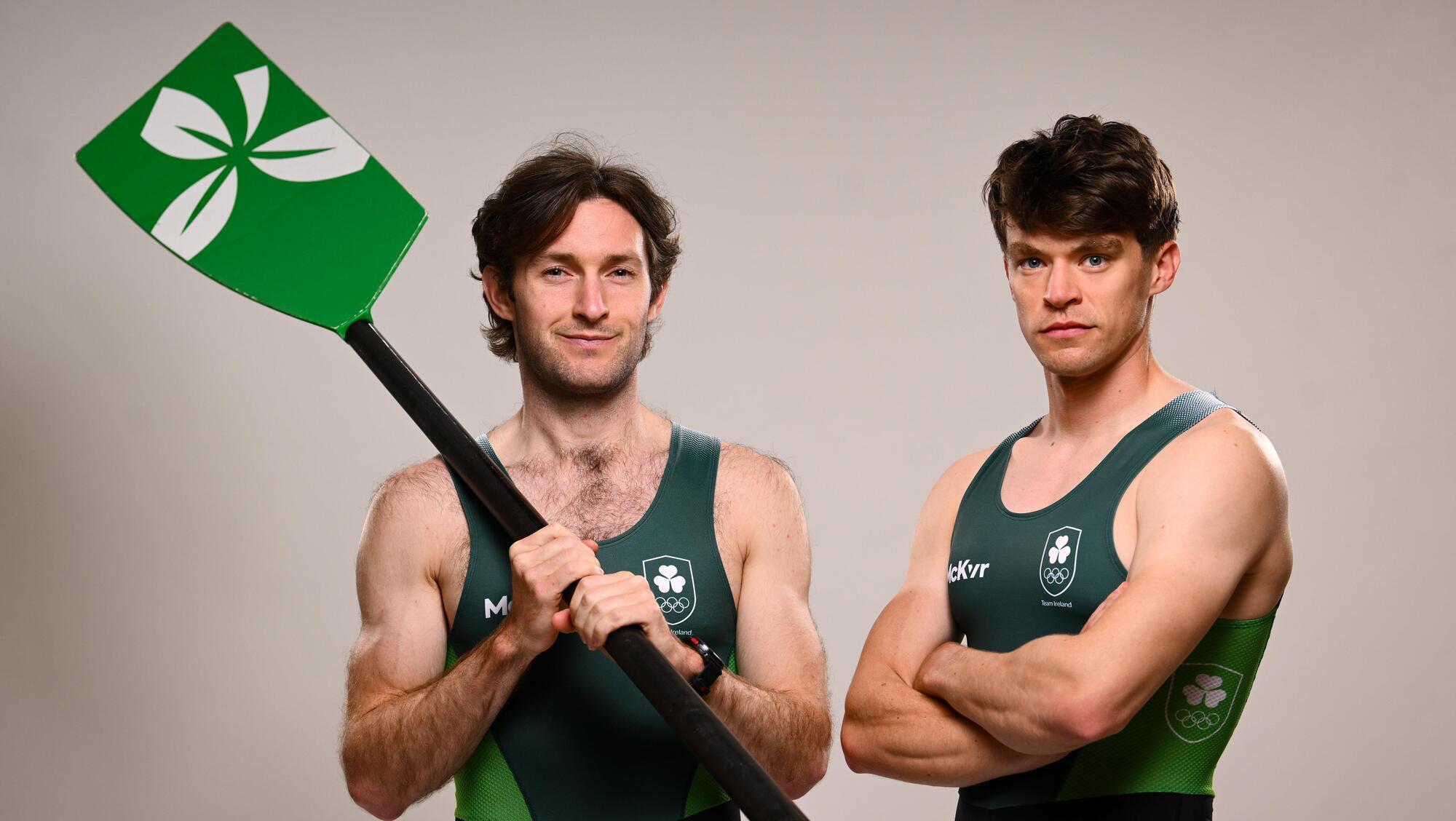
TRUSTING THE PROCESS: Paul O'Donovan, left, and Fintan McCarthy will be going to Paris to defend their Olympic gold. Pic: Ramsey Cardy/Sportsfile
Medals. They're the only currency that carry real weight among a sporting public that is largely indifferent to the existence of minority sports for the majority of every four-year Olympic cycle. Just making the Games is an achievement of extraordinary means for the majority of those athletes who appear in Paris but there is no getting away from the expectations held for certain people and specific sports.
Ireland's rowing team, for example.
Paul O’Donovan and Fintan McCarthy claimed gold in the lightweight double sculls in Japan at the delayed Games in 2021. The women’s four of Eimear Lambe, Aifric Keogh, Fiona Murtagh and Emily Hegarty came up with a surprise bronze.
The two medals earned were widely acclaimed but that effort actually came up one shy of the target set for the regatta even though Ireland finished ahead of powerhouses such as the USA, Germany and Great Britain in the sport’s medal table.
O’Donovan and McCarthy will again be favoured to claim gold in their race at Vaires-sur-Marne in the east of Paris later this summer, and there are other shouts again based on last year’s World Championships and other results and form guides.
Daire Lynch and Philip Doyle will go again in the men’s double having claimed bronze at those Worlds in Belgrade in 2023. Ross Corrigan, who won a bronze with Timoney in the same event, is partnered instead by John Kearney this time.
There were other close shaves in Belgrade last September with Zoe Hyde and Alison Bergin edged into fourth in the women’s double. Keogh and Murtagh recorded the same finish in the women’s pair.
The latter duo’s places in the women’s four have been assumed this time by Natalie Long and Imogen Magner. All told, Ireland will have a record seven crews competing but high-performance director Antonio Maurogiovanni is keeping any medal targets in-house.
“No, we don’t try to focus too much on the outcome but the process. This is always what we say to the athletes in our team and to the coaches. We need to do the best that we can do, focus on the process, tick all the boxes and whatever the results then we need to be happy.
“We have to put ourselves in the position where we do everything we can do and then line up the day of the race and have fun regardless of the results. If we do that the medals will come. I don’t know if they will come but I am quite confident.”
Maurogiovanni, who is in his post since 2017, expressed himself to be especially happy with the spread of rowers on the team with male and female, lightweight and heavyweight, sculler and sweep all represented.
The seven crews is also a major jump from the three that competed in Rio eight years ago and the Italian claimed that the numbers involved are proof that the centralized programme based in Iniscarra in the National Rowing Centre is paying dividends.
“We need them centralized in a place like this where they can row in the same boat together and match as much as possible. This is a quite demanding sport and the sacrifice of the coaches and the athletes in being centralized is quite high.
“People have to drop their friends, their family and move here in this place which is great but is not Dublin, New York, it’s not Rome. It is quite good for rowing but it is also quite isolated.”
Investment in Ireland’s elite rowing programme has increased but, while Maurogiovanni ranks this country in the top six or seven globally for funding, he says that with the rider that the difference between his programme and those at the very top is still significant.
Rowing is an expensive sport with countries investing somewhere between €1.5-€2m per medal won per year. Coaching, as in athletics, continues to be underfunded even with improvements made there too, while the talent pathway needs work to boot.
This is the last Olympics where lightweight rowing will be on the programme too. O’Donovan and McCarthy have intimated intentions to make that switch for LA in 2028 but not everyone will be of the mind or body to be able to do the same.
Ireland’s heavyweight strength has improved hugely in the last handful of Olympic cycles but seismic change is coming and that will require money and minds squared to the task. For now, it is all eyes on Paris and the possibility of a return for Irish rowing like none before it.

CONNECT WITH US TODAY



Be the first to know the latest news and updates