Catching the Olympic wave: Ireland's top surfer Gearóid McDaid
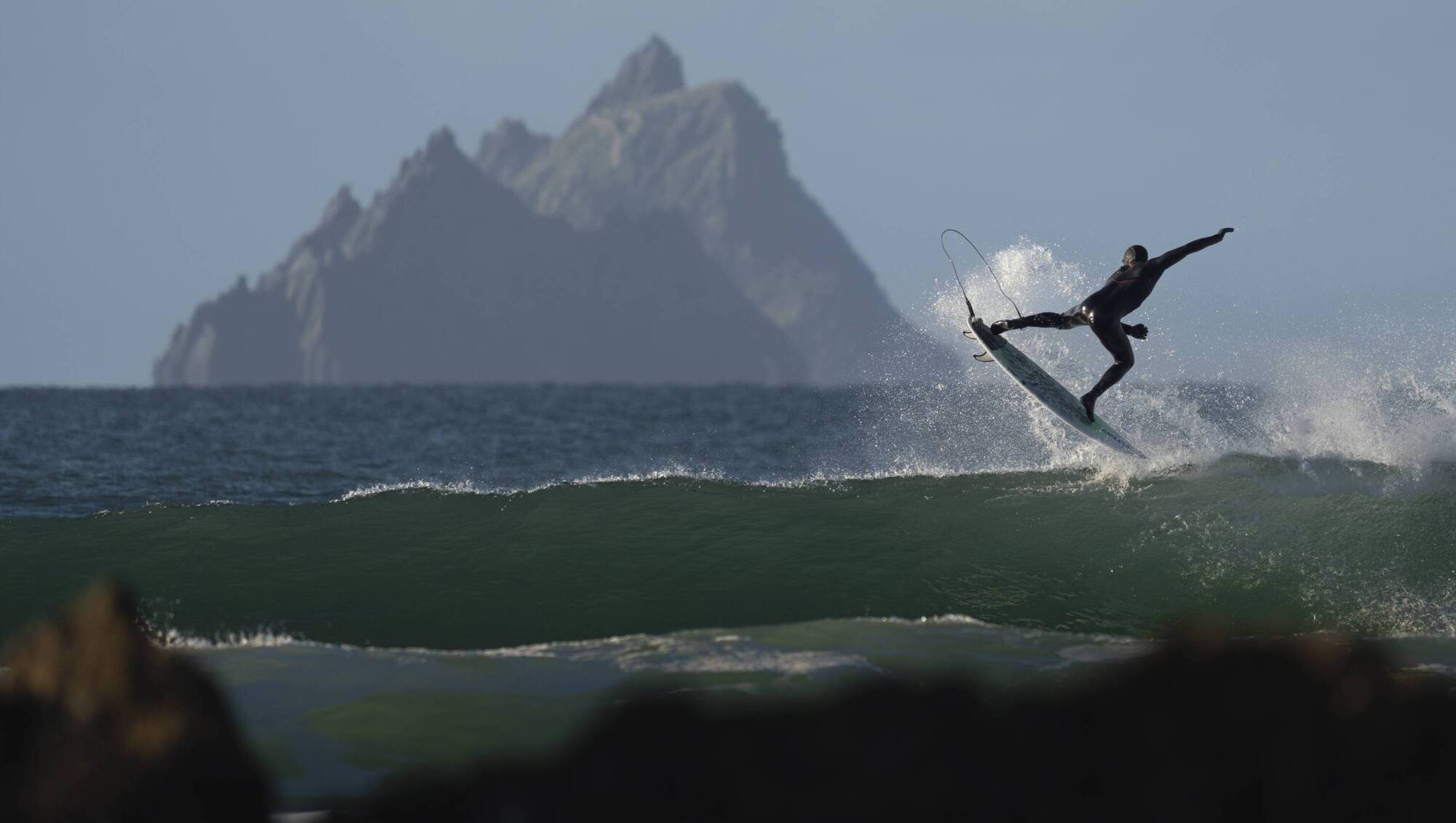
Gearóid McDaid pro surfer.
The life of a pro surfer is one of constant flux. For most of his day, Gearóid McDaid is either paddling out into the ocean or riding the waves back in. When he’s not doing that, the 27-year-old is scanning weather forecasts, scouting specific conditions and hopping in his car to go and find them.
One week, the Sligo man might be found plying his trade off the coast of Strandhill. The next, he might be in Hawaii or Namibia.
This is his love, his sport, his joy, and for the past nine years it’s also been his job. McDaid is Ireland’s top competitive surfer and ahead of next week’s World Surfing Games in Puerto Rico, he’s a man with a dream – an Olympic dream. The sport only made its debut at the Games three years ago in Tokyo, and McDaid is trying to become Ireland’s first surfing Olympian at Paris 2024.
Not that it’s happening anywhere near Paris. The Olympic surfing competition will be staged in Tahiti, an overseas French territory that is 15,800km from Paris, which makes it the furthest an Olympic venue has ever been from the host city. The road there will run through Puerto Rico, where McDaid will fly to today ahead of the key qualifier event, which begins next Friday and will run across several days.
The Olympic qualification process is a complex one, but for McDaid it will hinge on how many rivals finish ahead of him in Puerto Rico from nations that don’t already have quota places secured, with 24 male surfers set to compete at the Games. “I’d like to get top-10, that would pretty much guarantee it,” he says. “There’s potential (to qualify) as far as top-15, top-20.”
It’s an event he’s been working towards for years. On a typical day, if the waves are good, McDaid will leave his home in Strandhill before the sun rises, then put in multiple two-hour sessions in the frigid Atlantic waters – building his strength, refining his technique, sharpening his skill. “I leave in the dark and come home in the dark,” he says.
His father Ray was also a competitive surfer, specialising in kneeboarding, and Gearóid was five when his dad first taught him to surf. He juggled various sports until the age of 10, when surfing truly sunk its claws in. “From then, it was every single weekend or every day after school,” he says. “Every other sport took a back seat.”
At that point, he hadn’t a notion that professional surfing was a thing, but he got a grasp on the possibilities at his first international event at the age of 12. “I came seventh or eighth and a couple of companies approached my Dad saying, ‘We really like the way he surfed, we want to have him on board.’”
Support soon arrived in the form of free boards, wetsuits or having his travel expenses covered, but as time wore on his performances drew more substantial backing.
By the time he finished school at 18, McDaid could commit to full-time surfing, turning it into his profession. Still, it’s an expensive game. He spends a significant chunk of each year abroad, chasing the right conditions for training camps or travelling to World Qualifier Series events or invitationals. Sponsorship deals from Ripcurl, Monster Energy and ISDIN sunscreen have allowed him to give the sport his full focus. “It’s covering costs, but I wouldn’t say I’m making loads of money,” he laughs.
He doesn’t have a surf coach, though his dad is a key mentor, filming sessions and offering technical feedback. “A lot of countries that have more money have full-time coaches,” he says. “But we keep it going as we are.”
When we speak, McDaid has just returned home after a training camp in Portugal, though having been around the world he knows Irish surf ranks right up there. “The waves we have are amazing,” he says. “Every winter I try spend as much time here as possible to get the good waves.”
The sport has its risks. As a teenager, McDaid never got injured much but in recent years there’s been plenty of knocks and scrapes, bruises and tears. He sprained his ankle a couple of times, surfed through nagging pain in his hip, though the biggest issue was a broken shoulder which occurred after he crashed into the water in an awkward position. “My arm hit first and ripped my shoulder back, I chipped a bone,” he says. “I didn’t think I’d broken anything for a while, I continued to surf. But there was a lot of pain.”
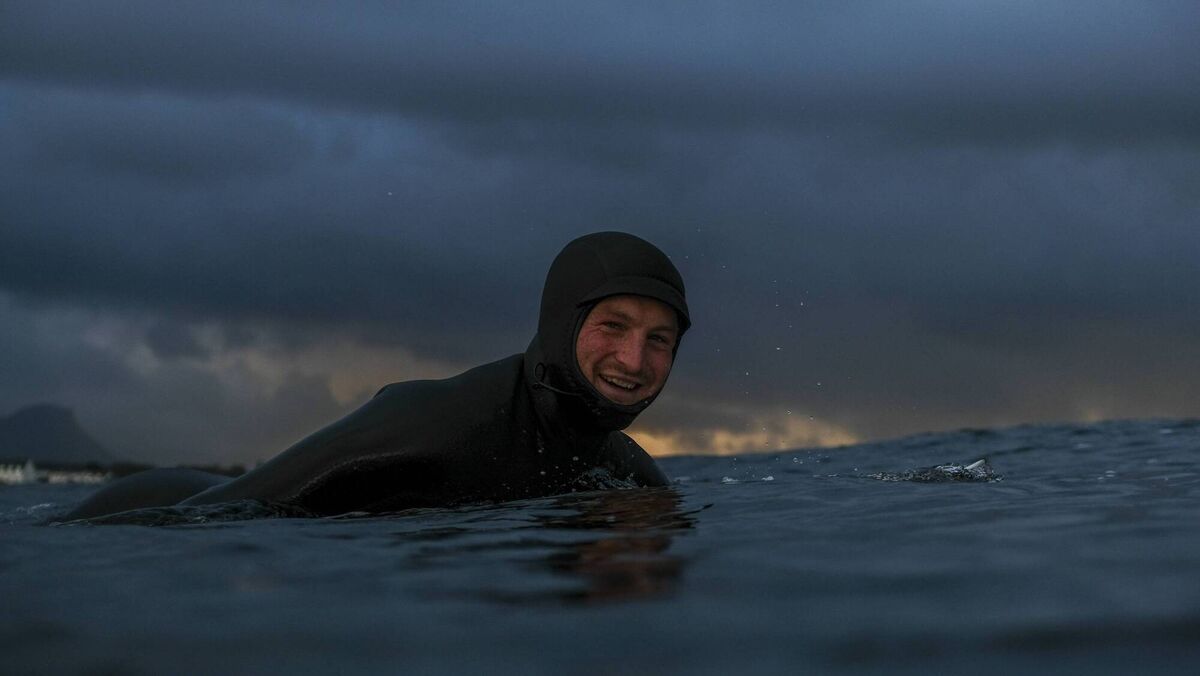
It’s not just the adrenaline of the sport that entices him. It’s the competitiveness. “I’ve always been into sports – basketball, tennis, football, Gaelic football, hurling; it’s who I am,” he says. “I love competing.”
In surfing, scoring is decided by a panel of five judges, with each wave scored on a scale of one to 10. The top and bottom scores are discarded and the surfer gets the average of the middle three. Across each heat, which lasts 20 to 35 minutes, a surfer’s score is the average of their two best waves, with no limits on the number that can be ridden. Success is based on several metrics: commitment and degree of difficulty; innovative manoeuvres; combination of major manoeuvres; variety of manoeuvres; speed, power and flow.
“A lot of it is being confident,” says McDaid. “Knowing you can do it and not overthinking the manoeuvres on the wave – that can sometimes mess you up. Sometimes the simple manoeuvres are better.”
Part of McDaid’s motivation in trying to qualify for the Olympics is to show the world Ireland can produce not just world-class waves, but elite-level surfers. “Everybody around the world knows there’s good waves in Ireland and a lot of people see it as a big-wave surfing spot, so if I can keep doing good in contests, I can promote it as somewhere that breeds good, competitive surf.”
Come what may in Puerto Rico, McDaid has no plans to step away from his sport anytime soon. “It’s something I’m going to keep doing as long as it’s a viable option of a career and I’m still making enough money to live off. Even if I don’t qualify, I’ll still be trying to get on the next one.”
Success will hinge on how well the conditions suit him and how well he executes his manoeuvres. Most of it is down to skill, but there is an element of luck. “Surfing is very changeable,” he says. “It’s (about) being able to perform my best on the waves given to me. Hopefully the waves over there will suit me, but as long as I put in a good performance for myself, I’ll be happy.”
The Paris dream is one that’s fuelled him through countless early-morning sessions in those icy Atlantic waters, and while his mind will be focused on the task at hand, he knows getting it right next week could result in him becoming what he’s long wanted to be – an Olympian.
“I always think about it,” he says. “I guess you have to visualise it to make it happen.”


CONNECT WITH US TODAY



Be the first to know the latest news and updates