Sport psychology isn’t a game. Stop treating it as one
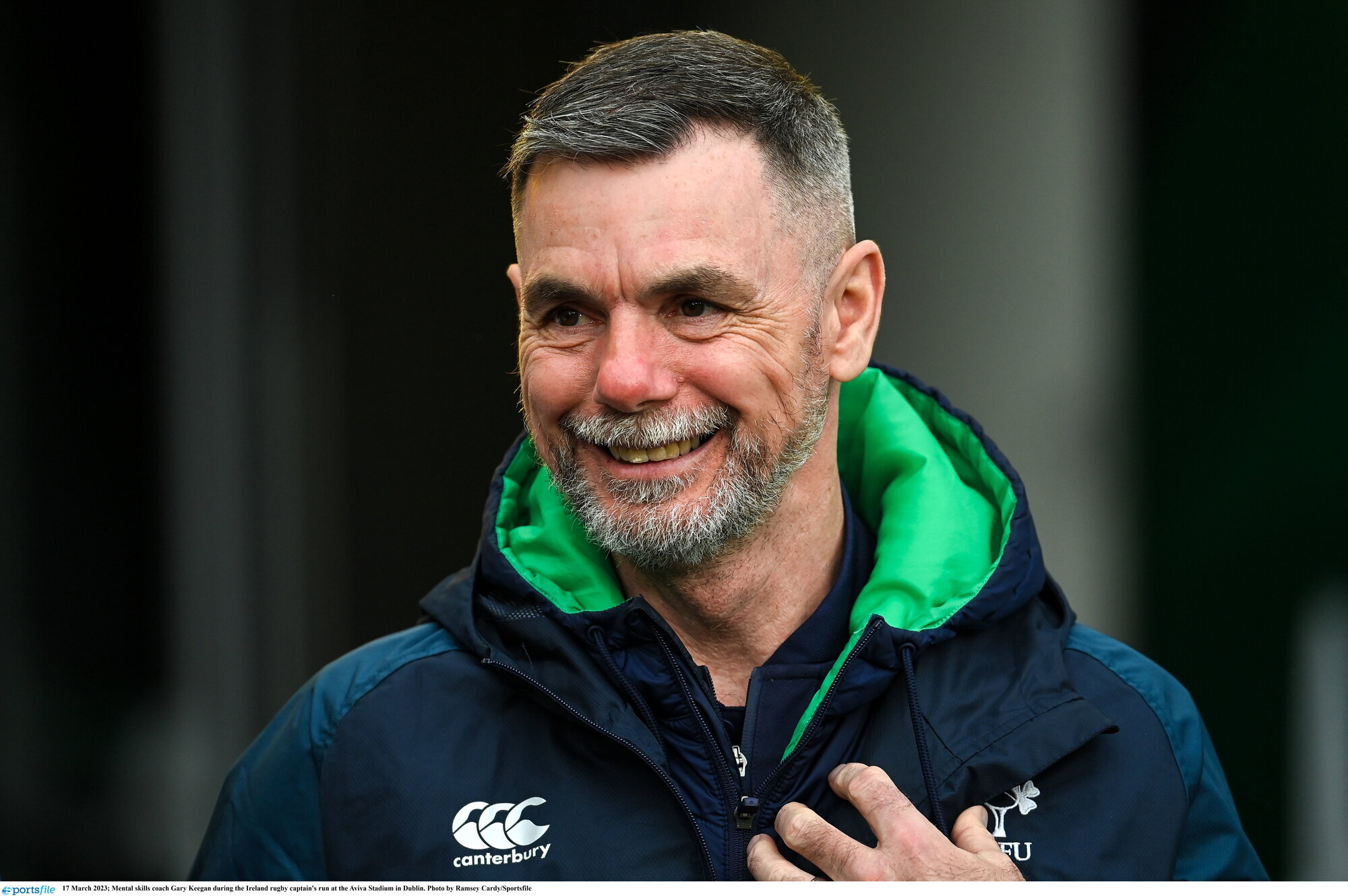
THRIVING: Mental skills coach Gary Keegan during the Ireland rugby captain's run at the Aviva Stadium in Dublin. Pic: Ramsey Cardy/Sportsfile
Given the growing recognition of the need for regulating practice in the arena of (sport) psychology, it was timely of Kieran Shannon to offer his view (March 21,2023). I’m glad to take the discussion forward now, relying on the rigour of facts and evidence, which I always find useful when offering comment.
Sport psychology is not apart from coaching: it is ‘a part’ of coaching. That’s a mantra I’ve repeated many times at conference keynotes, one borrowed from my co-author of Pure Sport, the eminent Dr John Kremer.
The best head coaches learn and develop effective psychological skills. So too do the best physiotherapists and team doctors. A sport psychologist’s role is not merely to support athletes and players. The role is to help foster a psychologically-informed environment in which every person prospers. That includes team or club coaches, sport scientists and support staff.
After Ireland’s untimely exit from the World Cup 2019 (because it was, in part, “psychologically ill-prepared” according to IRFU’s post-tournament review) positive changes were introduced. A rigorous process saw the IRFU’s recruitment last year of a Lead Psychologist. Darragh Sheridan has a PhD and is a Chartered Psychologist with the British Psychological Society (BPS). The IRFU has commendably created an accredited, registered, supervised framework of good practice within which other team support staff – like the Gary Keegans or Paul O’Connells – can thrive.
Yet no-one owns or controls the psychology of another. Sovereignty and independence of mind belongs to an athlete. Sport psychologists help foster this. It’s the polar opposite of the dependency culture of a growing industry of coaching in performance and mindset, leadership and lifestyle.
With increased public interest in behavioural science, comes a rising tide of pseudoscience. A 2018 research study of 545 sport coaches in Ireland and Britain found more than 40% promoted or supported ideas in sport based on pseudoscience, so-called ‘neuromyths’. Evidence-based, research-informed support from a registered sport psychologist is one essential ingredient to help counter this worrying trend.
A registered sport psychologist, with approved clinical training, also supports the mental and emotional health of coaches. In January 2023, a survey of 6,000 college coaches in America found relatively high rates of mental health difficulties. One-third reported mental exhaustion, feelings of being overwhelmed and near-constant sleep disruption.
At the end of last year’s GAA season, some counties and clubs struggled to appoint managers and coaches, with some speaking openly about the mental and emotional distress of his role. Having access to a sport psychologist in whom they can confide may help managers and coaches.
Last year, the GPA reported a 60% increase in players accessing counselling services. The issues presenting are potentially complex and serious. Offering solidarity is one thing: learning and training to support players with such issues is quite another. This demands expert care.
Recently, RTÉ Investigates exposed how the title psychologist was being abused. It revealed there is no statutory legal register for psychologists, psychotherapists and counsellors in Ireland. In response, the Psychology Society of Ireland is demanding reform, registration and regulation.
In the north of Ireland, the Health and Care Professions Council holds an online, searchable register of Practitioner Psychologists, including Sport Psychologists. To be registered, practitioners undergo academic study, professional training, supervised practice and formal examination. It can take up to ten years to become a legally registered sport psychologist.
Whereas to start a business in coaching performance, mindset, leadership or lifestyle requires no training or licence. There is no Code of Ethics and no statutory registration. This means the risk of harm is real as uncovered by BBC investigation into life coaching company Lighthouse (April 2023).
Anyone can embark on the professional pathway to become a registered sport psychologist. Each academic year, dozens of students in Ireland enrol on courses to start their journey. For those of us who have spent substantial years, resources, energy, and commitment – in personal, professional, and educational terms to become a fully qualified, legally licensed sport psychologist registered with HCPC (with all the formal regulation that entails), there is a fundamental ethical point and it is this.
Either we create a framework of best practice in sport, underpinned by education and overseen by regulation and registration. Or we carry on with the current free-for-all where athletes rely on the superficial ‘proof’ of proficiency implied by someone associating with a trophy-winning team.
Sport psychology isn’t a game. Others should stop treating it as one.