Ireland’s five medals cost taxpayers €6m each
However, despite the high cost, two thirds of all athletes have received less than €80,000 in targeted financial help since Beijing, suggesting costs are being spread too thinly to make an impact at the top level.
Figures supplied to the Irish Examiner by the Irish Sports Council show that despite our world-class boxers, one of the most successful Olympics in Irish history has still come at a high financial cost.
Between Beijing 2008 and London 2012, a string of sporting bodies, the Irish Sports Council, and the Olympic Council of Ireland, paid €29.438m to get our athletes into the shape of their lives.
This figure, which is based on €21.82m from the Irish Sports Council’s high performance unit (HPU) and specific financial aid to targeted athletes, means each medal won earlier this month cost just under €6m in support.
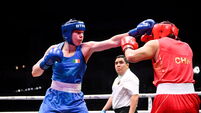
By far the most successful area, both in medals and financial results, was boxing.
Ireland’s one gold, one silver, and two bronze boxing medals were the culmination of a €4.82m investment since Beijing, including €2.91m from the HPU — with each heroic win costing €1.2m. Just €610,000 was spent on people who failed to qualify.
Cian O’Connor’s equestrian bronze comeback, coming eight years after he was surrounded by a drug controversy, came after €2.24m worth of HPU for the entire equestrian sporting field.
Athletics rivalled boxing in terms of State financial support, receiving €4.619m — including €3.13m from the HPU — during the four-year period.
However, despite the aid, our runners, sprinters, and hurdlers lagged far behind in terms of results. Despite the investment, the 23-strong track and field team saw a return of just one national record, two personal bests, and three season’s bests.
Only Rob Heffernan (fourth in the 50km walk) came close to the podium, despite hopes for the likes of Derval O’Rourke, Ciaran Ó Lionard, Fionnuala Britton, and Paul Hession.
The cycling team, which was controversially criticised by well-known sports journalist Paul Kimmage for their alleged failures, had received €2.658m in funding — including €1.449m from the HPU — since Beijing. Thirty-four cyclists were targeted for funding but only four qualified, and at the London Games their best finishes were 55th in the road race, 27th in the time trial, and 13th in the omnium indoor cycling event.
In the pool, just four of 13 athletes targeted for support made it to London, with all finishing last in their heats.
While high-profile sports have received comparatively positive funding, less popular events have been given next to no help.
Just €5,500 has been spent on wrestling, €48,000 on archery, €48,583 on fencing, €64,000 on table tennis and a maximum of €48,000 per triathlon athlete since Beijing. As a result, almost no progress has been made in these Olympic sports.
The overall under-performance of Irish athletes at an Olympics billed as being a near-perfect location for our sportspeople has re-opened the debate on whether money is being targeted properly to achieve the best results.
However, as yet there are no plans to change the way potential Olympic athletes are funded.
Speaking on Newstalk’s Off The Ball sports show on Thursday night, Olympian Rob Heffernan said while “athletics abroad is a job”, an “amateur culture” was affecting Irish standards.
CONNECT WITH US TODAY



Be the first to know the latest news and updates