Tom Coyne: Playing A Course Called America
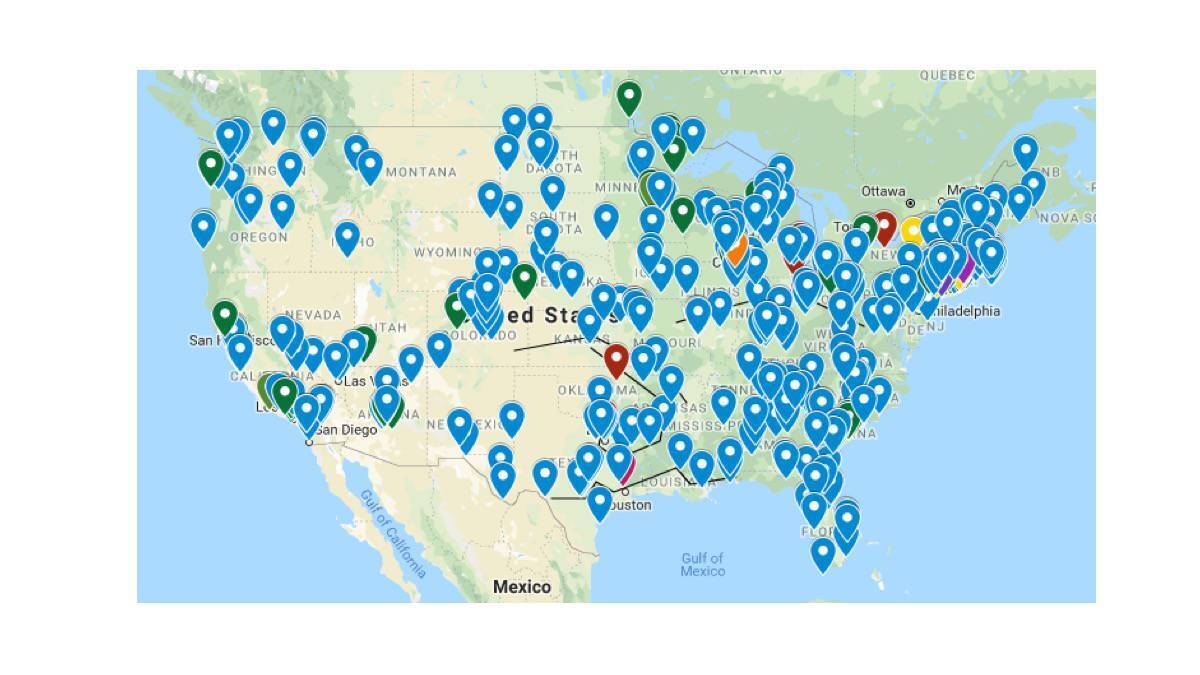
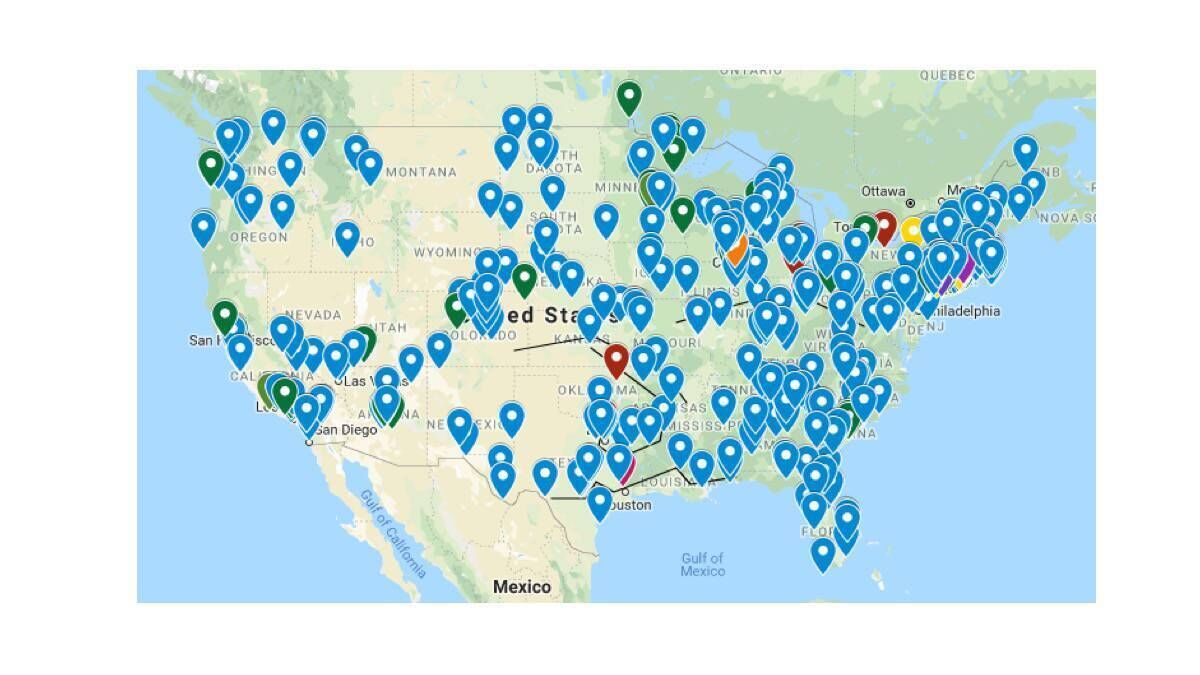
Tom Coyne's playing map for A Course Called America
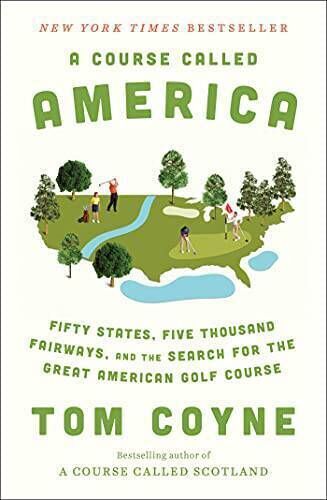
It seems like little time has passed and yet Coyne now brings us A Course Called America. Totally different… and yet somehow the same: Coyne in search of adventure and on a quest for answers.
Coyne is well known to readers of the . He chatted to Kevin Markham about his new book.
Tom Coyne: It was a natural progression after doing Ireland and Scotland. I’d done these two around-the-country travel adventures, and they seemed to work, so I was of course looking to complete a trilogy. As an author the true cliché is that you are generally as valuable as your last book, or that your next book is never a guarantee. Well, the Scotland and Ireland books allowed me to have a next book, so when I got to thinking about the big question — Where? — I didn’t have to think very much.
About a year, and though I had all the benefits of social media and the internet at my disposal (unlike Ireland, which involved some email but a lot of calls to out-of-the-way B&Bs), this was by far the most challenging itinerary to arrange. The obvious issue: America’s size. But less obvious issues emerged as well — shifting seasons, varying climates, changing time zones — none of which were an issue in Ireland or Scotland. And then I had this added layer of complexity of so many American clubs being entirely private. I spent days staring at maps and calendars and emails: I could plan a route, but then I had to finagle my way on to the courses by way of friends or friends of friends, or by blind luck and a shout out to Twitter.
I couldn’t just call for a tee time. There were any number of times I thought I’d have to shrink this down and just write a book about Long Island golf. That would have been a good book, but I’m glad I didn’t quit on trying to get to all 50 states. Doing so was a meaningful accomplishment for me.
: I was on the road for eight months, finishing up before Covid hit. I broke up my map of America into 10 or 11 chunks and tried to conquer each in a two or three week leg, then get home to make sure my family remembered me. The real hero of the story is my wife, Allyson: I was perpetually away and while I was golfing, she was holding life together. She’s the star of the book.
: When I asked social media to suggest places I had to visit to get a true flavour of golf in America, I got about 800 emails. I plugged all the suggestions — about 600 courses — into a spreadsheet and then worked it down to 500 that I pinned on a Google Map. Then I started looking at the calendar and my map, and courses started to fall away. I used a lot of colour coding to note must plays, like-to plays, maybe-plays. I wanted to visit every US Open venue, so they were all must-plays.
I wanted to play unknown treasures, municipals, and really out of the way places, so the weirder the better, so they became must plays as well. And then there were the courses I just dreamed about seeing, and they made the list as well. And of course, wherever I had a warm invite or a group of golfers ready to join me, I made the effort to get there. Characters make the story, always more so than the courses.
Social media was hugely important on this trip, at every stage. It was essential to the planning, as that was where I got most of my course suggestions, and where I got invites from members that could get me on at their private clubs. During the trip, it built a sort of community that was following my travels and really kept me going, because people weren’t just writing to me, they were coming out to tee it up with me. When you’ve been driving for nine hours and arrive in the middle of Montana, and there are three guys excited to meet you and play some golf, that really lifts one’s spirits. And in the writing of the book, it was a help as well because I had this somewhat carefully curated catalogue of my trip with images and words to help keep it all fresh and remind me of moments and people. I had a 500-page journal detailing my journey, but my Instagram feed was pretty handy in collecting some important memories as well.
: I played somewhere around 294 courses, some more than once, to get me to 300 rounds of golf.
: Somewhere around Las Vegas I recall my shoulder giving out as I hauled my clubs down the Strip for the airport. I couldn’t quite make a full swing, for almost a year, but the punchy half shots I learned in Ireland helped me get around the remaining courses.
: If I told you my most interesting discovery you wouldn’t have to read the book! I’ll just say that nearly every day I came across a new surprise about golf or America or travel or life on the road. It’s really the joy of traveling, to find out how much you don’t know, and how much there is yet to learn about people and places. One thing that I was pleased to find is that America does indeed have true links golf courses — at Bandon Dunes, and on Cape Cod — as well as what one might call American links, which would be dunes golf courses that aren’t anywhere near the water. Nebraska is actually full of sandy dunes, and Wisconsin has plenty, too, and golf has now found them and created courses that feel like Baltray. All that’s missing is the ocean.
: The book details one celebrity encounter that I was not anticipating at all, where I was pretty well starstruck for an entire weekend. It was certainly a highlight of the trip, but again, you’ll have to read to meet him or her!
: The book’s goal was pretty simple: find the great American golf course. But that question can be broken apart into less simple questions. So what makes a golf course truly great? I was interested in figuring that out as a golfer. But then that leaves the question: what makes a course American?

What did American mean in 2019? That was the big question of the book. That was why I wanted to go to all 50 states and golf with people from every part of my country to see what our country was, and who we were as Americans. I won’t go too deeply into my conclusions, but I will say that I ended my travels feeling better than when I began them. And I most assuredly did locate the great American golf course.
Erin Hills has a very strong Irish connection that I was pleased went behind its shamrock logo. The area — Erin, Wisconsin — was settled by Irish and maintains that character and identity. So it’s great to see that spirit reflected in the golf course which is a wild, windblown linksy feeling course that I would compare to Enniscrone. It’s just an absolute blast. And nearly as good a welcome as you’d get in Sligo. Whistling Straits in Wisconsin also maintains an Irish identity: Pete Dye was charged with creating an American version of Ballybunion, and whether he succeeded or not, what he did create is stunning. And with sheep literally roaming the property and sometimes walking through your line, you might have flashbacks to Mulranny, at least until you check your receipt for your greens fee and realise you’re a long way from Co Mayo!
: A Course Called Ireland had a sort of survival adventure quest element to it that is unique from the other books. Since I was walking the coast of the country, there was this question and this drama around whether I was going to make it. Was the rain going to win? Was I going to end up stuck to the front of a coach? That trip was actually dangerous. I didn’t think about it much at the time, not having kids yet, but I don’t think I’d do that hike again with two wee ones at home. ACCA is also a quest story, but visiting all 50 states is not the task that walking all the way around Ireland is… not even close. I took planes, trains, automobiles… ferries and horses, too. I was also much younger when I wrote A Course Called Ireland, so perspectives and priorities change. And the America book is notably longer, as I played five times more golf courses.
: There is still no American equivalent to the dunes of Carne, or to the quality and setting of a place like Lahinch, where such extraordinary golf flows into the heart of a town. There is no American layout like Old Head, and there is no American welcome like the one you receive at Ardglass. And that’s all good news to me, because if I’d found their equal in the States, I might be less inclined to come back to Ireland every year (and may that practice resume very shortly, touch wood).

CONNECT WITH US TODAY



Be the first to know the latest news and updates