The tragedies, failures and scuttled plans that made the Augusta Masters
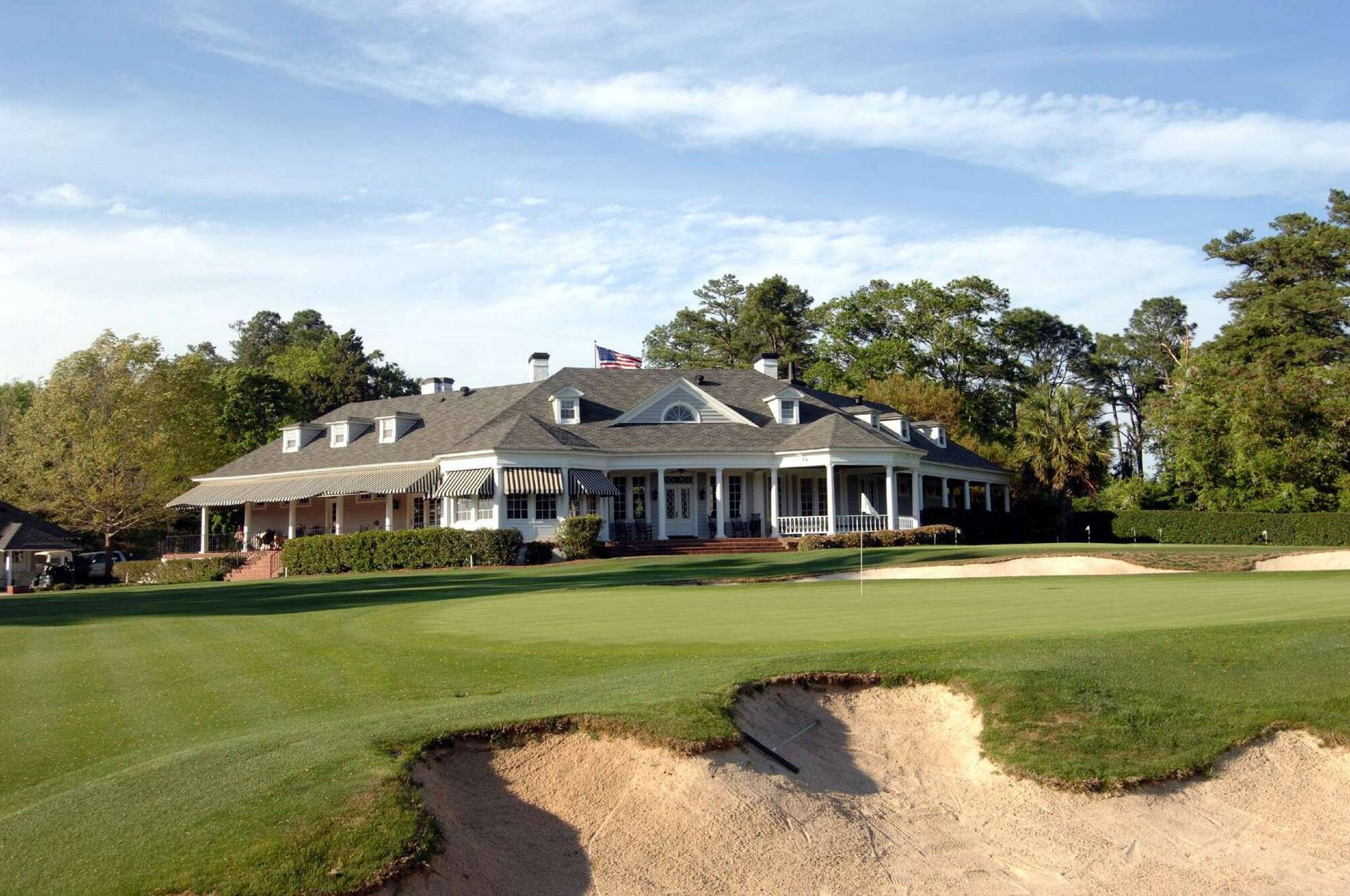
Outside of architectural afficionados, most golf people have probably not even heard of Palmetto Golf Club. But the revered little 129-year-old club in Aiken, South Carolina, is one of the most important reasons why the famous golf course and tournament 20 miles down the road and across the river in Georgia is what it is today.
Augusta National Golf Club and the Masters Tournament owe a great deal of debt to Palmetto for its very existence, along with a host of tragedies, failures and scuttled plans that conspired to create what has become one of the most revered venues and events in the sports world – not to mention the richest.
In many ways, it’s a miracle the course and tournament ever existed at all, with so many things needing to go wrong for the Masters to be so right. The foundations of the club and tournament that exist today were built upon a confluence of events including the Civil War, the Great Depression, a destructive hurricane, a lost match and a minor snub.
The myth-building of Augusta National would have you believe that the great Bobby Jones – in a quest for the site of his dream golf course – just stumbled upon the grounds of the former Fruitlands Nursery in Augusta, Georgia, and famously said, “Perfect. And to think this ground has been lying here all these years waiting for someone to come along and lay a golf course on it.”
It’s a nice story, but there’s so much more to it than that. Starting with the fact that Jones – the Atlanta born-and-raised lawyer and gentleman golfer – briefly wanted to build his course nearer his hometown. There were two problems with that idea: his celebrity and Atlanta’s accessibility.
Jones was simply too famous in his hometown to be anywhere in public peacefully, so a little space was preferable. While Augusta is only 140 miles due east of Atlanta and easily covered in a couple of hours via interstate highway now, it was a world away 90 years ago and a bridge too far to cross for the lion’s share of the would-be member pool that spent their winters in Aiken.
“Around 80 to 90% of the wealth in America wintered in Aiken,” said Tom Moore, the professional emeritus and historian at Palmetto. “Florida hadn’t really opened yet and air-conditioning and stuff like that. Bobby Jones, in his book, made reference that he wanted to build (his course) in Atlanta, but in those days driving to Atlanta wasn’t a two- or three-hour drive, it was a couple of days. Mr Roberts got some of the Aiken money knowing they weren’t going to drive to Atlanta to play golf.”
Augusta also had the benefit of better climate, being on the right side of the traditional weather patterns that tend to move along the north-easterly path of modern Interstate 85 that runs from Atlanta up toward Charlotte, North Carolina. That means Augusta experiences milder winters and fewer storms, which is why the region became a winter colony for the wealthy in the first place – along with the fact that Union Gen William Sherman bypassed Augusta and its Confederate powderworks to march from Atlanta to Savannah to resupply, sparing the city his destructive wrath.
The Fruitlands Nursery was very nearly not lying there in 1931 waiting for Jones’ dream course, either. The property had been bought in 1925 by Commodore Perry Stoltz, who had designs on building his fourth Fleetwood Hotel and a golf resort on the land. The foundations for the 15-story hotel were already poured nearby the site of the current putting green, with the famous manor house ready to be razed in 1926 before the Great Miami Hurricane wiped out the Fleetwood in Miami Beach and with it washed away a large chunk of the hotel magnate’s wealth. His Augusta resort plans were abandoned.
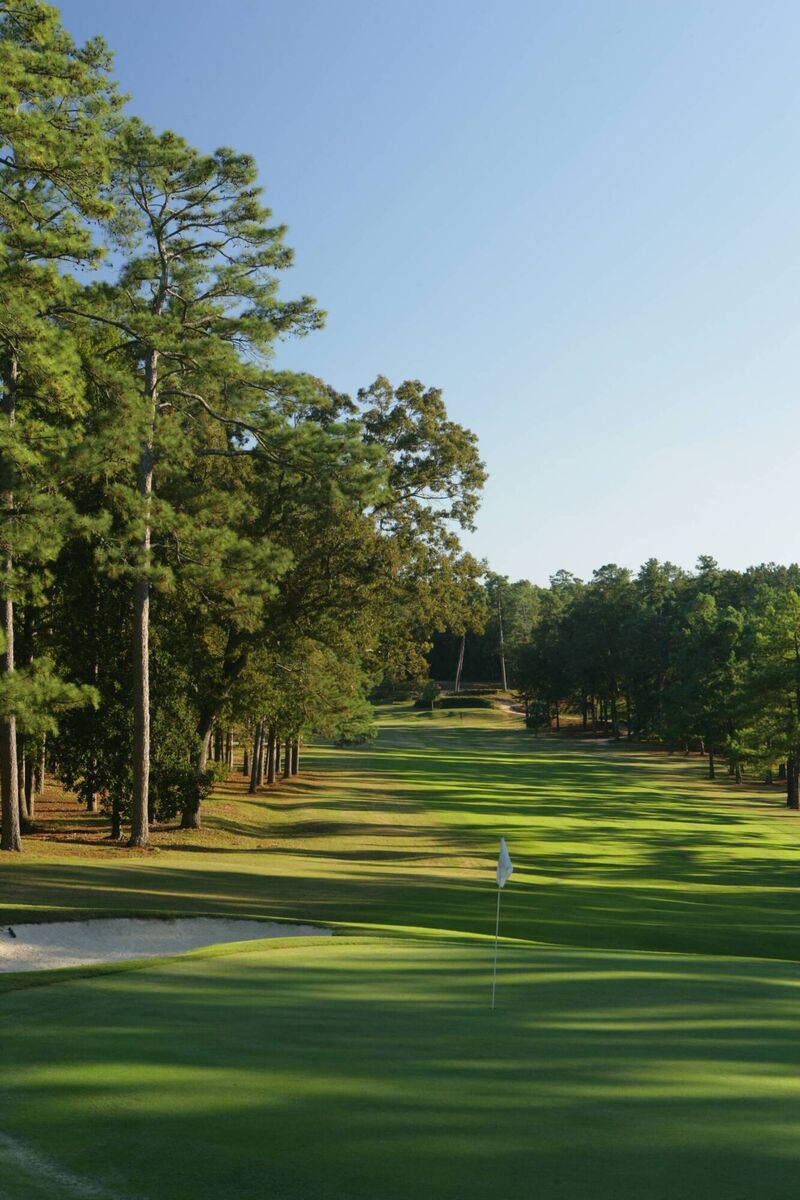
That left the 365-acre property available for Jones and Clifford Roberts to purchase in 1931 for the tidy sum of $70,000. The concept Jones and Roberts had for the place was nothing like the exclusive enclave it is today.
In 1929, when Jones was eliminated early from the US Amateur at Pebble Beach, he fell in love with the work of architect Alistair MacKenzie playing with Marion Hollins at Cypress Point and Pasatiempo. It was the development that Hollins created around the inland Pasatiempo that intrigued Jones the most, and he hoped to fairly replicate it in Augusta.
MacKenzie was contracted to collaborate on the design with Jones, but the overall plan was far grander in scale. They intended to build two golf courses, sub-divide the surrounding land for home sites and raze the crumbling antebellum manor house – the first poured concrete structure in the South – and in its place erect a large stately Southern colonial-style mansion with large men’s and women’s locker rooms at each flank. Frederick Law Olmsted, who designed Central Park and the village of Pinehurst, was hired to make plans for the community that would include bridle trails as well as squash and tennis courts.
Even more, Roberts wanted a diverse membership to be 1,800, with the collection of dues (a $350 initiation fee, plus dues of $60 a year and $15 extra for wives and children) and selling of home sites used to launch the construction process. In the three Depression years before the first Masters was played in 1934, only 76 male members were on board.
Roberts still tried for 20 years to sell home sites, even plotting a little subdivision where the Par-3 Course is and offering to sell it. They ultimately only sold two lots and houses that were built behind No. 1 green. Roberts bought back the homes and made sure they were demolished before he committed suicide in 1977.
Funds were so tight that none of the plans except for the main course materialised, and they had to settle on keeping what is now their iconic clubhouse. (They also didn’t pay MacKenzie for his work, and he died before ever seeing it completed.)
“Luckily, I guess, they ran out of money and didn’t tear the manor house down,” said David Owen, who wrote The Making of the Masters: Clifford Roberts, Augusta National, and Golf’s Most Prestigious Tournament. “They never built second course or other amenities.”
The club was so broke by 1933 – “the Augusta National is embarrassed” Roberts wrote in a letter to creditors – that it couldn’t even pay Augusta Grocery Co for its toilet paper. Yet Roberts and Jones persevered and built the course in the middle of the Depression.
Their biggest hope was to attract the first US Open or US Amateur to be played in the South, showcasing their “inland wonder” to the wider world. But the USGA wasn’t easily convinced. USGA president Herbert Jacques wrote that “whereas we are all favourably inclined to this move in the near future, we do not think it is practical to attempt in 1934.”
That rejection prompted them to create their own tournament instead to showcase the club and raise essential funds. The “Augusta National Invitational,” which later came to be known as the Masters, began in 1934. It survived bankruptcy after the second installment and continued after World War II only because the club still needed the gate receipts to stay afloat. It eventually rose in prominence to sit beside the US Open, Open Championship and PGA Championship as one of golf’s four majors.
It’s hard to fathom the Masters not existing and even harder to imagine what major championship golf today would be like if the Masters never existed. Despite its late arrival on the major scene, no major has been more innovative and influential than Augusta’s.
Many of the things we take for granted as defining features of modern golf were created by Augusta National and Roberts. It was the first 72-hole tournament to be stretched out over four consecutive days; the first to provide on-course comforts such as concessions and bathrooms for fans; the first to provide bleachers and on-site parking for guests; the first to rope off the galleries; the first to supply updated on-course scoreboards and employ the over-under scoring system; the first to offer free pairing sheets and course maps; and the first to be broadcast on national radio.
It was not the first to be shown on television, but it quickly set the standard once it was in 1957.
“All the innovations were result of Clifford Roberts’ anxieties,” said Owen of the original club chairman’s obsession for detail and fear of failure.
As for Palmetto – the second oldest 18-hole course in America – it got a decent return for its role in Augusta’s existence that included planning lunches between Jones and Mackenzie inside Palmetto’s 1902 clubhouse designed by Stanford White, who also designed the clubhouse at Shinnecock Hills.
MacKenzie redesigned Palmetto’s flat sand green complexes and the construction company that finished Augusta National was brought to Aiken to implement MacKenzie’s plans in 1932 and build his tiered and contoured grass greens. MacKenzie also reconfigured the par-3 seventh hole so it plays diagonally instead of straight into its small green built on a hillside shelf.
MacKenzie paid a high compliment to Palmetto in the May 1933 edition of the American Golfer magazine: “The alterations at Palmetto have been such a success that the Chairman of Bobby Jones’ executive committee at the Augusta National writes me saying, ‘We have only one serious complaint to make against you regarding the Augusta National. That layout you designed at Aiken is liked so well that the Aiken colony does not seem to be the least bit interested in coming over to the Augusta National.’”
Palmetto, however, did attract an elite field from 1945-53 for its pro-am tournament the week before the Masters, with a cast of winners including Ben Hogan, Byron Nelson, Herman Keiser, Henry Picard and Lawson Little.
The $10,000 winner’s share ensured top professionals came annually to Augusta, which only paid the winner $2,500 in 1946. So if you’re ever lucky enough to secure tickets and make it to Augusta for the springtime major championship, make a side trip to play Palmetto Golf Club and raise a glass to one of the places instrumental in making the Masters a tradition unlike any other.
CONNECT WITH US TODAY



Be the first to know the latest news and updates