What Tiger must do now...
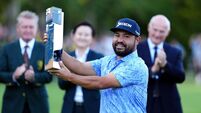
For Phil Mickelson, the winner of the 142nd Open Championship, it was a lifelong dream finally realised. His stunning success meant that with five major championship victories to his name he was now three quarters of the way towards winning the “grand slam” of majors.
In order to achieve that, it would require a victory in the US Open, (the championship he so spectacularly threw away just last month), but surely after Sunday’s performance that now has become a realistic possibility.
As for Tiger, his journey to the Open Championship was all about securing his 15th major championship and as difficult as Muirfield undoubtedly played, his sixth place finish represented yet another opportunity lost. It undoubtedly hurts him now that he is no longer the dominant intimidating player he once was.
Where once there was a steeliness in his eyes and an unshakeable purpose in his step, it has now been replaced by the more ponderous demeanour of a man prone to mental lapses and missed putts, a man unable to seize the moment.
So what can Tiger now do to try to get back on track?
1. Tiger doesn’t appear to have enough confidence in his new swing. He has to rectify this problem with his swing coach Sean Foley as soon as possible while also developing a “go to” shot that he can produce in times of need in major championships. While on the course, he also needs to be able to fix his swing himself mid round, in order to regain his initiative.
It is all very fine to say that Tiger has won already four times this year, but it’s the majors that count most and this year when Tiger has been asked to produce a key shot, he has more often than not, failed to deliver.
2. Tiger needs to develop a sounder game plan that best reflects his current ability. Last week his game plan was simply too conservative to be truly competitive at the Open Championship. By relying on approach shots often in excess on 200 yards out to make birdies, or by hitting clubs that made par fives more or less unreachable in two shots, he loaded the pressure on his short game.
To be truly competitive he will need to take more risks. Remember when he won his first ever title at Augusta by 12 shots, the longest club he hit into a par-4 all week was a seven-iron and on each of the first two days he hit a wedge into the 500-yard par-5 15th hole for his second shot and it was this type of confidence and aggression that routinely led to rounds of seven birdies or more on his card. !
3. The most dominating features of Tiger’s game over the years have been his short game skill and his mental toughness. Today, he hits more poor shots and misses more putts but I would still argue that Tiger’s short game would benefit greatly by him pursuing a more aggressive game plan.
4. Lastly, we come to Tiger’s demeanour on the course. In his prime, his body language was considerably lighter than it is today. Back then he engaged with the crowds openly.
For a man who so openly talks about enjoying the challenge of competition, his expression often smacks of pure frustration and at times even contempt. Can Tiger ever play with the type of genuine smile his great foe Mickelson seems to have mastered? Unlikely, but much like mastering his swing; mastering a better outlook might just produce better results.
Throughout his career, Tiger has largely pursued a dedicated and lonely life in pursuit of golfing perfection. Right now is not the time for him to doubt his ability or to retreat back into an uncharacteristically defensive strategy.
Tiger’s game will always be about competing and that will always mean him making mistakes, but much like his great adversary Mickelson, a more aggressive game plan backed by greater trust in the many thousands of shots he has mastered on the range may just mean a return to the winning rostrum at major championships.