The 1970s were a golden era for hurling in Cork City. Why has it changed?
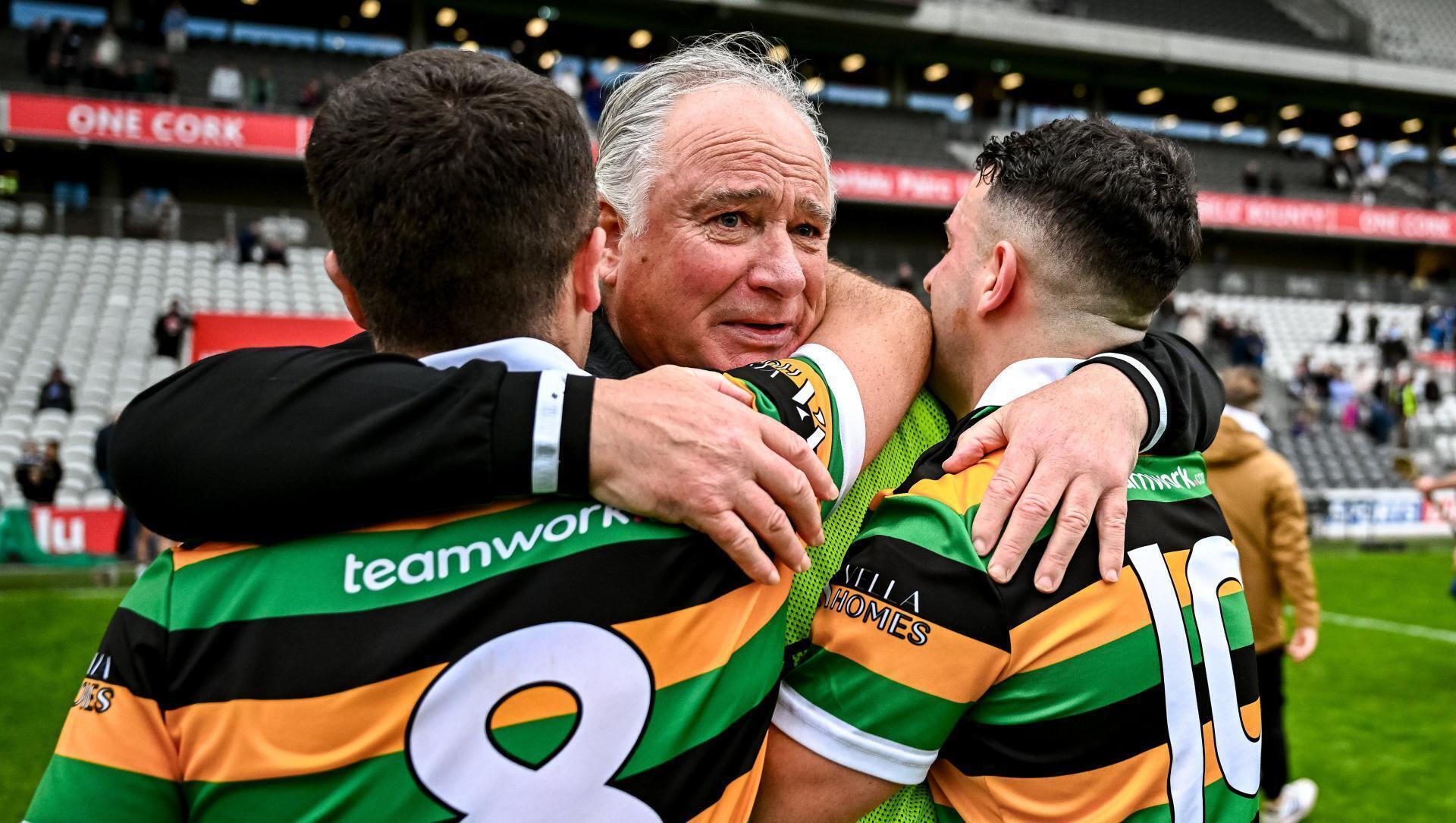
PAST AND PRESENT: Glen Rovers manager Tomás Mulcahy celebrates with his players. Pic: Tyler Miller/Sportsfile
Last month I delivered a paper at the UCC History Conference examining the changing fortunes of Cork City GAA since the 1970s.
That decade was a golden era for Cork and particularly for Blackrock, Glen Rovers and St Finbarr's. Cork City has since evolved in ways that were unimaginable when Cork completed three All-Ireland hurling titles in a row in 1978.
This week Glen Rovers and St Finbarrs meet in a county senior hurling final for the first time since 1988. Since 1934, the “big three” city clubs have met in 26 finals, yet this is only the third such final since 1988. What changed?
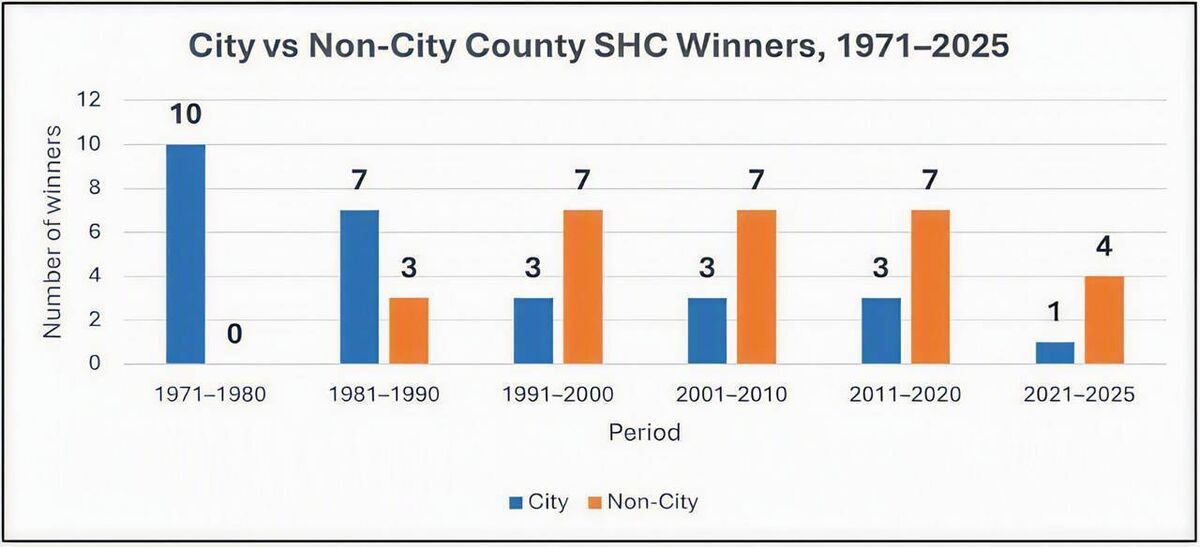
In the 1970s, Blackrock, Glen Rovers and St Finbarr's won all 10 county senior hurling championships, all 10 Munster club championships and seven All-Ireland club titles. Along with Na Piarsaigh (four titles), they also won nine of 10 Division 1 national Féile na Gael titles. City hurling was not merely successful; it was dominant.
Two questions arise: what created that dominance, and why has it faded since?
Read More
Let's go back to the beginning of the Cork senior hurling championship in 1888 and divide the winners into city and non-city clubs. Up to 1980, the title never left the city more than three times in any decade; in three decades it did not leave at all.
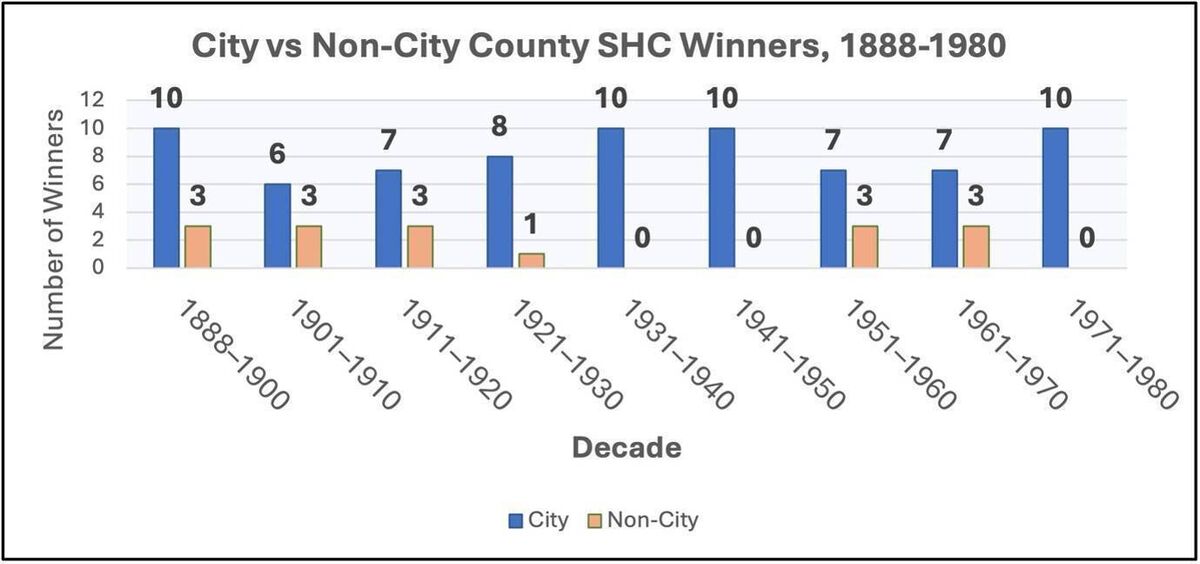
City clubs had larger populations and more local employment, making it easier to replace players lost to emigration or work. They also gained hurlers who moved to Cork for employment and transferred to city clubs because travel to their home clubs was difficult.
Rivalry mattered too. Strong city clubs pushed each other on: success by one immediately challenged the others.
The early city powers were Blackrock, Redmonds and St Finbarr's.
When Redmonds faded in the 1920s, Glen Rovers rose in their place, their rise charged the interest in city hurling by adding a northside–southside edge.
From 1929 to 1950 every championship was won by Blackrock, Glen Rovers or St Finbarrs.
The ‘big three’ inherited a demanding tradition. Blackrock and St Finbarr's came from an era when county champions represented Cork in Munster and All-Ireland competition; Glen Rovers carried the same sense of responsibility.
Non-city clubs such as Dungourney, Midleton, Carrigtwohill, Éire Óg, Sarsfields and Mallow could produce strong teams, but sustaining success from one generation to the next was difficult.
Things began to change in the 1950s and 1960s through Sarsfields (1951 and 1957), Avondhu (1952 and 1966) and UCC (1963 and 1970), before the city’s extraordinary run in the 1970s.
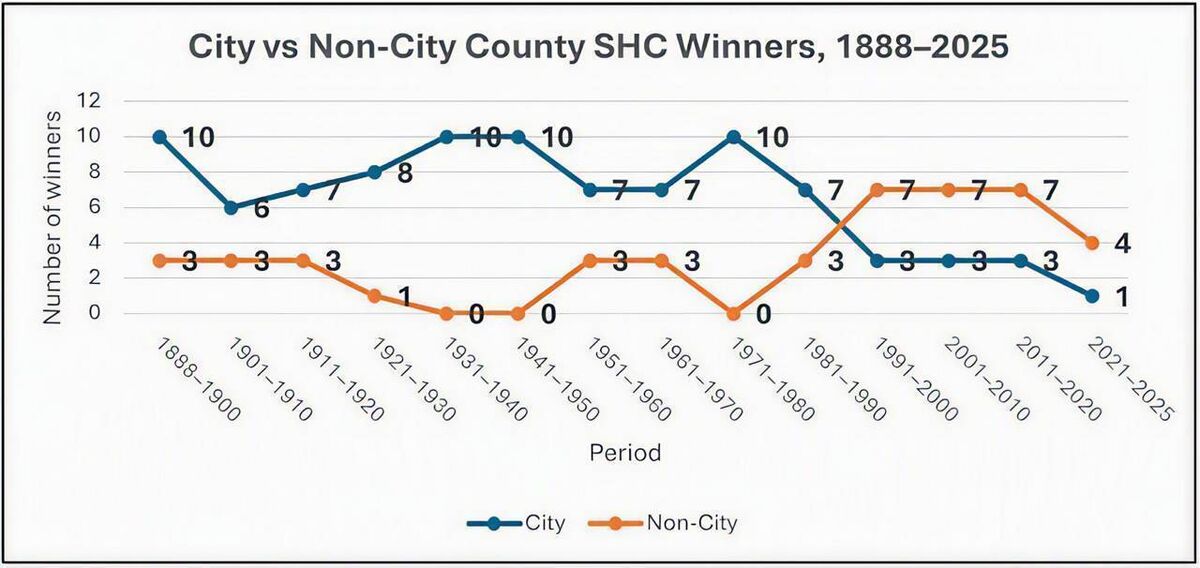
If the 1970s marked the peak, the decline was gradual. Over time the pendulum moved steadily away from Cork city. The county championship winners graph since the 1970s tells the tale.
The composition of Cork senior teams reaching All-Ireland finals since 1926 shows the same pattern.
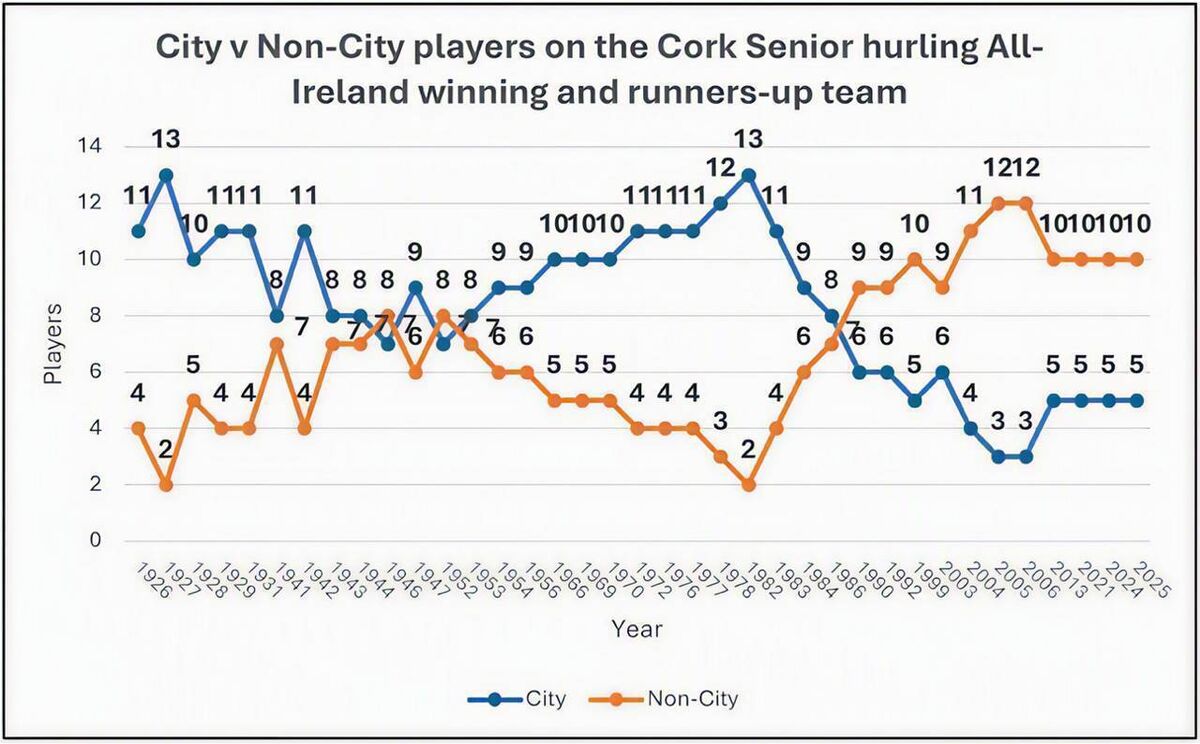
City clubs dominated the selection up to the 1980s, apart from a more even balance in the 1940s. From the mid-1980s, city representation fell away.
Cork minor teams tell the same story. Cork have contested 32 All-Ireland hurling finals since the All-Ireland minor hurling championship began in 1928. The city contribution comes mostly from Blackrock, Glen Rovers, Na Piarsaigh and St Finbarrs. These clubs account for roughly one-third of all Cork starters in All-Ireland minor finals.
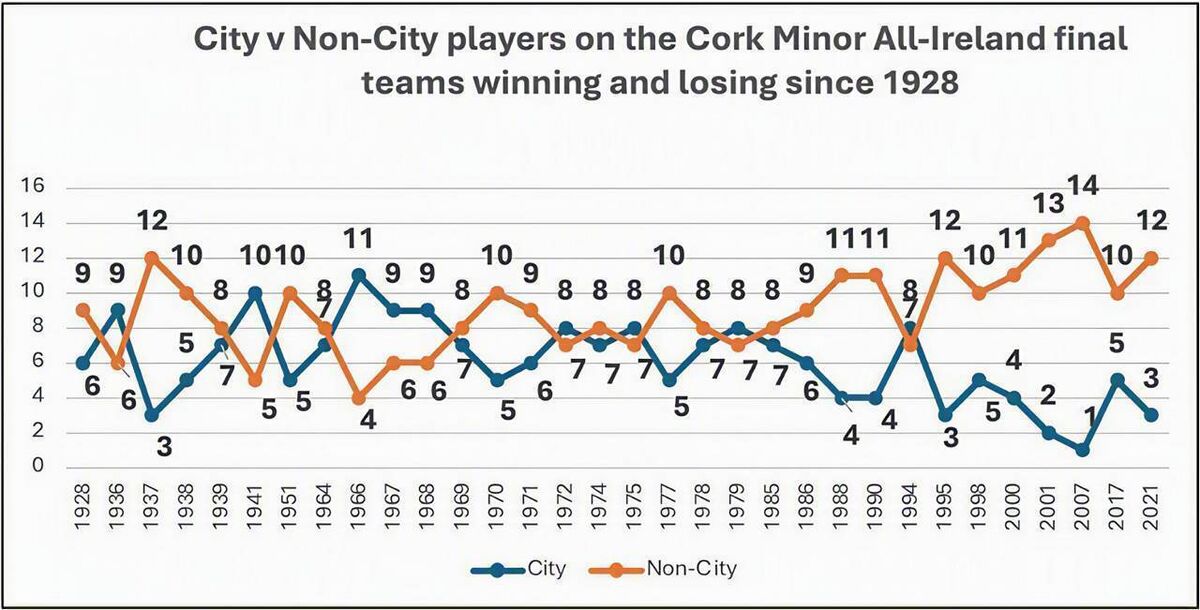
Outside the city, representation was spread widely. Until the late 1980s the balance remained broadly stable; after 1990 the figures show structural change rather than an occasional outlier.
Since 1926 the county junior championship has been decided by the winners of the divisional champions. Despite having the largest population and smallest area, the City Division has won only twelve titles in a century. Four of the 12 were won by second teams of Blackrock, Glen Rovers and St Finbarrs.
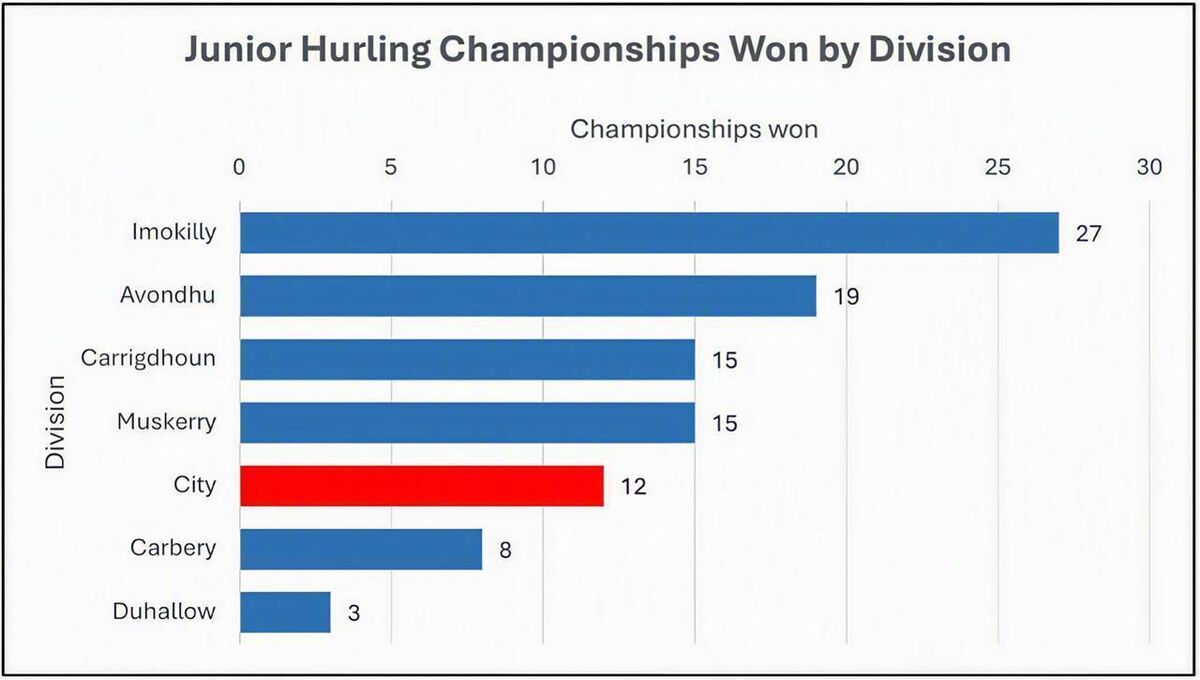
That record does not do justice to city’s clubs. Until the 1990s, clubs could apply to move to intermediate or senior level; St Vincent’s, Passage, Douglas and Bishopstown all did so and have remained in higher grades for years.
To understand how city clubs produced players year after year, we must look at underage games.
Founded in 1939, Cork City Bord na nÓg provided regular club competition for boys. Its heyday ran from the 1950s to the 1980s. Its competitions received enormous coverage in the Evening Echo. Boys often sat beside opponents in school during the week and played against them on Saturdays. The rivalry was familiar and personal.
By the 1970s, soccer, rugby and other activities competed more strongly for children’s and parents’ time. Families also moved from older neighbourhoods to new suburbs and beyond, strengthening new communities while some traditional club areas aged or lost population.
Redmonds disappeared as its South Parish population base declined.
Second-level schools changed too. Timetables, regulations and priorities made extracurricular activity harder to sustain, weakening a system that, along with Bord na nÓg, had produced many talented dual players.
Only the North Mon and Christian Brothers College represent the city in this year’s Harty Cup, compared with four schools in the 1970s. The one remaining school influence is the primary schools Sciath na Scol model. This remains hugely important as a gateway to gaelic games across the county.
A County Board review of under-age activities as part of the 2007 – 2012 Plan, sought better grading and more evenly contested games. In 2010 City Bord na nÓg was replaced by all-county Coiste na nÓg. The logic was understandable, but the city’s distinctive underage rhythm, although it had been creaking and fading for years, was lost.
Pressures also grew inside city clubs. Before the 1960s no city club had proper facilities. In the 1960s and 1970s they acquired fields, dressing rooms and pavilions—a major achievement that also transformed club administration.
Officers now had to manage property, finance, maintenance and fundraising as well as teams. By the 1990s, the generation that built the facilities was handing over just as this workload intensified.
Many volunteers no longer lived beside their clubs. Instead of living in Blackpool, Ballinlough or Greenmount, they might be living in Ballincollig, Glanmire, Carrigaline or beyond. The old daily presence around the grounds became harder to sustain.
City boundary extensions could not reverse the deeper trend: population was moving away from traditional club areas and the city’s share of potential players was weakening.
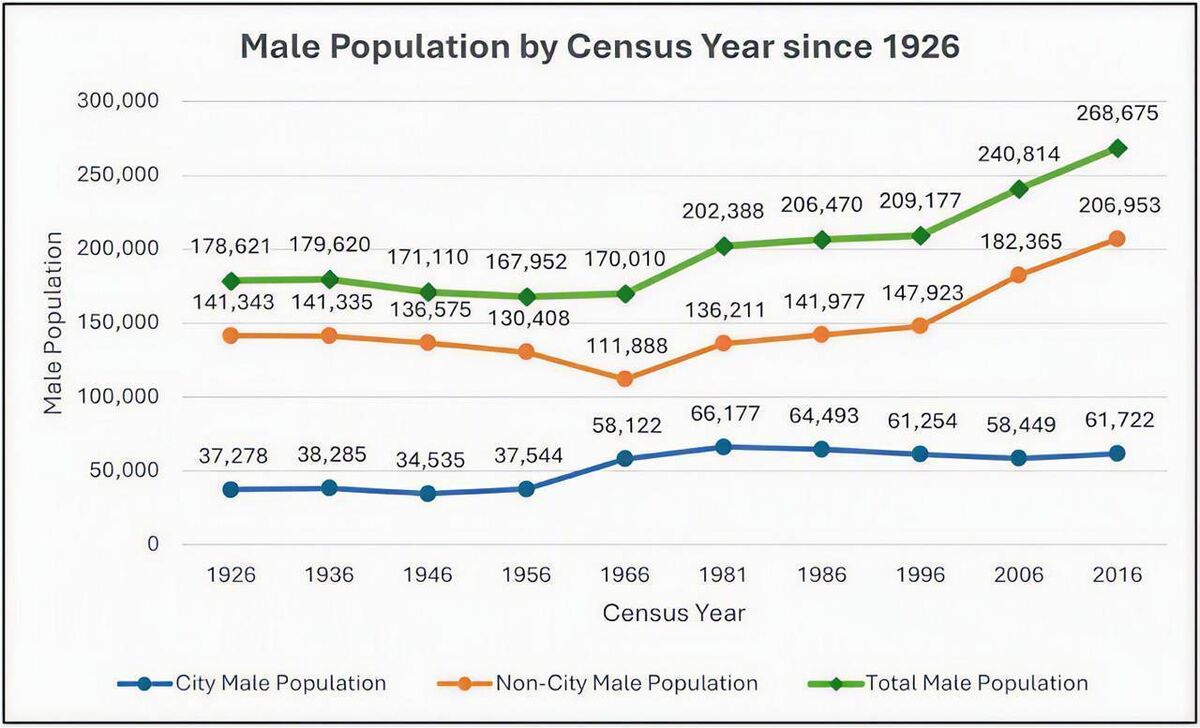
Meanwhile, suburban and commuter-belt clubs gained families with deep GAA experience. These families strengthened their new clubs as players, coaches and administrators.
Sports Capital Grants helped clubs build modern facilities, particularly outside of the city, where grounds often became community focal points and attracted wider support.
The 1970s were the confluence of unintended consequences built over decades: population, employment, schools, local rivalry, strong clubs, regular underage games and a culture in which one club’s success challenged the others.
The subsequent decline was not simply a failure of city clubs. Families moved, schools changed, other sports strengthened and neighbourhood structures gave way to county-wide systems.
At the same time, satellite towns and suburbs gained population, volunteers, schools, facilities and underage systems. In other words the county caught up and, in places, moved ahead.
Cork city hurling still has a bright future however, its old advantages cannot be assumed. Otherwise, there is a danger that Cork city GAA clubs could eventually lose their position as the dominant sports organisation with in the city.
City clubs must remain competitive and build strong relationships with the new communities around them.
The point, I believe, is not to look back with nostalgia or blame. It is to understand what made the old system work and ask what can be rebuilt in today’s Cork city.
Success requires clubs to be rooted in their communities: that they be well organised, ambitious and close enough to young people to make football and hurling matter in their lives.


A collection of the latest sports news, reports and analysis from Cork.
CONNECT WITH US TODAY



Be the first to know the latest news and updates