There was never any plan for equality, laments Women’s GPA founder Lane

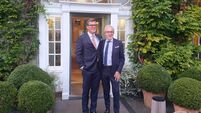
Aoife Lane during her time as CEO of WGPA. Photo by David Fitzgerald/Sportsfile
Women’s GPA founder, Aoife Lane, has said the collapsed integration process is an “important reality check” for eventually delivering a merged association that guarantees equality of male and female members.
While an ardent supporter of integration, Lane had been concerned by the “siloed” make-up of the steering group formed in September 2022, the lack of consistent engagement with the various units in the four years since, over-ambitious timelines, and the roadshow admission earlier this year that the iteration of integration stalled this week would not deliver equality for one half of the membership.
With the steering group that Mary McAleese resigned from on Tuesday having comprised the President and Ard Stiúrthóir of the GAA, LGFA, and Camogie Association, Lane believes “the ship has now sailed” for those presently at the helm to deliver an association that is equal for all and how a different, more independent leadership group with experience of mergers in global sport is required to take up the baton.
Having driven the transformation of the then Olympic Council of Ireland, she mentioned former Olympic Federation of Ireland President Sarah Keane as one possible candidate to oversee the integration restart.
While GAA Ard Stiúrthóir Tom Ryan rejected on Wednesday morning the accusation of misogyny tabled by McAleese the evening before, Lane urged a “listening piece” by whomever takes over the process from here so to establish what exactly are the resistant concerns from the men’s side of the Gaelic games house.
Another crucial first move in restarting integration, she added, is a women in Gaelic games plan.
Read More
“I asked about equality at the integration roadshow in Leitrim in March. I was told by GAA and LGFA officials at the top table that equality wasn't possible, that equality and integration aren't the same thing, and that equality isn't helping integration. Those comments just turned me upside down,” said Lane, who was a founding member and first chairperson of the WGPA.
“That reality would break you a little bit. It broke me at the time, and I was just flabbergasted that that’s the response I got, specifically about expenses, facilities and so on, that we don't think we can do that.
“All of those brilliant women who have been in front of the media since the integration news emerged on Tuesday - the female players, commentators, politicians - their intent on this was that integration is going to be better for girls and women.
“But we were told in March ‘we can't do that’, so there's a massive gap between expectation and reality. And in one way, I'm so glad we all know that now because integration, as it was going, could have been a massive disappointment.
“I'm a little relieved because I could see a situation of people then going, ‘we should never have done this’. I could see those words being uttered.”
Lane has a crystal-clear view on what constitutes an equal organisation. The disappointment is that the steering group, in their time together, never prioritised formulating such a strategy for either discussion or implementation.
“Equality is that every member of the organisation has an equal opportunity to participate in Gaelic games. They have an equal opportunity to be supported and developed within Gaelic games; to lead, to coach, to be a referee, to be an administrator, and within that, they are respected, acknowledged, and valued.
“Yes, that will then come back to investment and funding and visibility and representation. But at the minute, there's a lot of evidence to show that women aren't well represented, that they're not treated fairly, we don't have the same visibility, and we have much lower representation in coaching, officiating, administration, and leadership. Equality is a movement towards that not being the case.
“We know that girls have totally different experiences in Gaelic games. Equality for me is a plan to eradicate that gap.
“I'm not sure that was ever really addressed. And like, that's hard. It's a change of culture and mindset. There's so many layers to that. But that was never unpacked. There was this big hope that integration is going to be the thing that delivers it, but you’re like, there's no plan for it.
“The instinct is so deeply entrenched towards the male approach. You have to start with everybody asking about every decision, what does this mean for the girls? And if you can get everybody to do that within a year, then you might start to see [what integration looks like], but that's not everybody's instinct.
“So that is why this week’s developments are an important reality check and maybe a blessing in disguise.
“You can’t do integration first, and equality after. Reviews of other sports mergers show that doesn’t happen, even though there were assurances given. Women end up being marginalised and feeling let down.”
In terms of next steps, Lane is stridently opposed to the federation model mooted in recent days. Her argument is that continuing to segregate by gender will never lead to equality.
She cites the success of Jim Gavin’s Football Review Committee as an example of reformative work to go after and replicate.
“Look who was on the committee, look who led it, look at the amount of comms, look at the amount of questions, the questionnaires, and tell me that we can't do something similar. I know that wasn’t as complex, but it was still a big job and compare it to how we've managed integration up to now.”
She also believes public pressure will ensure the merger is not kicked down the road and out of sight, as might be the hope among certain sections of GAA top-brass.
“The public pressure we have now could be the prompt that gets above roles, positions, and egos. That did sit with me on Tuesday night. I was like, is this the public pressure we need that everyone will actually say, ‘No, no, no, we're going to do this right and we’re going to get it flipping done’, and it’s not a few people in a room making decisions.
“We've had instances of that in Ireland - marriage equality, Repeal the 8th - where we've had the public go, ‘No, we're not having this’.
“Gaelic games is one of the biggest parts of our lives. More men need to take that on. I'd love every woman to be shouting and roaring today, but I'd love a few more men as well.
“I don't know if we need to step back and remember that's it’s about the membership, it’s about the boys and girls, men and women. It's not about a president, vice-president, or chairperson role. I do think there was too much vested interest in the leadership of this.”
CONNECT WITH US TODAY



Be the first to know the latest news and updates