When the Bomber asked, how could New York millionaire Maurice Regan refuse his native Kerry?
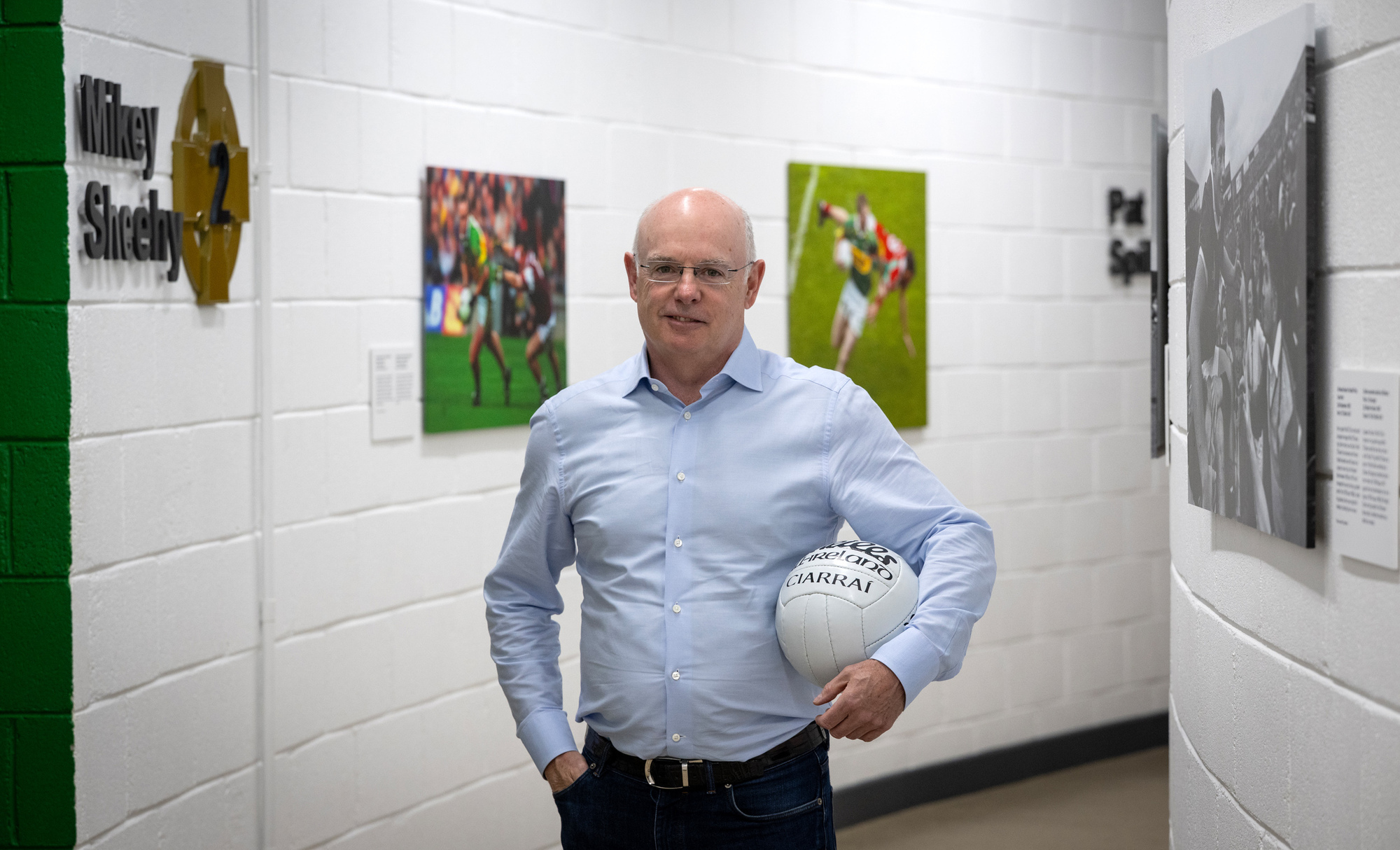
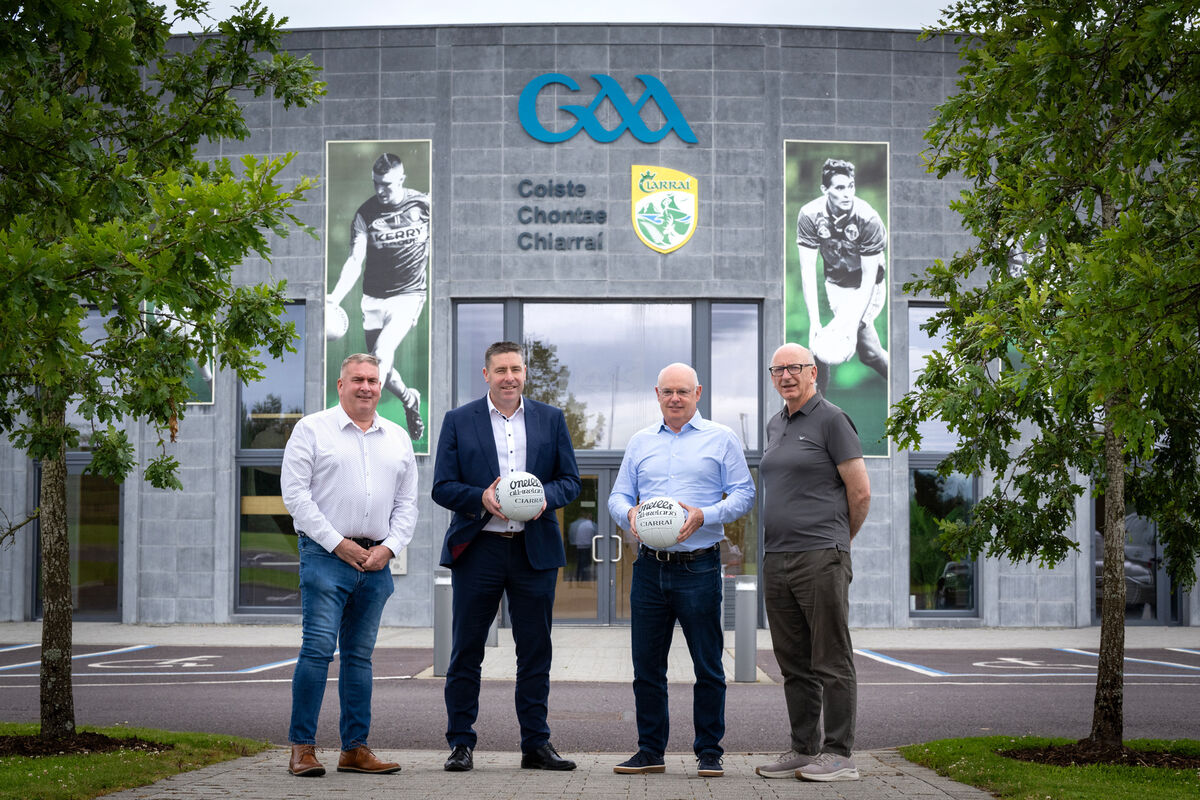
New York-based Kerryman Maurice Regan, founder of leading construction firm JT Magen and a long-time supporter of Kerry GAA, visits the Kerry GAA Centre of Excellence in Currans, Co. Kerry
SITTING across the board room table in his Manhattan corporate HQ is a bearded, hulking man looking for big money off Maurice Regan, the hard-nosed New York business man and developer.
Regan (60), raised in north Kerry, has faced down union muscle and construction leaders around the five boroughs but knows, in this moment, he’s a beaten docket.
“Understand this,” he explained this week in Killarney, “you have the Superman of my world growing up, sitting across the table from me. Am I seriously going to say ‘No’ to Eoin ‘Bomber' Liston?”
Alongside the Bomber were Kerry GAA chairman Patrick O’Sullivan, Mikey Sheehy, Darragh Ó Sé and John O’Dwyer, son of the Waterville maestro. Their names were gold in Regan’s eyes. Just as well. They had a sobering tale of toil and trouble to tell about the finances in Kerry GAA and plans for the Centre of Excellence at Currans.
After Regan had been toured this week by Kerry GAA around the facility his fundraising helped get off the ground, he reflected on a tougher time a decade ago – and not just for Kerry GAA. Though they still won an All-Ireland in 2014, financially Kerry GAA was in a parlous place.
Whatever else Kerry chairman O’Sullivan had in that moment, he had friends in New York. And it was time to use them. Kerry were ahead of the curve – “they marked out the road,” Regan says – in glad-handing their way around the Plaza and the Waldorf Astoria in New York city. They were a different galaxy to a green field site in Currans, near Farranfore, but Regan was a key bridge at the time between both.
Read More
“They came to talk about the Centre of Excellence,” the CEO of MT Magen, with a 2026 revenue projection of around $3 billion, recalls. “The project was under a bit of pressure. The Celtic Tiger was gone and Ireland hadn’t bounced back yet. They sold me their hearts and their souls, really. I’ll give them credit, though, they had the nous and wherewithal before most other counties to utilise all the connections they had, and they hit up Kerry people here big time.
“A few thousand miles away, when you see Kerry footballers doing their stuff at Croke Park, you assume everything is under control and it’s a well-oiled machine, but that often that isn’t the case, and they were struggling to do Currans.
“Maybe on the GAA scene at home, events are raising twenty or thirty grand on a good night, but we were all thinking much bigger than that because we had to. Bomber is sitting across the table and as a kid you are transported back to what he was doing in All-Ireland finals and the sacrifices those guys made to give us special times that we brought into the schoolyards and the back gardens and the fields at home as children,” Regan explains.
“When we were growing up, it was one channel, RTÉ, the Angelus at 6pm, the news, then it was over at 11 o’clock. So what did we have only the pride in our native team and their football. Sitting in an office in Manhattan, that might seem like the furthest thing away you could imagine, but it was easy for a lot of us to draw a very straight line between the two. You don’t even realise how woven into your bloodstream the GAA actually is.”
At their New York HQ Regan has every shade of GAA jersey working for the company. There were enough from Kerry to form a fund-raising committee. They stacked them high in the Plaza Hotel on Central Park for the privilege of a steak and a small stake in Kerry’s GAA future and the yield helped Currans feel less like a yoke. They repeated the trick again the following year at the Waldorf Astoria. Funny yarns about the Kerry chairman bringing it home in suitcases are barely hyperbole.
“The love of Kerry football, it’s in your blood,” says the Listowel man. You’re going to lend an ear, and the cost comes after, doesn’t it? Savage, native shores and all that.
“You also know the fundamental import of grassroots for the GAA and the youth of Ireland, and what’s it’s done over the years, via volunteers, parents. What really supercedes all that is the sacrifice of the players for a non-professional, non-paying sport. What someone explains this facility in the heart of Kerry and they say they are struggling with the funding of it, if you can do it you got the extra yard.
"They’ve given me so much to follow and to enjoy. Getting the train to Dublin as a young fella, the whole All Ireland final day experience. You can’t take those memories away, can you?”
Regan is still a key supporter of Kerry GAA from afar, like London-based developer Gerry Rochford from Ballyduff, augmenting the financial titan that is Kerry Group. Inter-county costs – never mind success – is a runaway train with no steering or brakes these days. High level talks at capping annual spends are gathering traction. In the meantime, Regan and his four kids will walk up Lewis Road on Saturday desperate for Kerry’s 2026 journey not to be derailed by Armagh. But he realises too that New York can’t continue to be lower hanging fruit for cash-strapped counties.
“Kerry set out the road, but every county has jumped on board since. That’s why we have to be careful about how we do things nowadays, it’s a bit of a secret and we don’t want other counties copying us. You get so many requests for stuff, charities for ill people, so when you are picking a sporting one, you have to selective, and it has to be close to your heart.
“We probably support around ten clubs in New York itself, and the new centre for underage here. Now we don't do the big corporate events. You get a table from an Italian construction company who might not even understand what the Irish lads are saying on the night, never mind what they are supporting. So we target smaller, more intimate fund-raising now.”
Regan moved to the US with the Irish immigration wave of the mid eighties, hopping between Bainbridge Avenue in the Bronx, onto Bedford Park before moving to Sunnyside in Queens. Sidetrax, the bar restaurant owned by the Breslins from Cavan, was his home from home. The Bliss Tavern, Sally O’Brien’s, Blooms. Rites of passage but the pipeline to home was patchy and sporadic.
“It’s not like it is today, the GAA was much harder to watch and participate in as a fan. There was no cell phones, Kerry were in a fallow period and would go til 1997 before they’d win another All-Ireland. You’d ring home once a week at a certain time, and you’d get home once a year. Everybody left Ireland, they were harder times than people remember.
"But it’s impossible to get that football bug out of your blood, I’d call my dad and I’d get the match run down on what went wrong. Depending on the result, you might meander up to the local where the VHS tape of the game had arrived from home." Sean Walsh was my coach in the CBS in Tralee, Bomber was one of my idols.”
And so that boardroom meeting with his north Kerry neighbour and co struck at the very heart of what a nascent emigrant success story was about. Making it good. Paying it back. He won’t say for detail what the go-arounds raised for Kerry but the creases on O’Sullivan’s forehead faded like the overhanging debts.
“It’s money well spent. We do a certain amount of heavy lifting raising the money, but think of all those who work and help and train at the Kerry Centre of Excellence and do it all for free. It’s beyond words.”
Kerry GAA has powered its way forward to become one of the association’s most recognisable global brands. “Everyone jokes about the Kerry jersey popping up everywhere, at a Grand Prix, at a Lions test in Australia or a World Cup game in Guadalajara. My kids all wear the Kerry jersey when we are on holidays. It’s like a tattoo. It’s not just my kids. It’s my kids’ friends. We have to bring some back for them every time.”
Handing on the jersey.

CONNECT WITH US TODAY



Be the first to know the latest news and updates