The Waterford hurler teaching Gaelic football to Zambians
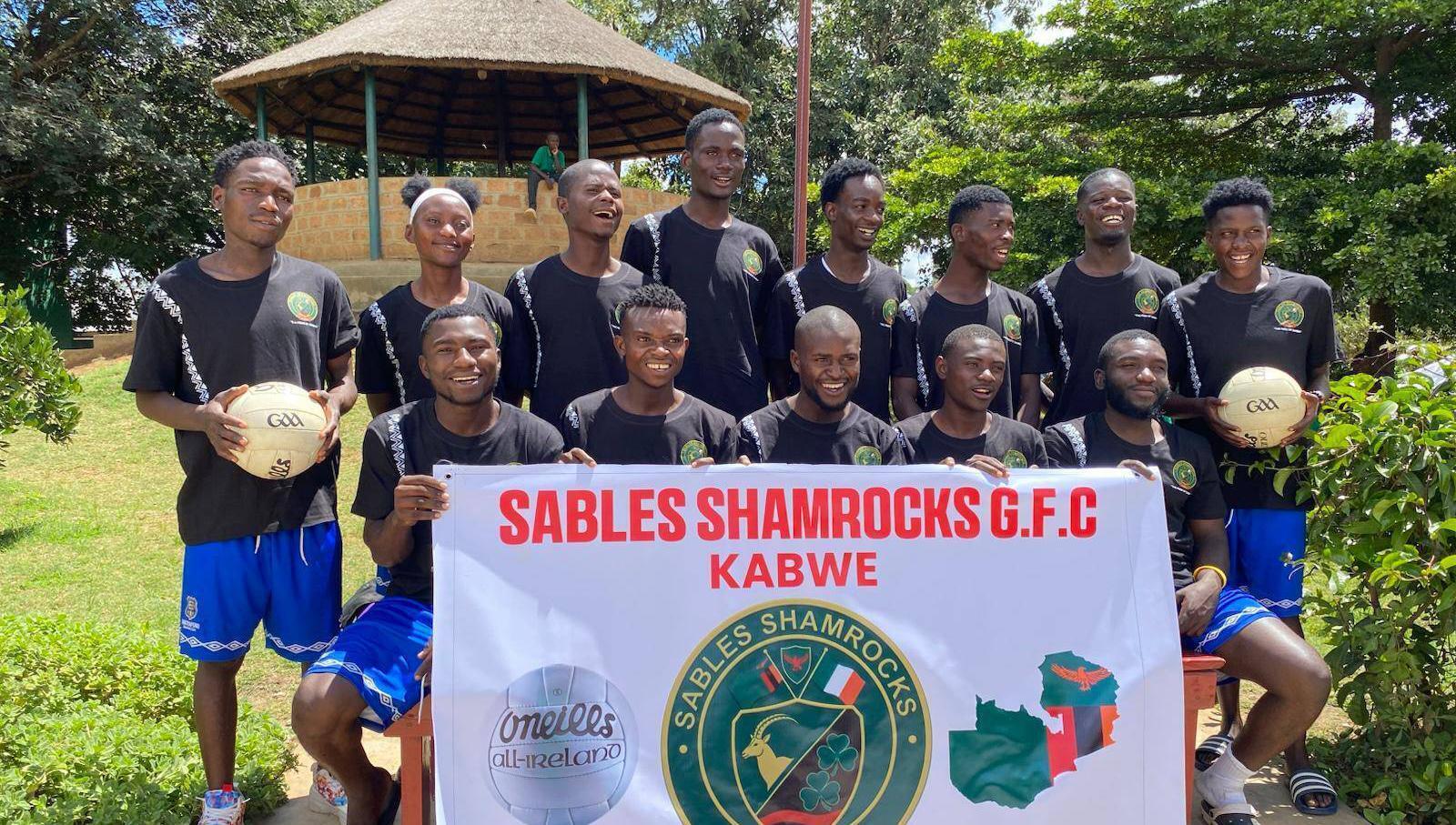
The Sables Shamrocks Gaelic football team from Zambia.
Padraig Ó Fainín laughs when he thinks back to the beginning of it all.
“I was a teacher, principal in St Joseph's in Fairview in about 2003, got a letter from the Christian Brothers asking ‘would anyone like to come to Zambia and see our schools out here?’ So I said, yeah, sounds like a junket to me. I can do junkets,” he grins.
That’s where it all started. What he found there changed everything.
“I spent a fortnight there, I was blown away by what I saw, the poverty and the deprivation and all the rest of it.”
That visit led the Waterford man – Mount Sion is his club – and his wife, Emer, to Kabwe, to an Irish woman named Mary Chidgey (née O’Brien), a Corkman named Eoin Hegarty and eventually to Sables, a centre for orphaned children which has grown from “about 12 street kids” into a school with hundreds of pupils.
The children come from circumstances that are almost impossible to comprehend from an Irish perspective.
“These kids have nothing, they're living in poverty you wouldn't believe, living in mud huts, which would be the size of your bathroom. One room, sleeping on mud floors, very little in the way of furniture, obviously no running water.”
But Sables was never only about survival. It was about dignity, energy and joy too.
“So we feed these kids, we clothe them, we educate them and then we said, ‘feck it, they might as well have some sort of craic in their life’ so we put a lot of focus on extra-curricular activities.”
That’s where Gaelic football entered the equation – and the World Games, hosted on Ó Fainín’s own stomping ground in Waterford from July 13-17th next, will help bring it altogether.
Soccer, volleyball, netball and judo – they have, amazingly, produced some internationals in the latter discipline - all became part of the rhythm of the days in Makululu, the second-largest ‘compound’ in sub-Saharan Africa after Soweto.
Then, last autumn in Waterford, Ó Fainín heard about the World Games and an idea took hold.
“I said, Jesus, I wonder would the GAA consider letting a gang of our lot in?” After some toing and froing, the answer came just before Christmas.
“I got an email saying you're in if you want to be. So, geez, that's when the panic started, because then I was in Ireland. I said, I'd better get my ass back to Zambia and get a team together.”
Thus, Sables Shamrocks was born. The response from the players was instant. For many, this was not just prep for a tournament but a sense of focus in lives shaped by mass unemployment, extreme poverty and uncertainty.
“They are madly enthusiastic, they want to train seven days a week,” Ó Fainín says. But it’s not easy. One of his players recently contracted malaria; at times, food is scarce.
“My centre-forward was looking very listless at training and I was saying to him, what's the story? What's wrong with you? Are you sick or whatever? No, he hadn't eaten. ‘There's no food at home because I'm going training,’ he says, ‘because if I go training, I can't go looking for a job, I can't go looking for piecework (what they call odd jobs, digging holes, knocking down trees etc). I can't buy food’.
“So there's him, his grandmother and four siblings living together. And because I was taking him to train night and day and try and teach him the game, he wasn't eating. The family wasn't eating.”
Pádraig stepped in, delivering some sacks of food for the family but that is the reality behind this World Games story.
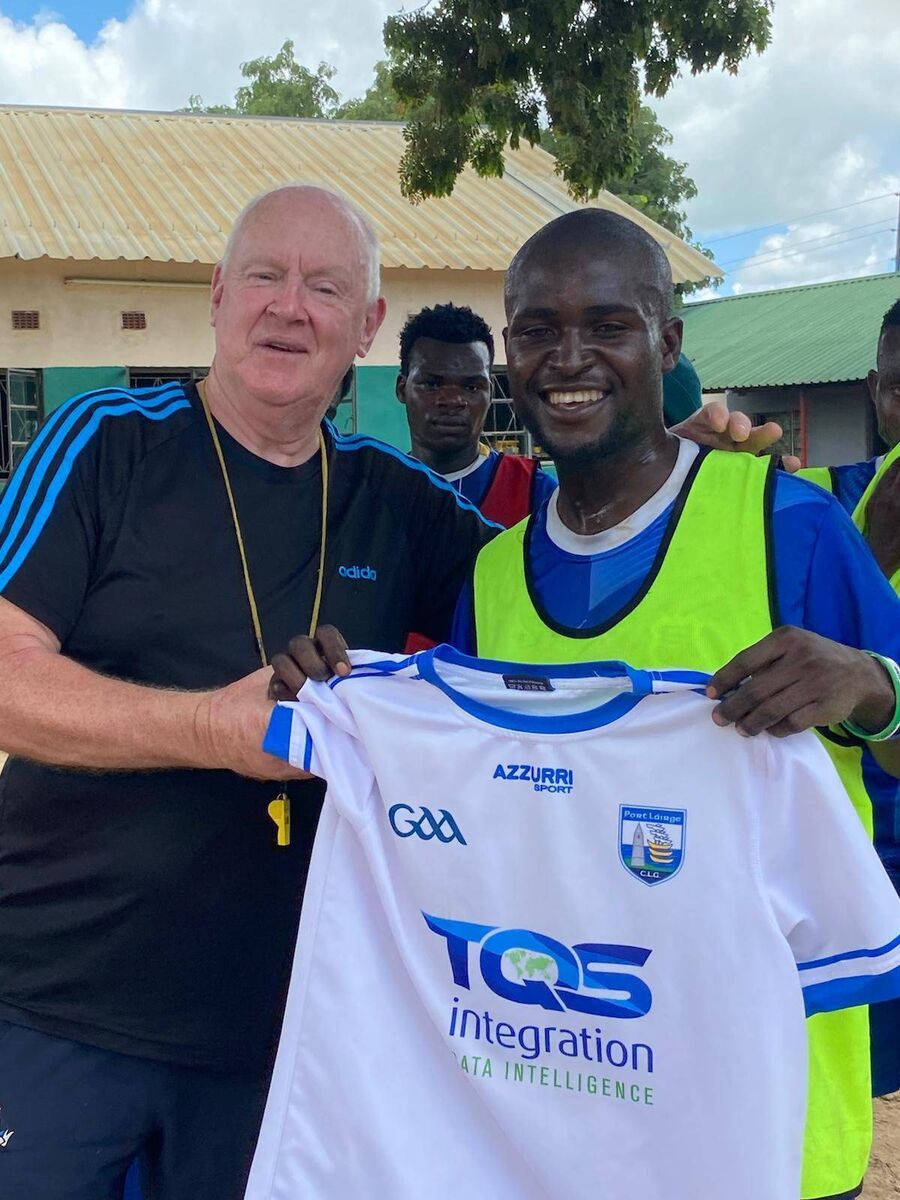
For Ó Fainín, the tournament offers something extraordinary.
“It's really taken them completely out of one world and into another world. The only downside is we have to send them back to that world again but they'll have memories and they'll have a ball when they're here.”
Some of the players have never left Kabwe, not even to visit the capital, Lusaka, 150km away. Most will see the ocean for the first time; some are already nervous about stepping on a plane.
“They're looking up at the sky and they're seeing these things going by and they're saying, ‘Jesus, I'm going to be on one of these things’.”
Their itinerary in Ireland is packed. They have been invited to visit Áras an Uachtaráin, attend events in Dublin, meet people, play, dance, drum, perform and represent Zambia. They will arrive in Waterford carrying more than football boots and jerseys. They will bring personality, music and colour.
“They have their dance routines worked out and they have their warm-ups.” Ó Fainín says.
“They're bringing their drums with them and they'll be very colourful. There'll be some laugh, there'll be some craic, on and off the pitch.”
For Ó Fainín, who was raised in the GAA (his father, Pat Fanning, was President from 1970-73), there is a beautiful absurdity to it all.
“A Waterford hurler teaching Gaelic football to Zambians in the middle of Africa. Jesus, what could possibly go wrong, you know?”
Plenty, perhaps. But plenty has already gone right. Along with the 320 kids in primary education, 90 are attending secondary school while a dozen, including three of the 16-strong travelling party, have advanced to third level.
“One is a law student in second year. This guy was living on the streets in a sewer pipe, right? And he is the most articulate person you would meet, he’s something else.”
The fundraising response has been enormous - “overwhelming and humbling,” Padraig says.
People who heard the story wanted to help. Air fares were covered. Food, transport and equipment were sorted. A young woman who had visited Sables before sponsored football boots. Previously, some trained in bare feet – one player, Ó Fainín says, is already deadly accurate with 45s, without boots.
He knows the odds. They’re “ready for action”, he says, but winning the competition seems a long shot. Winning, however, is well down the list of priorities.
“For the last five months, it's given them something to do, a focus in life for kids who have nothing. It's just so uplifting for them and they're so enthusiastic over it. It's just class.”


CONNECT WITH US TODAY



Be the first to know the latest news and updates