Talking points: How the Ballgunner-Na Piarsaigh dynamic flipped
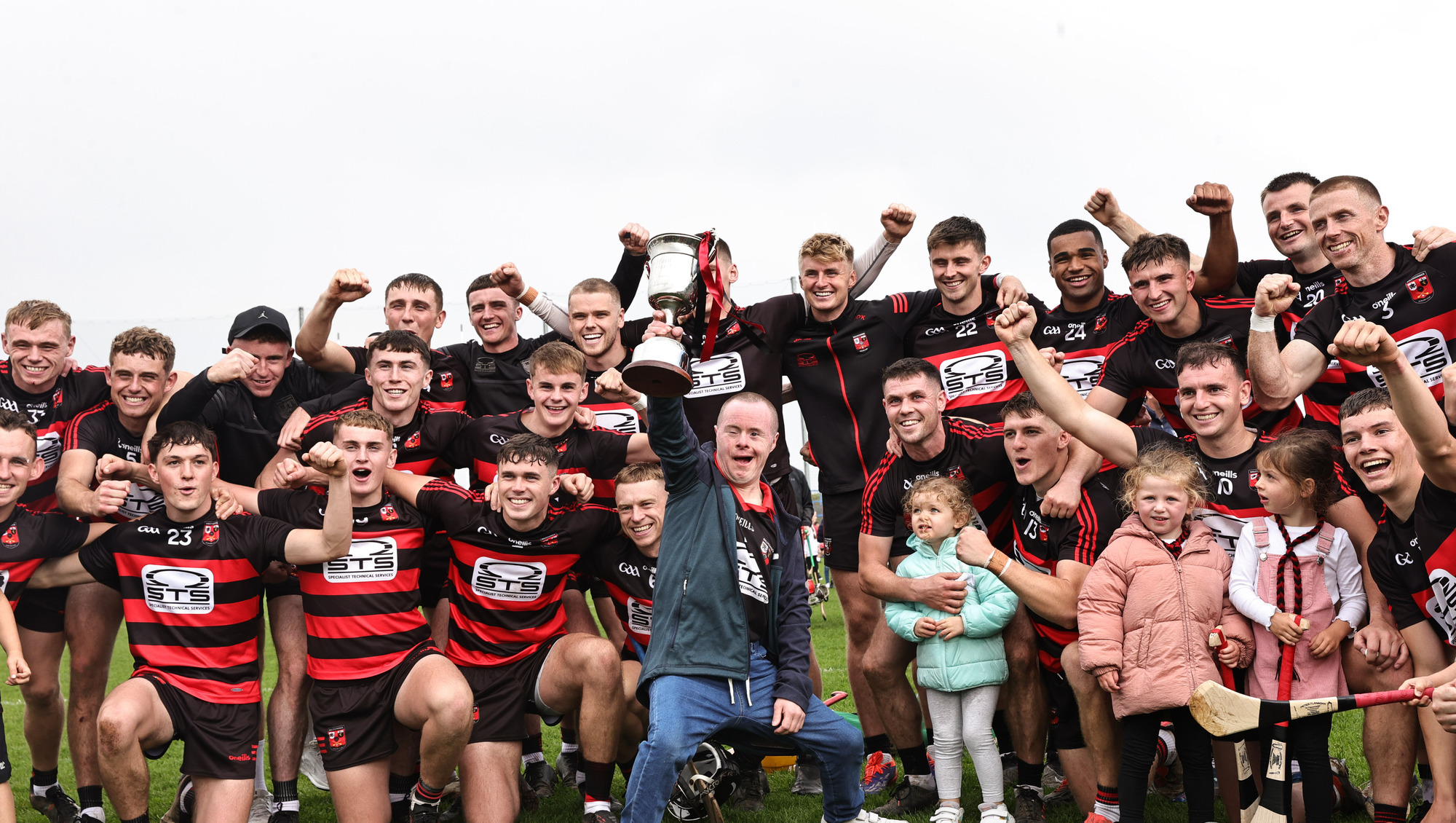
TOP GUNS: Ballygunner supporter Nicky Kennedy leads the celebrations after the Waterford decider. Pic: INPHO/Tom Maher
On the Wednesday night before the 1996 Leinster hurling final, Liam Griffin, the Wexford manager was flicking through the TV channels when he came across a programme featuring Alain Mimoun. The great French athlete was in his 80s by then but the story he told encapsulated much of the struggle of his career.
Mimoun was a contemporary of the brilliant Czech runner Emil Zatopek, who consistently beat the Frenchman. At the 1948 Olympics and twice at the 1952 games, Mimoun had come second to Zatopek. The results had been the same at two World Championships. Zatopek had won three gold medals at the 1952 Games, the last of which came in the marathon.
By the time of the Melbourne Games in 1956, Mimoun decided that the marathon would be where he would conduct his last great battle with Zatopek, even though he had never attempted a marathon before. On the day, Mimoun was inspired; at the finish line, he was over a minute ahead of his nearest pursuer.
“I thought, all of a sudden, this story was a divine inspiration,” recalled Griffin in Denis Walsh’s book Hurling: The Revolution Years. “We can do this you know, I said to myself. We are the Mimouns of hurling. Offaly have beaten us every time but this is the chance to get the ghosts off our backs and be somebody. And if we don’t we’ll forever be in the shadows. So I told the players the story of Mimoun.”
Wexford finally overcame Offaly that Sunday to win a first Leinster title in 28 years. They beat them too in the following year’s Leinster semi-final. And in the decades that followed, there were numerous examples in hurling of a Mimoum finally catching up on a Zatopak.
Waterford were the standout example on the inter-county stage, finally overcoming Tipperary, Cork and Kilkenny on the big stage after decades spent being ran off the track and the road by those counties.
Waterford beat Tipp and Cork in huge Munster final wins in 2002 and 2004 as well as overcoming Kilkenny in the 2007 National league final. Waterford didn’t beat Kilkenny in a championship final (in that era) but their victory against their nemesis in the 2017 qualifiers was Waterford’s first win against Kilkenny in 10 games across a 20-year period, which included seven All-Ireland semi-finals (one which went to a replay) and an All-Ireland final defeat. The next time the sides met again, Waterford defeated Kilkenny in the 2020 All-Ireland semi-final.
On the provincial club stage too during the last decade, Waterford also had a Mimoum desperately trying to chase down a Zatopek who they had tried for so long to catch. When Ballygunner won a first Munster club title in 17 years in 2018, the satisfaction was all the sweeter again because they took down Na Piarsaigh.
The Limerick side were unbackable favourites going into the match because of their record against Ballygunner. The sides had met on three occasions in the previous seven years (two finals and a semi-final) and Na Piarsaigh had won each time.
Na Piarsaigh had been the higher standard that Ballygunner couldn’t surpass. And yet, once they finally did, the direction of their relationship jack-knifed. In their last three Munster club meetings, Ballygunner have won each one.
There has never been a relationship like Na Piarsaigh-Ballygunner on the provincial club stage of how the dynamic between both clubs has flipped so dramatically in such a short timespan. Especially when both clubs have been the dominant forces in their own county at the exact same time. And even more so when both clubs have retained such strong provincial and All-Ireland ambitions.
Making up that ground on a dominant force, and then overtaking them, has never been an easy chase throughout the history of the provincial club hurling championships.
Ballycran from Down had already won two Ulster titles in 1974 and 1976 but their attempts to build on that success ran into a brick wall when Ballycastle McQuillans emerged as the first dominant club hurling force in the province when winning six provincial titles in nine years between 1977-’84. And they beat Ballycran in three of those finals.
Ballycran never got a chance to right that wrong and, while Castletown from Laois finally got, and took, that opportunity against Birr in 2000, that sole victory never added enough balm to a seeping wound that Birr tore apart again a year later.
Castletown dominated the Laois championship between 1995 and 2005, winning eight titles, but Birr were the rock they consistently perished on in Leinster. The sides met five times and, while Castletown beat Birr in the 2000 quarter-final, they lost three Leinster finals to the Offaly champions — 1997, 1999 and 2001.
The latter defeat was the hardest to stomach. Castletown led by seven points five minutes into the second half but they failed to score again. Birr eventually reeled them in before beating them by 11 points in a replay.
Castletown never won a Leinster title. They were unlucky to come up against one of the greatest club teams of all time but the pain was even harder to take as they watched Birr win two All-Irelands after losing two of those three Leinster finals to them. After that 2001 final replay win, Birr won their 2002 All-Ireland semi-final and final by an aggregate of 20 points. “I have eight county medals,” Paul Cuddy, the leader of that Castletown team, once remarked. “But those Leinster finals we lost to Birr are the ones I always think about.”
For years, Na Piarsaigh were all Ballygunner thought about once they emerged from Waterford because of how they consistently perished under the force of their fire. Yet now that the dynamic of the relationship has flipped so dramatically, Ballygunner have become the dragon that Na Piarsaigh have never been more desperate to slay.
At a Meath county board meeting in Dunganny in May, Conor O’Donoghue, chairperson of the Football Development Committee in the county, told delegates that the Meath senior club championship is among the worst performing in the province.
That wasn’t telling the delegates anything that they didn’t already know but O’Donoghue’s presentation still produced some stark statistics when the Meath senior club champions' recent record in Leinster was compared with every other county in the province; only Wicklow, Wexford and Kilkenny were below Meath.
The standard of the senior club championship has been nowhere near where it was, or should be, especially with the tradition and the playing population in the county. There is little room for optimism around those numbers improving considering how poor Meath clubs have fared since Skryne were the last side to reach a Leinster final in 2004. In the intervening two decades, Meath clubs have won just nine matches in the province.
Some of those years were total washouts; seven defeats were by nine points or more, with four of those losses exceeding 13 points. The only Meath club that put back-to-back wins together in the province in those last two decades were Skryne in 2010, when they beat Rathnew and Castletown before losing the semi-final to Rhode by four points.
Summerhill were hammered by St Brigid’s the following year but, in their defence, Summerhill have been one of the few Meath clubs who have performed reasonably well (when measured in the overall context of how poor Meath sides have done) in the intervening years. After beating Newtown Blues in 2013, they ran St Vincent’s to four points in the semi-final. And that Vincent’s team went on to win the All-Ireland.
Two years ago, Summerhill beat a decent Tullamore side before losing the semi-final to Naas. As one of just four Meath clubs to have won a Leinster club title – in 1977 – Summerhill will hope now that they can tap into that history in this year’s provincial championship, starting with Sunday’s game against Longford champions Killoe Emmet Óg in Páirc Tailteann.
For a while now, especially over the last few years, there has been a theory in Galway that has been almost irrefutable in the context of what has always happened when St Thomas’ are involved in the concluding stages of the senior hurling championship. ‘If Thomas’ get to a final,’ goes the theory, ‘they won’t be beaten.’ And the theory has always proven to be correct.
In their eight county final appearances since 2012, St Thomas’ have won each one. It’s a 100% record that four other clubs in the county have managed, but none of those come anywhere close to matching what Thomas’ have achieved; Meelick (1887), Derrydonnell (1911), Tommy Larkins (1971) and Abbeyknockmoy (1988) were victorious in their only county senior final appearance.
Thomas’ have beaten five different clubs in those eight finals; Loughrea (twice), Turloughmore (twice), Liam Mellows (twice), Gort and Clarinbridge.
On Saturday evening Thomas’ take on Loughrea in a mouth-watering final in Pearse Stadium. Loughrea are the champions but can they do now what no other club has been able to do against St Thomas’ in a final?
Having already lost two finals to St Thomas’, one after a replay in 2022, if Loughrea can put successive titles together for the first time now, it will be the sweetest championship the Town have ever won.

CONNECT WITH US TODAY



Be the first to know the latest news and updates