The GAA arms race: The county-by-county costs of competing at the highest level
COUNTY BY COUNTY: GAA president Jarlath Burns has called it an arms race. Picture: ©INPHO/Laszlo Geczo
At Tipperary’s annual convention last month, Munster chairman Ger Ryan became the latest GAA officer to describe the scale of spending on preparing inter-county teams as “unsustainable”.
Ryan’s remark wasn’t related solely to his own county but after a record outlay of €2.175 million, the third highest of the 32 counties, when its senior hurling and football teams’ seasons ended on May 26 and June 8 respectively it was obvious he was speaking to those in front of him.
Today, the can reveal counties’ total team spending for 2024 has reached an alarming €43.35m, an increase of over 8% from the 2023 figure that crept over €40m and more than 112% higher than the €19.8m 12 years ago.
In 2013, Ryan was Tipperary PRO. The county’s team expenditure for the year amounted to less than €1m, the first time in five years that the figure wasn’t seven figures. That was achieved after the board reported losses of over €650,000 across the four previous years.
For the second year in a row, Tipperary recorded a deficit in 2024 and for the two years they are in the red to the tune of €204,000. In their All-Ireland SHC winning year of 2019, their deficit was €371,000. History appears to be repeating itself.
It's not that Tipperary aren’t aware of the issue. In his 2023 report, county secretary Murtagh Brennan acknowledged: “The ever-rising costs associated with all intercounty teams is placing a significant strain on the County Board to meet its operational commitments.”
However, the strength of their and other counties’ will not to mention the GAA’s to address what president Jarlath Burns has described as “an arms race” and Leitrim chairman Declan Bohan called “a rat race” is under question. Combatting those aspirations to keep a tight ship is the eagerness “to keep up with the Joneses”, as Clare GAA’s operations manager Deirdre Murphy said in her 2024 report.
That conflict between ambition and advisability has been illustrated in Galway who were the biggest spenders for the second year running in 2024 with €2.64m. In 2023, county chairman Paul Bellew said the county made “no apologies for the (€2.449m) spend – it all goes to the players.” In another interview, he said: “We can afford it.”
Galway’s healthy accounts would back up Bellew’s assertion. Yet there were words of warning from outgoing treasurer Mike Burke as he signed off last month: “The fact of the matter is, as a county we spend the largest amount of money in the entire association on our teams. This is something that I am not happy about and I am absolutely certain the incoming county board will have to seriously address the issue or we will end up like the bad old days of the past in a financial mess.”
Ryan’s claim in FBD Semple Stadium’s Dome last month is one we have heard before (Burns used it himself earlier this year). In 2022, departing Westmeath treasurer James Savage said the €1.072m spent on teams was “unsustainable”. Last year, their figure was up to €1.263m.
In his 2023 report, Waterford secretary Pat Flynn said the level of spending was “not sustainable”. Referring to that year’s €1.204m spend (later adjusted to €1.34m), then chairman Seán Michael O’Regan insisted the county had “met the edge of the cliff and can’t go any further”. Waterford still spent €1.288m in 2024 and experienced an overall deficit of €164,743.
Undoubtedly, the cost of living crisis has been an accelerant for team expenditure but it had been envisaged the split season would save money. Paradoxically, the intensity of the schedule has required more medical attention. Last year, Derry’s physio and medical expenses jumped to €230k from €83,356.
Quick turnarounds in booking accommodation and catering have cost a pretty penny too. Cork’s meals, catering and nutrition expenses were over €400,000 for the second year running. In the space of two years, Laois’ catering/overnight figure has pushed up by over €134,000 to €252,856.
The size of panels was a large reason for Tipperary’s bloated player mileage costs of €413,106 compared to €296,888 in 2023, the senior footballers (€181,998) total exceeding that of the hurlers (€172,306). County treasurer Eleanor Lahart said of the unexpected and “massive” mileage bill: “This is clear evidence that panel sizes must be kept to an agreed reasonable level going forward.”
Tipperary’s hurling and football training panels announced last month ran to 45 and 42 players respectively before being trimmed to 38 for the Allianz Leagues.
Going back before the pandemic to February 2020, GAA director general Tom Ryan wrote in his annual report that the €29.4m spent on teams was “not sustainable”. He returned to the subject again in 2023 to declare that “the values of the Association are being eroded with each paid addition to the backroom team”. Last year, he said the practice was “endemic everywhere”.
The €325,569 that Roscommon spent on team management last year, a higher figure than their players’ total mileage rate, should make Ryan’s eyes water but without action his concerns will remain just observations.
It is hoped the amateur review committee formulated by Burns will call counties to order but the brakes are broken on the “runaway train” as former Kerry and Munster treasurer Dermot “Weeshie” Lynch described the overspending seven years ago.
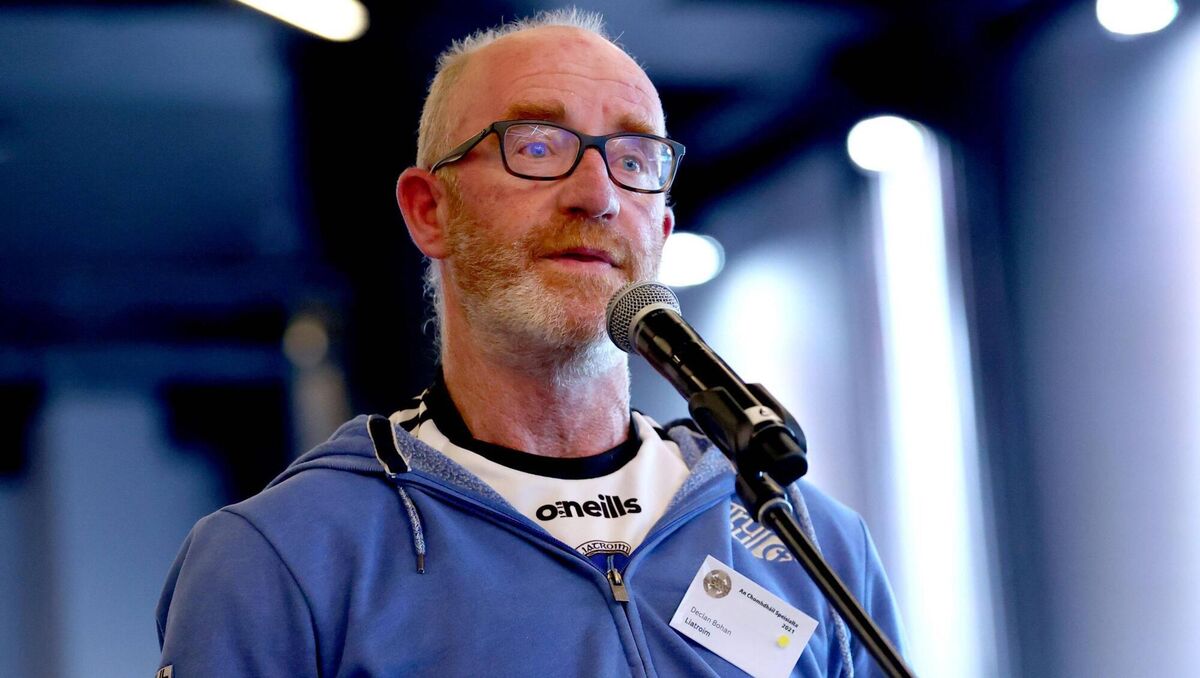
The table compiled by the illustrates that All-Ireland SFC champions Armagh’s team expenditure rose the highest from 2023, just short of €700,000 to €1.982m.
Following them were Donegal whose additional spend was nigh on €600,000 to €1.861m. Of that sum, senior footballers accounted for €1,081,807. The rise was absorbed by the board’s total income increase to €3.139m, almost €800k more than 2023. Commercial income jumped by over €200k but the greatest improvement was in fundraising, climbing to €527,447 from €34,394. That figure alone underlined the power of Jim McGuinness whose ability to get supporters to put their hands in their pockets was established during his first term in charge.
Despite the total inter-county team expenditure bill ballooning, there is some evidence of financial prudency. Ten of the 32 counties spent less than last year than in 2023 - Antrim, Carlow, Kerry, Kilkenny, Leitrim, Limerick, Meath, Monaghan, Waterford and Wicklow. That’s up from three who in ’23 spent less than the previous year – Derry, Offaly and Tyrone.
In 2024, Limerick’s outlay was €384,959 less than the previous 12-month accounting period owing largely to not to making a fifth consecutive All-Ireland SHC final. Likewise, Kerry exited at the semi-final stage and their expenditure dropped substantially by €262,449.
However, the number of counties reporting deficits has remained stubbornly steady. Aside from Tipperary and Waterford, there were the likes of Antrim (€126,306), Roscommon (€268,935), Sligo (€48,298) and Westmeath (€70,000). In 2023, six were in the red – Carlow, Donegal, Louth, Offaly, Tipperary and Wicklow.
Although their stadium debt cripples, there has been little indication of that impairment in Cork GAA’s bankrolling of their representatives. Being high on the spenders’ list is not a badge of honour, as Burke says, but for a bona fide dual county, the largest GAA county in the country, it’s natural to be near the top of the charts, this past year rising to second from fourth.
But Cork want to be savvy. In 2023, secretary Kevin O’Donovan called for Croke Park “to implement budgetary controls”. He wrote in his annual report: “The time has come to form a national review group to take an accurate and true perspective of where we now are and bring forward realistic proposals which allow a progressive, yet sustainable approach. Most importantly, this would require totally honest engagement by us all at county level with regard to current custom and practice.”
Collective bargaining, caps and other forms of enforcement have all been suggested as means of bringing down the costs but in writing that last line, O’Donovan must have realised just how aspirational it read. There are 43 million reasons to believe the extravaganza isn’t going to end anytime soon.
CONNECT WITH US TODAY



Be the first to know the latest news and updates