Gaelic games must be included in multi-sport stadium plans, Munster GAA chief insists
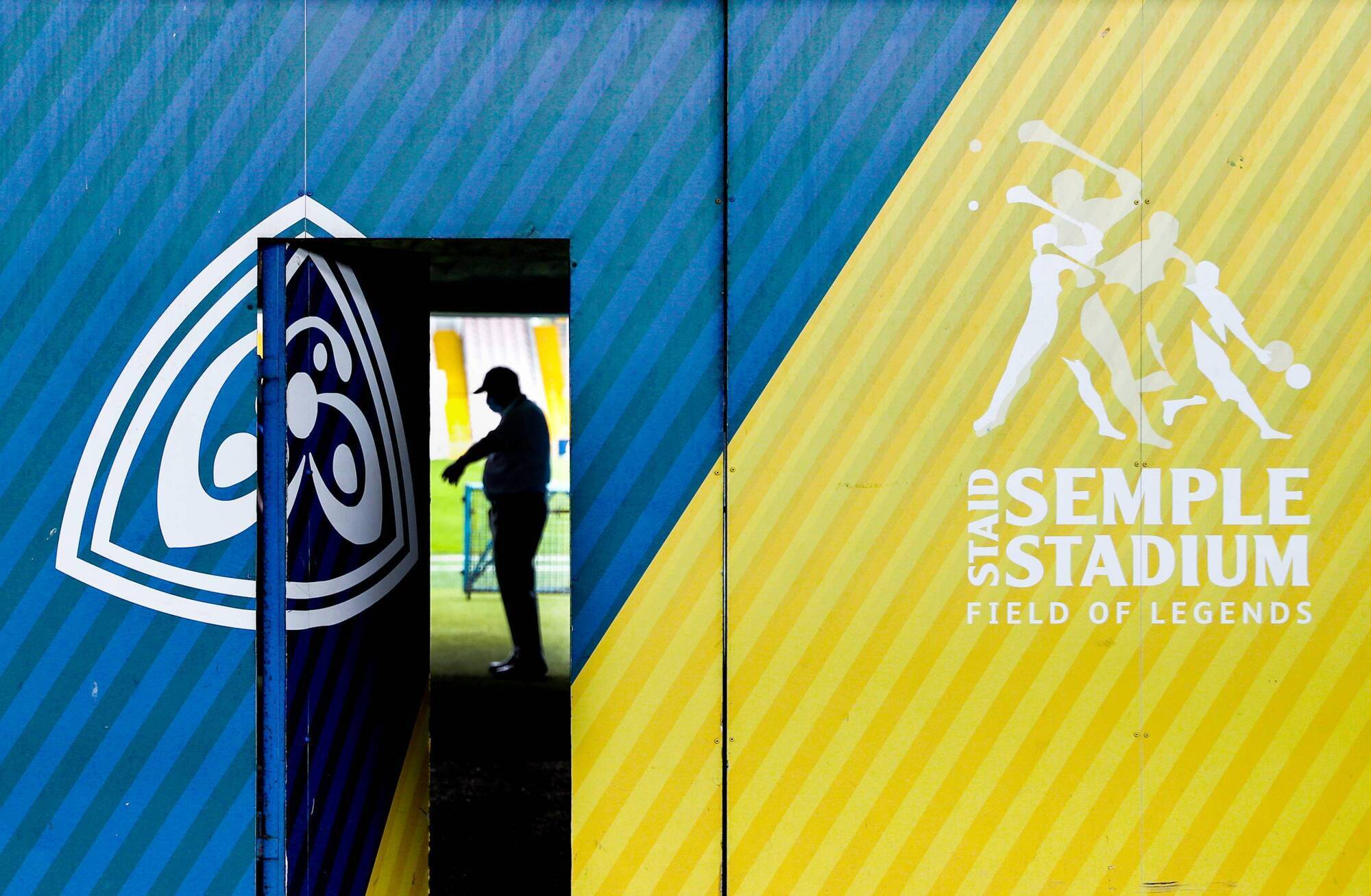
Kieran Leddy outlined the financial demands placed on the GAA in running their large stadia, like Semple Stadium. Pic: Inpho/Tommy Dickson
Munster GAA chief executive Kieran Leddy has called for Gaelic games to be included in plans for multi-sport facilities.
Insisting such infrastructure can’t be deemed municipal if they don’t include the GAA, Leddy took issue with suggestions the government has been over-generous to the organisation in supplementing its own capital initiatives at the expense of other sports.
In his annual report to provincial convention in Tralee on Friday, Leddy is adamant the Gaelic sports have to be incorporated into such cross-sport urban projects. “The GAA needs to become part of the conversation around municipal facilities in urban areas. In other words, multisport facilities built by funding from the taxpayer need to include facilities for the playing of Gaelic Games.
“In the past, our desire to build our own facilities was very strong, but in the modern world this is not always practical. Land in urban areas is scarce now so facilities need to take on multisport model.
“So good has the GAA been at providing its own facilities that local authorities have built municipal facilities that have excluded Gaelic games simply because the playing areas in these municipal facilities is too small to cater for Gaelic Games.
“A notion is being pedalled that the government has put far too much money into Gaelic Games to the detriment of other sports. This is not true. The current county centre of excellences in Munster, for example, have been built with minimal government support and have largely been funded by the GAA.”
Leddy outlined the financial demands placed on the GAA in running their large stadia. “Given our past desire to own all our own grounds, we now find ourselves with an ageing inter-county stadium infrastructure with significant finance needed to maintain these facilities, and a far larger sum to modernise them.
“The cost of the proposed works at Semple Stadium has risen to €8 million and the majority of this work is maintenance related and won’t result in improvements, apart from new seating in the Kinane Stand and the laying of a new pitch.
“The Páirc Uí Chaoimh price tag of €96m, while great value when compared to today’s construction costs, has left a crippling debt of €30m, and one thing we know for sure is that GAA games, which return 15% of the gross gate to the host county, won’t go near returning enough money to maintain the ground and pay off the debt.
“The biggest beneficiary of this is the city of Cork. We can extrapolate from recently published research that the city benefits to the tune of around €4m for every large event held there, and in 2025, there could be three large Munster senior hurling games, including the final.”
Leddy again championed the split season in its current guise and warned of extending the inter-county season in August. “Of course, we can push the All-Ireland finals to mid-August and this means at least eight counties will be in competition until late July/early August. That will inevitably lead to a later championship start in those counties.
“If we go to a situation where counties have two calendars, one set of fixtures for when they reach an All-Ireland semi-final and the other for when they don’t, we have slipped back to the matter of uncertainty for the club players in those counties. In other words, they won’t know the exact weekends they are playing until the county team exits the championship.”
Leddy expressed his fear that extending the length of the inter-county season could see the GAA “slowly inch its way to a day when inter-county players won’t play for their clubs at all.
“Then we will have the fixture freedom to play the All-Ireland finals whenever we want, and start club championship whenever suits, but we will have lost one of our greatest attractions, and that is the sight of our inter-county stars playing championship for their clubs.”
Leddy felt the Football Review Committee should have retained their original proposal to increase the value of a goal from three points. “I was disappointed to see the proposal for the four-point goal not make it to the floor of Congress, particularly given that Central Council has the power to amend rules as the year progresses. Encouraging teams to try and score goals must surely be a good thing."
As former inter-county hurling referee Johnny Ryan is set to become the province’s first full-time match officials development manager, Leddy said the challenges in attracting sufficient referees are "as worrying as ever”.
Citing the exorbitant costs of video technology, he called for the debate about incorporating it in Gaelic games to end. “Let us dispense with the notion that we can have the technology required and the personnel required to manage video technology in all of our grounds and for all championship and league games.
“We have touched the technology area with HawkEye, and it only available in Croke Park and Semple Stadium. HawkEye is cost prohibitive to introduce it to all other grounds and it will be the same issue with video refereeing technology.”

CONNECT WITH US TODAY



Be the first to know the latest news and updates