An analyst’s view: Here are the major flaws with the proposed new Gaelic football rules
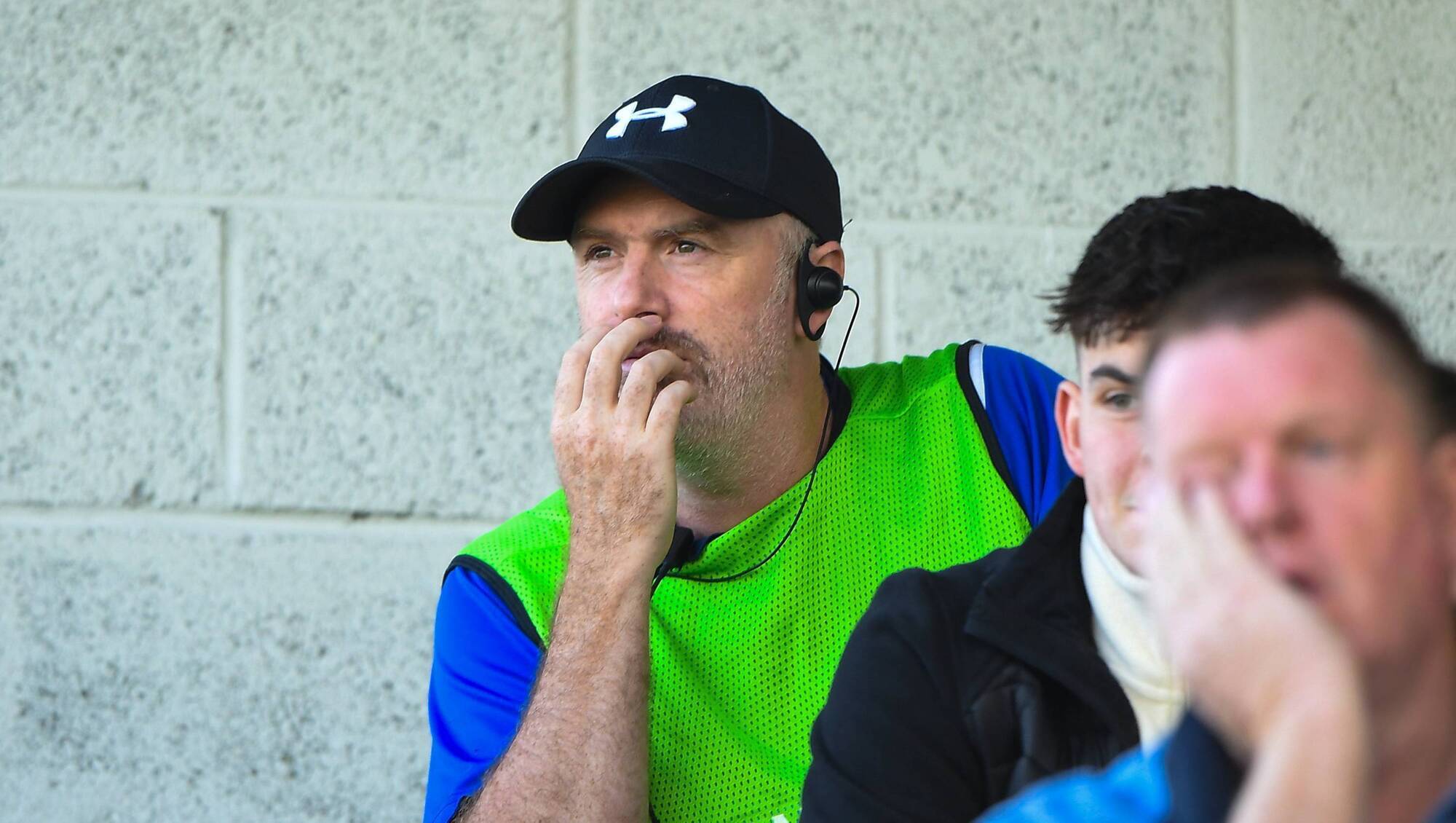
FLAWS: Stephen O'Meara has worked with a variety of clubs and counties across the country as an analyst, coach and manager. He currently hosts a Gaelic football analysis podcast, The Square D. He freely admits the sport has a problem. He freely admits he has been part of the problem. Picture: Matt Browne/Sportsfile
16 years ago, Stephen O’Meara brought several motions to his club in a bid to improve Gaelic football. The game was working itself into a dilemma and he believed he had the solution.
The more things change, the more they stay the same. Among his suggestions was iterations of rules that would later be introduced and rules that were trialled in Croke Park last weekend as part of the interprovincial series. Way back when, he pushed for a tap and go as well as a penalty for the denial of a goal scoring opportunity.
O’Meara has worked with a variety of clubs and counties across the country as an analyst, coach and manager. He currently hosts a Gaelic football analysis podcast, The Square D. He freely admits the sport has a problem. He freely admits he has been part of the problem.
“It is the use of the goalkeeper, which I as a coach have taken to the nth degree, just keeping the ball off superior opposition,” he explains. “Not making it a game of who is faster and who is better.
“You're trying to minimise that gap in raw ability and athleticism by holding the ball indefinitely and gaining ground slowly and using numbers. Absolutely for me, something has to change. The game has become drab to play. It has become exceptionally drab to look at. Even though I've had a reasonable level of success as a coach and a manager, as a purveyor of the keeper playing out of the back, ultimately it is at the root of a game that has now become boring.”
How do you fix that? Well, the Jim Gavin-chaired Football Review Committee (FRC) have met 36 times and considered thousands of different survey responses in a search for the answer. One of their seven core enhancements, the solo and go, is a move towards solving one of O’Meara’s major issues, cynical fouling to stop quick transitions and counter-attacks. He pursued an even more radical option, a modified version of basketball’s personal foul and free throw rule.
But the big idea is the two-point arc. Combine that with the three/three structure rule and the ban on goalkeepers receiving a pass inside their own half and the FRC believe it will lead to a more exciting game to play and watch.
“This is the major issue,” stresses O’Meara. “The big one that will cause all the problems is the two-pointer and the goalkeeper rule. I’m all for banning the back pass to the goalkeeper. Necessary evil, greater good all of that.
“Let me give you some data on this. Give or take a few percent, but on average over the last two years in two-thirds of national league games and all significant championship games, the average uncontested shot from outside 40 metres and inside the 45 is 58% (conversion). This is the key coaching element.
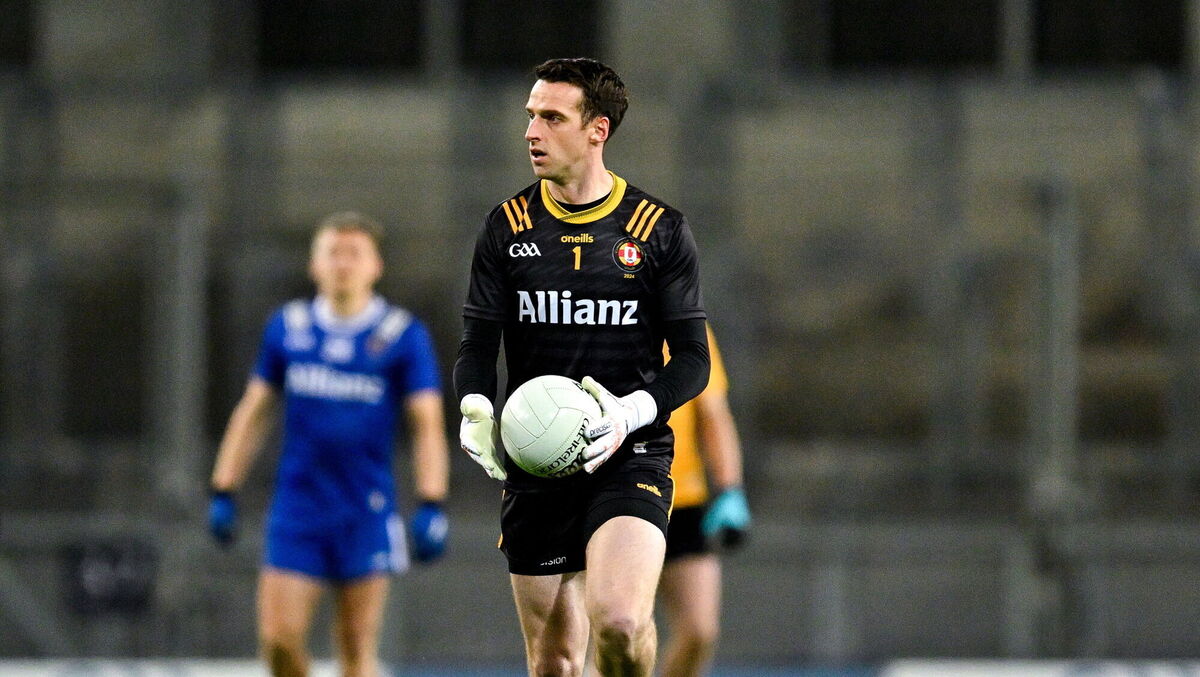
“A moderate pressure shot is 43%. High pressure is 35%. So I’m a coach and I know I can bring my goalkeeper up to make it 12v11 and hold the ball definitely, as Niall Morgan illustrated. That is one element where we did get a reasonable view of how the future would look. The difference is lads didn’t cross the ball over 19 times to get their free shot, which they will once it is competitive football. If I am a coach and I realise 58% of uncontested shots from there are going over the bar, I am telling teams ‘Hold, hold, hold until you get your two-point shot under no pressure.’
“You transfer possession football from one half into the other half and there is less the opposition can do about it because it is so close to their goal.
“That creates a situation where no one wants one-pointers. I’d estimate an 85-90% chance at a one-pointer is just about value. Otherwise, we won’t go for it. Now we will have a situation where I am coaching teams, if we have the ball 30 metres out, don’t take the point shot. Come back out. If I am coaching the other team, I am saying there is no value from here, so try corral them back in.”
This is the precise thing that was lacking in Croke Park. They were, in a variety of ways, exhibitions. Nobody was out to bend or break a rule. What happens when there are real consequences? Cynicism. Creativity that manifests as negativity. Carnage.
“The three-up, it wasn’t spotted at one point when Niall Toner was offside. Can you imagine the carnage on a sideline at a club game when that happens. If a team get caught once and the other gets away with it. Also, teams will eventually strategize it. One will swap out one side while someone swaps in the other side, knowing the defender can’t come out.
“If you went with my rule of no back pass to the goalkeeper, so much of this would happen organically. You would have to keep height or it would be too clogged when you have the ball. This version is unpoliceable and unnecessary.”
There are 12 qualified and informed members of the FRC who have considered extensive data and a games intelligence report provided by Rob Carroll. Over the course of sandbox matches, they have tracked key measures like goals per game, points, shots, ball-in-play time, contested kickouts and compared them to the 2024 championship average.
O’Meara has long maintained that such a committee shouldn’t just be provided with data. An analyst should also form part of the group. Representing the tribe, says you. Sure, but that is the point. They will have a say in the shape and style of Gaelic football regardless. Understand how they think.
Take Connacht. In the final last Saturday they scored 4-15, including three two-pointers. They had 32 kick passes in the entire game. Here is how one boffin would break it down.
“A data analyst like me would show teams, when you kicked the ball, this is what happened. When you went through the hands, this happened. So, Connacht scored 1-2 from eight aggressive kick passes. Moderate forward kick passes, zero from four. So 1-2 from 12 kicks. Through the hands, it was 3-10 from 25, which is 3-13 with the two-pointers. So, the evidence thus far, taken with a large pinch of salt that it was a trial on Saturday, on average there was overwhelming better value on keep the ball through the hands than kicking it.”
What about the simple logic that even if it isn’t perfect, it surely can’t make the game worse?
“It's going to be a radical deterioration of the game. I don't think you can even call it that, it is not going to be the game. It's going to be a new game. A newly created game that I think betrays the natural evolution that has happened since 1884, which does include rule changes.
“There have been well-thought-out, moderate rule changes. Can you imagine in 1990 when they banned the back pass to the goalkeeper in soccer, that they also brought in a rule where it was two goals for a header from a cross, two goals for a long shot, you can only get eight back and leave three up? It just wouldn’t have washed. A big issue here is that rule change can only happen every five years. There is going to be a huge opportunity lost. I’d vote no to everything except the solo and go. That only solves 30% of the problems in the game.”
Which brings him back to the core point. Something has to change. It doesn’t have to be like this.
“Deal with the back pass. Progressive coaches with good teams will immediately press high. You don’t need the kickout rule then. The value of going short to the D is completely different. It will become man-on-man. There will be an end-to-end dynamic. The butterfly effect of that creates the 70% that is feasibly realistic. 30% of the aim here feels like utopia naivety.
“I am wholly supportive of what I assume is the idea behind these rules. I am quite certain they are going the completely wrong way about it.”

CONNECT WITH US TODAY



Be the first to know the latest news and updates