Declan Hannon: 'It’s probably one you are just given, not one you earned'
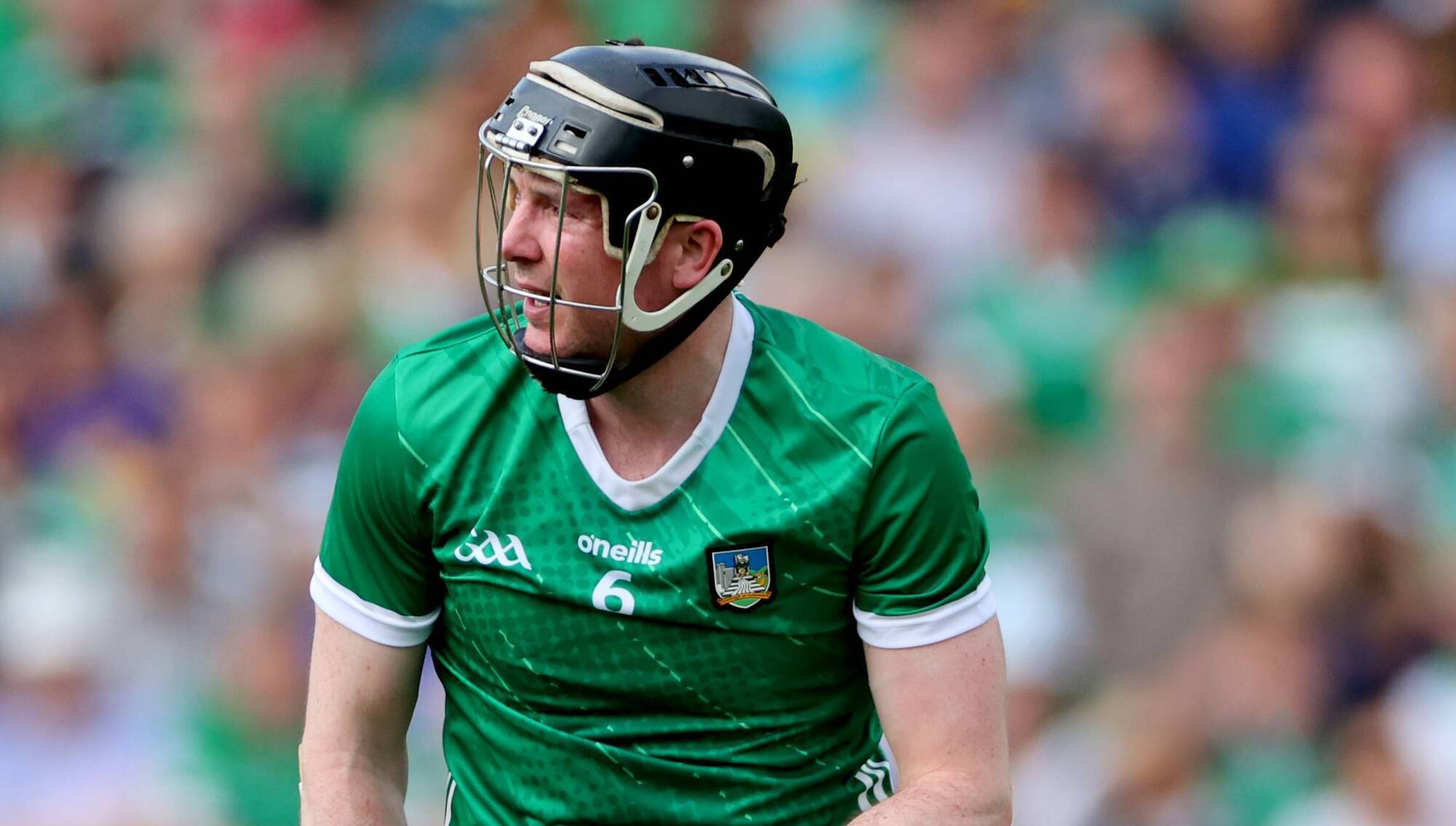
Declan Hannon: Injury denied him chance to play in last year’s All-Ireland semi-final and final. Pic: ©INPHO/James Crombie
Ten years ago, Colm Cooper won his fifth and final Celtic Cross.
The Kerry great was drafted into the matchday panel for the All-Ireland final against Donegal. For the semi-final replay win over Mayo, Éamonn Fitzmaurice asked him to tog out.
After his cruciate injury in February and the loss of his mother Maureen in August, Cooper needed a lift but the medal felt like a token than anything else.
“Does it hold the same value as the others because I did not play?” he asked afterwards. “No, it doesn't.”
Fast forward nine years and Declan Hannon claimed his fifth having not been able to line out in the All-Ireland semi-final or final with a busted knee. The captain had played his part in last year’s Munster SHC triumph and team captain on the day Cian Lynch insisted he join him in lifting the Liam MacCarthy Cup but there was an element of imposter’s syndrome.
“It’s hard, like. Sure, I didn’t do a tap to help them when the semi-final or final, do you know what I mean? I don’t know, it’s a funny one. It’s probably one you are just given, not one you earned, is how I would put it for myself.”
Has missing out been a motivation this year?
“It probably would be, yeah. These are the games you want to be playing in and you want to earn the right to play in them and earn the right to win the games as well, so it’s probably an internal motivational factor as well.
“Probably makes you appreciate being able to train and to be able to play matches a bit more, I think. When you look back and you miss important games, I suppose it just makes you want to get out on that pitch whenever you can, for trainings in particular and if you are doing enough in training you will get the opportunity to play in games then.”
All that being said, Hannon admits getting back to his typically high standards took time.
“It probably took longer than I had hoped to get up to match speed and match fitness and everything like that. Getting old might have been part of that but fine, yeah. Getting a good run of games towards the end of the league and throughout the Munster championship was great.
“Staying clear of injury was probably the main goal, to be honest with you, and just being able to perform to a certain standard throughout the games for 70 minutes has been a positive and hopefully it can continue for another while.”
As a collective, Limerick’s showing against Cork on Leeside in May was below-par, reviews Hannon.
“Our performance on the night wasn’t good enough to win the game and at half-time they probably should have been 10-12 points ahead, only for Nickie Quaid making a couple of saves they’d have been totally out of sight.”
Quaid was rescuing them just as he did in the 2018 All-Ireland semi-final extra-time win over Cork when he denied Séamus Harnedy. It’s that victory – not their landslide All-Ireland final triumph against their neighbours – which sticks in his mind most.
“The save from Nickie Quaid immediately comes to mind. If that didn’t happen, we obviously would have been beaten that day and God knows what would have happened in the years after. That was such a pivotal moment in our journey, I suppose.
“Looking back on it, he (Quaid) could have just... not panicked, but just dived in and probably fouled Séamus Harnedy, I think it was. It just shows the composure and skill level of the man that he could make that save and we went up the other side of the field and I think we got a score out of a free. What a defining moment, I suppose, in Limerick's GAA history."
After the loss to Cork three months ago, John Kiely bemoaned how quickly the home side were allowed to restart the game and win that crucial penalty after Limerick went two points up in additional time. Hannon regards it as a piece of education.
“I suppose there’s a lesson more than having an issue, you just have to be ready as quickly as you possibly can. I think a lot of games these days the puckouts seem to come really, really quickly. You’d see at times the ball is barely gone wide and it’s already pucked out and up the other side of the pitch.
“That’s the way it is, you kind of have to learn, if that’s the way it’s going to be we have to be better at getting ready for those quick puckouts. If we are not ready, we are going to be caught, so definitely something we have learned from.”
CONNECT WITH US TODAY



Be the first to know the latest news and updates