Tearing it up: GAA players showing off their ripped side
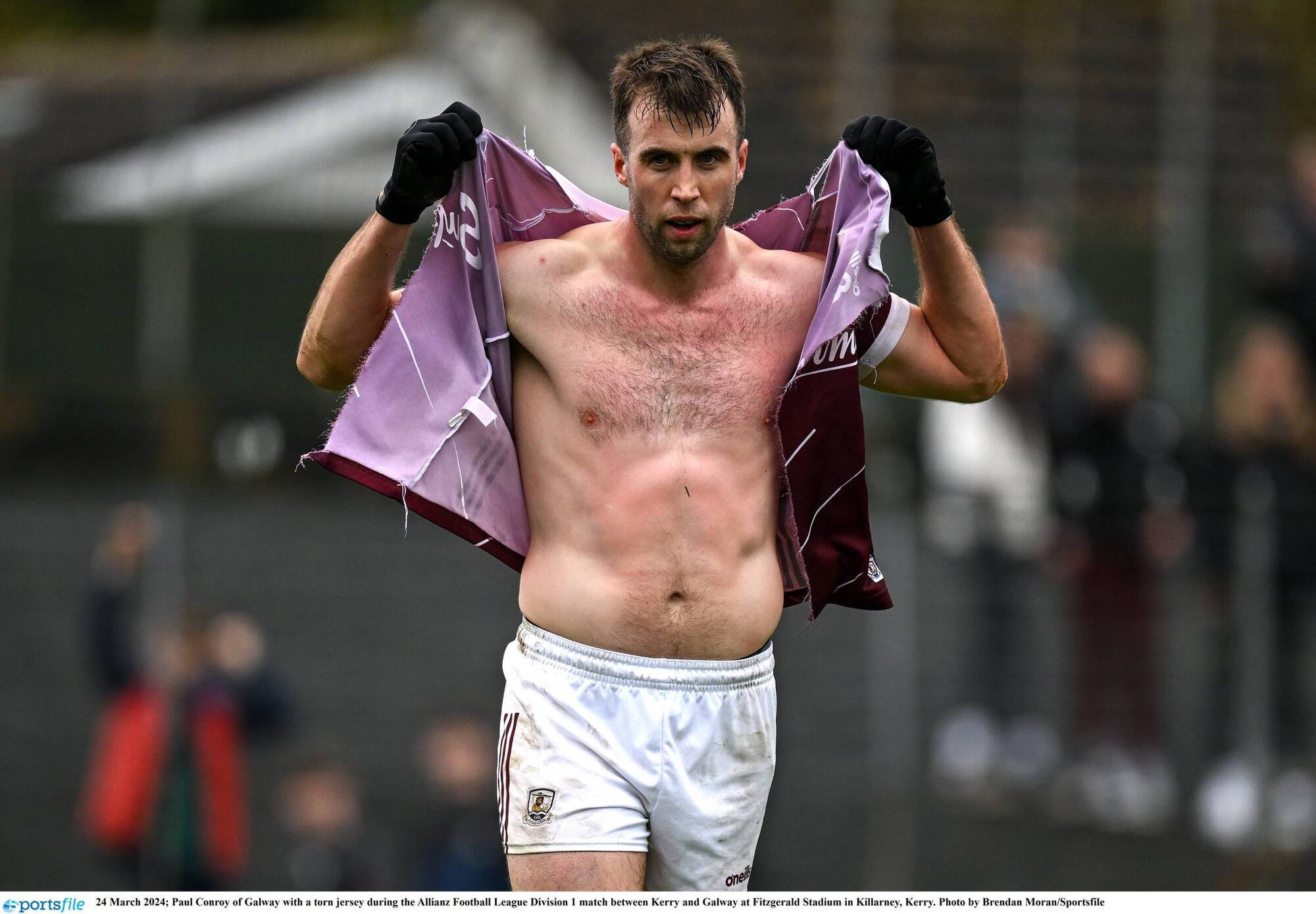
Galway's Paul Conroy after a contretemps against Kerry at Fitzgerald Stadium in Killarney, Kerry. Pic: Brendan Moran/Sportsfile
When the ball was thrown in at Celtic Park for the Ulster Championship game between Donegal and Derry last Saturday week, Donegal's Ciarán Thompson was wearing number 32 on his back. By all accounts his own jersey, number 8, had been torn by a teammate during the warm-up.
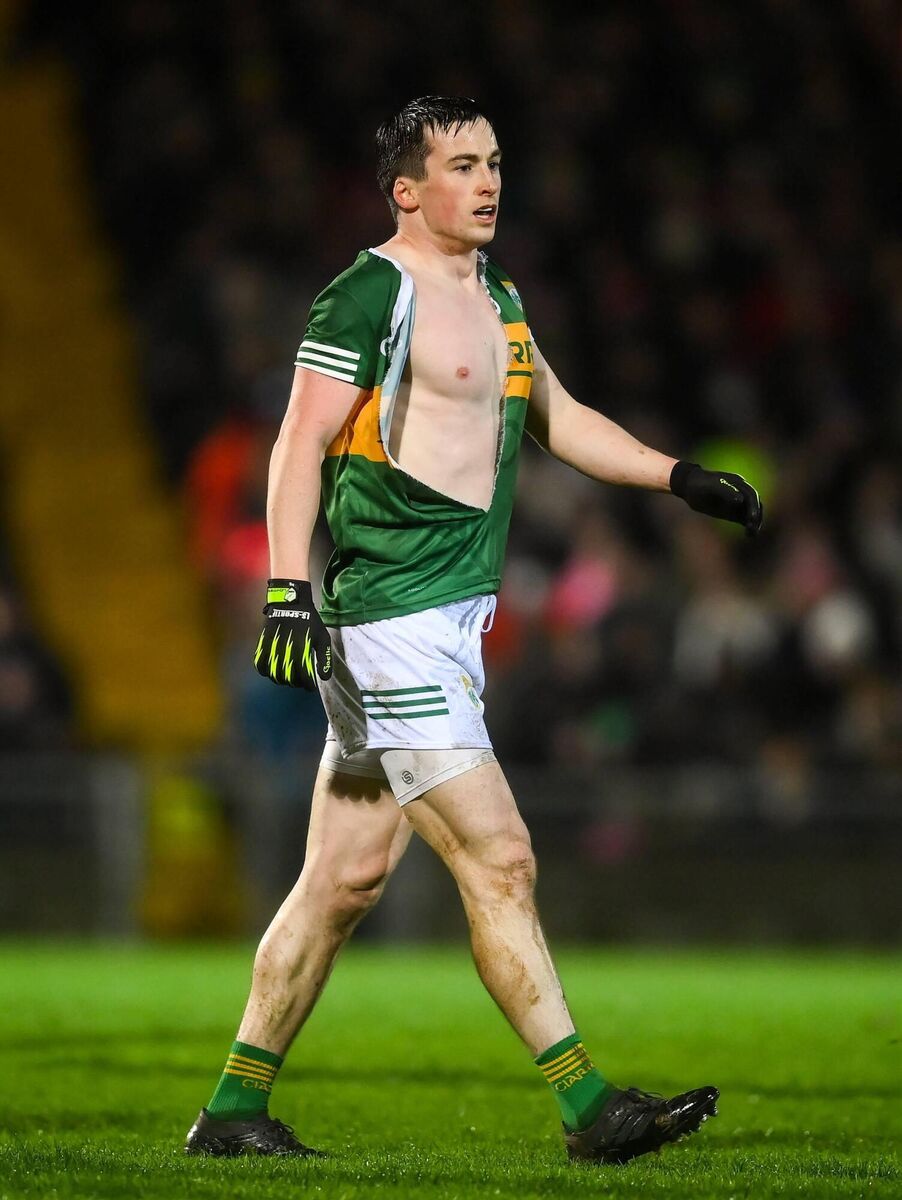
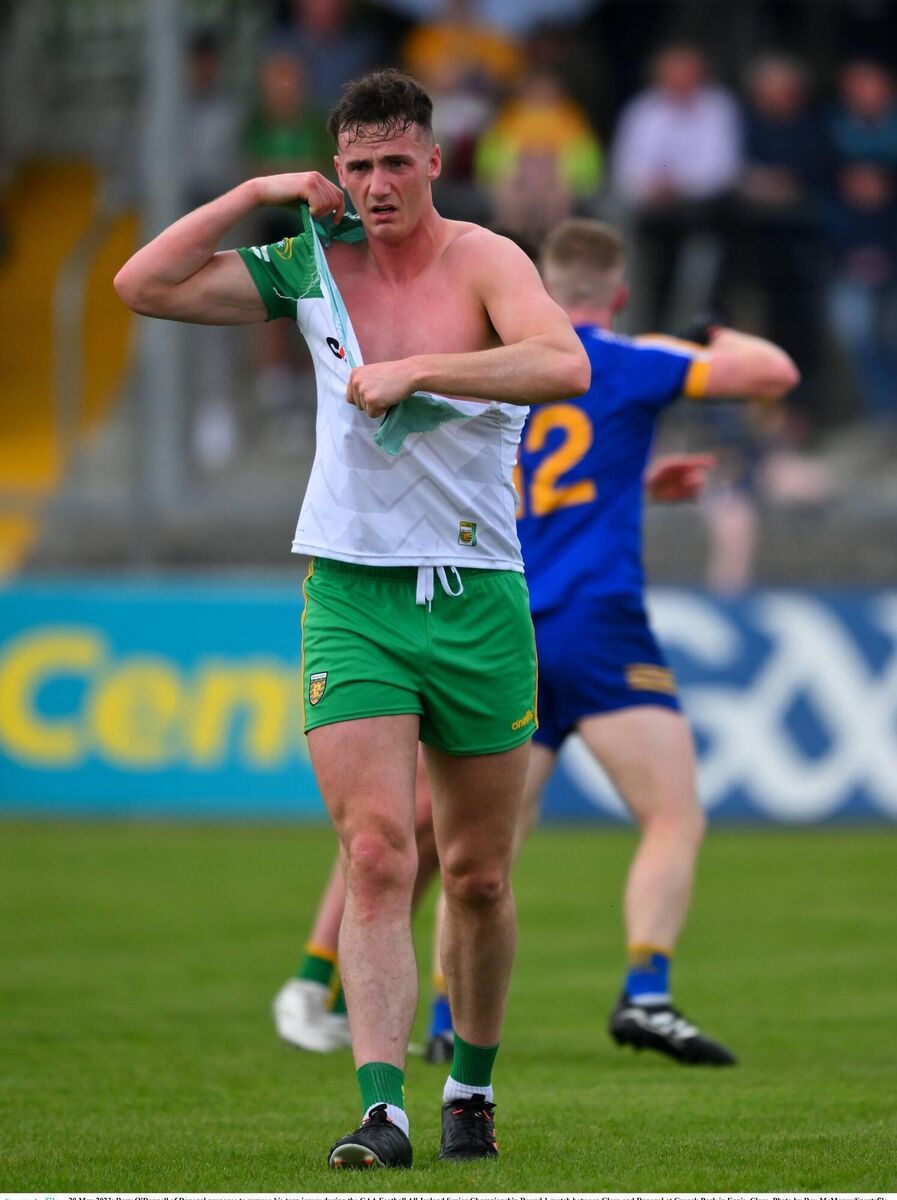
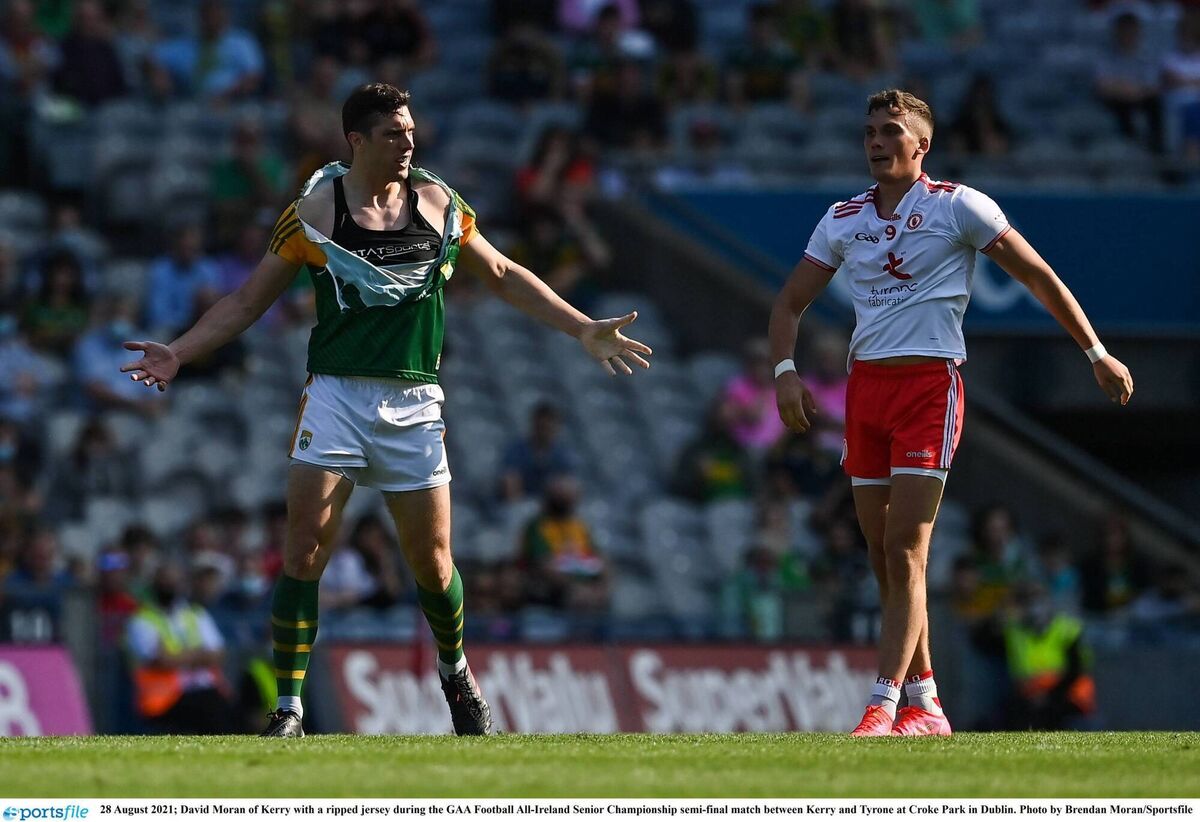
It’s a scene that we’re witnessing more and more these days. One of our GAA stars, often a footballer, trudging away from a crowd, a little out of breath and slightly embarrassed, with their once resplendent county jersey in tatters.
It seems unlikely that Thompson’s geansaí was intentionally torn by one of his comrades (although given the intensity that Donegal played with on the day, who knows?), but players purposely damaging their rivals’ jerseys has become quite the regular occurrence.
When his side played Kerry in the league in March, Galway’s Paul Conroy fell victim to the ‘collar rip’. This relatively new battle tactic involves players grabbing the collar of an opponent and forcefully yanking it downwards in a clear and obvious attempt to destroy the garment. Perpetrators are often successful, leaving us with striking images like that one of Conroy, battered, bare-chested and in need of a replacement shirt. Why is this happening so often?
More to the point, why is it happening at all?
It’s difficult to pinpoint the exact root of the problem but there was a very high-profile incident eight years ago that may have had some influence on what came next.
In the drawn 2016 All-Ireland final between Mayo and Dublin at Croke Park, two all-time greats, Lee Keegan and Diarmuid Connolly, were involved in a rather conspicuous wrestling match that left Connolly’s jersey ripped open from his collar to his midriff.
Both men were booked for their actions, as is standard practice in such circumstances.
Ironically, upon closer inspection, it appears as though the Dublin forward was the one trying to execute a collar rip, but Keegan’s jersey held firm. The Mayo legend also had a hold of Connolly’s shirt and, as he fell to the ground from the force of Connolly’s pull, the famous tear occurred.
Keegan recalls that incident and other occasions during his career when jerseys were torn, but he believes that damaging the playing gear was incidental rather than deliberate.
“When I played, especially in those games with Dublin, it really wasn’t a case of ripping or tearing the jersey,” the former Footballer of the Year says. “I think it was more a case of that’s where the rivalry was and trying to put down a marker. At certain times the jersey was torn but never intentionally. I always believe it was just how physical our battles were at that time.”
It may not have been the case in the 2010s when that Mayo-Dublin rivalry was at its peak, but players are definitely doing it on purpose now. The Mayo legend, who retired in 2023 and is now a pundit with RTÉ, finds the trend “bizarre”.
“It’s much more apparent [these days]. Like, I know the Conroy picture was doing the rounds but it’s happening in the majority of games now. It happened in Tyrone v Kerry as well (Peter Harte and David Clifford both had their jerseys torn).
“I think teams or players have this idea that’s it’s a tough image or a macho approach, but sometimes it takes focus off what’s important: trying to win the game. In how many cases does it give an individual or the collective an edge? I’m guessing very few.”
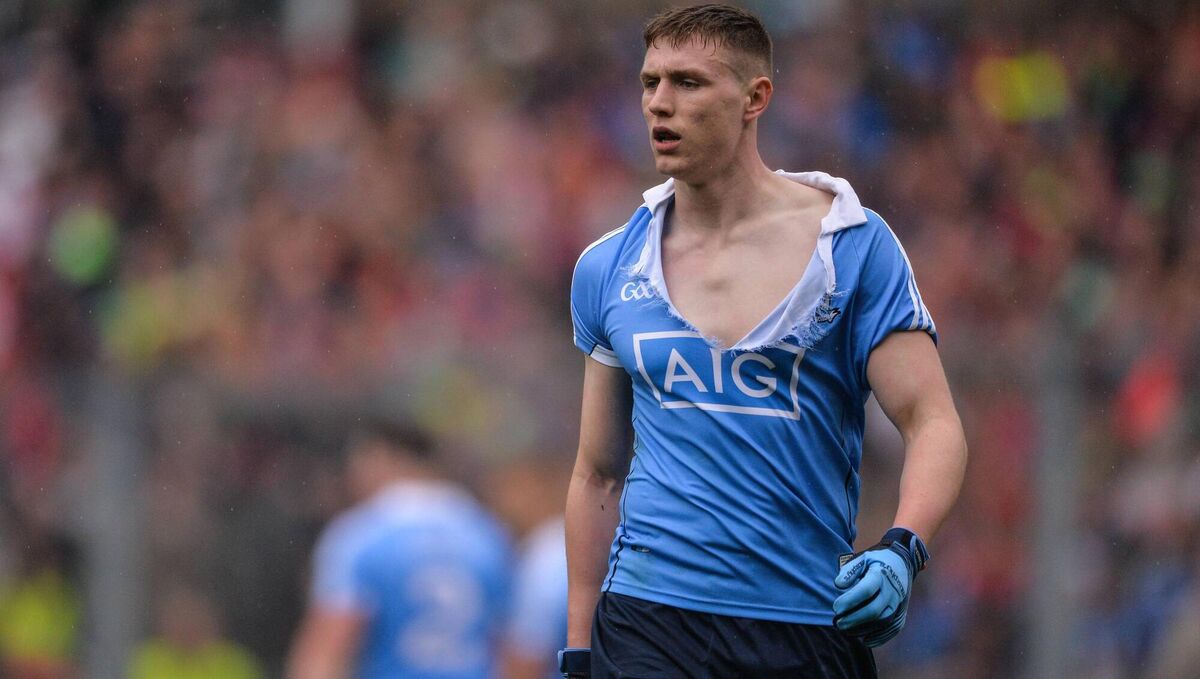
One wonders what O’Neills, who manufacture playing gear for 29 of the 32 counties plus London and New York, make of it all. They did not respond to a request for comment.
Renowned kit designer Rob Warner has sympathy for the Irish sportswear company. The Englishman has worked with international brands Umbro and Puma, designing iconic football shirts like the one worn by Italy when they won the 2006 World Cup. He says that while shirt-pulling is also common in soccer and (naturally) rugby, he has never come across players actually going out to destroy the other team’s apparel. The practice seems to be unique to the GAA.
“I feel sorry for O’Neills,” Warner says. “Even if you do a lot of rigorous testing, generally you would do testing based on what you anticipate is going to happen on the field. You’d want a certain amount of tear strength in the fabric, but you wouldn’t necessarily test it for really intentional destruction.
“But, knowing that it’s a physical sport and quite a few big guys play it, the fabrics have got to be strong enough to withstand that. It’s quite unfortunate for them that they’re facing quite unique circumstances but, equally, you don’t want to be putting elite level athletes out in something that can rip under the pressure of being pulled by an opponent.”
The lay person might speculate that because shirts these days are lighter than before, that makes them easy to tear. Warner argues this is not necessarily the case.
“There are plenty of fabrics that are very difficult to rip. I mean, if someone was wearing a t-shirt and you were to grab it and pull as hard as you can, it’s not going to rip. I did a bit of designing for Aussie Rules during my Puma days and the fabrics were hardcore. They were really strong.
“It might just be that the fabric O’Neills have chosen has a lot of attributes that are good for keeping the players cool, it’s comfortable, it’s flexible… But when it comes to tear strength, it’s just not robust for that sort of stuff.”
O’Neills sell two different versions of their county jerseys: regular fit and player fit. The player fit option is identical to the version worn on the pitch by county teams (apart from the GPS pouch found in player-issue jerseys). It costs €75, which is €5 more than the regular fit.
Warner suggests that O’Neills could go down the road of producing high-spec player-specific shirts, just like big brands such as Nike and Adidas do for their top-level soccer teams.
“It could well be something that they want to - or need to - look at, that the players are going to need a higher specification jersey now. Is their athlete shirt fit for purpose? Does it need to be more expensive in order to meet their needs?
“It was always hotly debated at Umbro where it was felt that the fans should get what the players are wearing. That’s nice and all but what’s right for the fans isn’t always right for the players and vice versa. So that might be something that O’Neills look at - but with that comes higher price points if they decide to retail the player version.”
Some player version soccer shirts cost as much as €150.
For now, at least, the GAA trend of jerseys getting ripped looks set to continue with intensity levels ramping up as we approach the height of the 2024 championship.
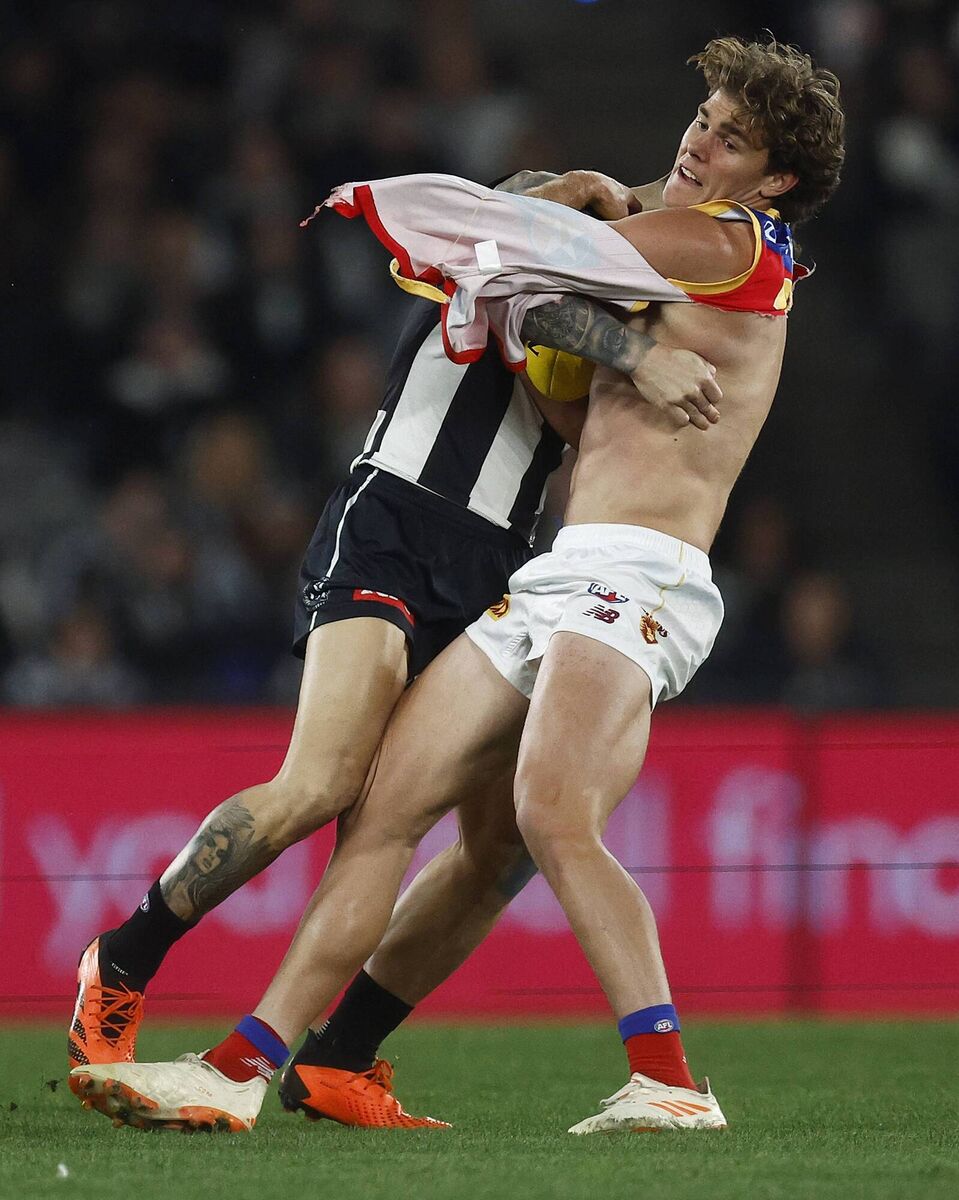
Perhaps a GAA player will follow the lead of their AFL counterpart Deven Robertson. Last season the Brisbane Lions youngster had his jersey – or ‘jumper’ as the Aussies call it - ripped in a tackle against Collingwood. Instead of scampering to the sideline for a replacement, Robertson played on for several minutes with the shirt hanging on by a thread.
Eventually he whipped it off and flung it away in dramatic fashion. He then continued to play on, naked from the waist up, leading to some brilliant commentary from Brian Taylor of the Seven Network. “We’ve got a top-end nude out there…” Taylor quipped. “And he is loving it. He’s almost flexing! I’ve never seen someone enjoy this so much.”
Finally, a runner entered the fray to clothe the Brisbane midfielder but by then he had already made his mark with certain demographics. His Instagram following quickly shot up from 11,000 to 70,000 on the back of his topless display. So, there’s a PR avenue for GAA players to explore if they so desire, although maybe the likes of Conroy, Harte and Clifford would rather not be accused of flexing on live national television.
They might be more inclined to draw inspiration from what Robertson did next. After the game he sold his torn jersey at auction, raising thousands of dollars for a cancer charity.
That’s a nice way to salvage something from the wreckage.
CONNECT WITH US TODAY



Be the first to know the latest news and updates