When Clare’s attack fires, O'Donnell is at the heart of it
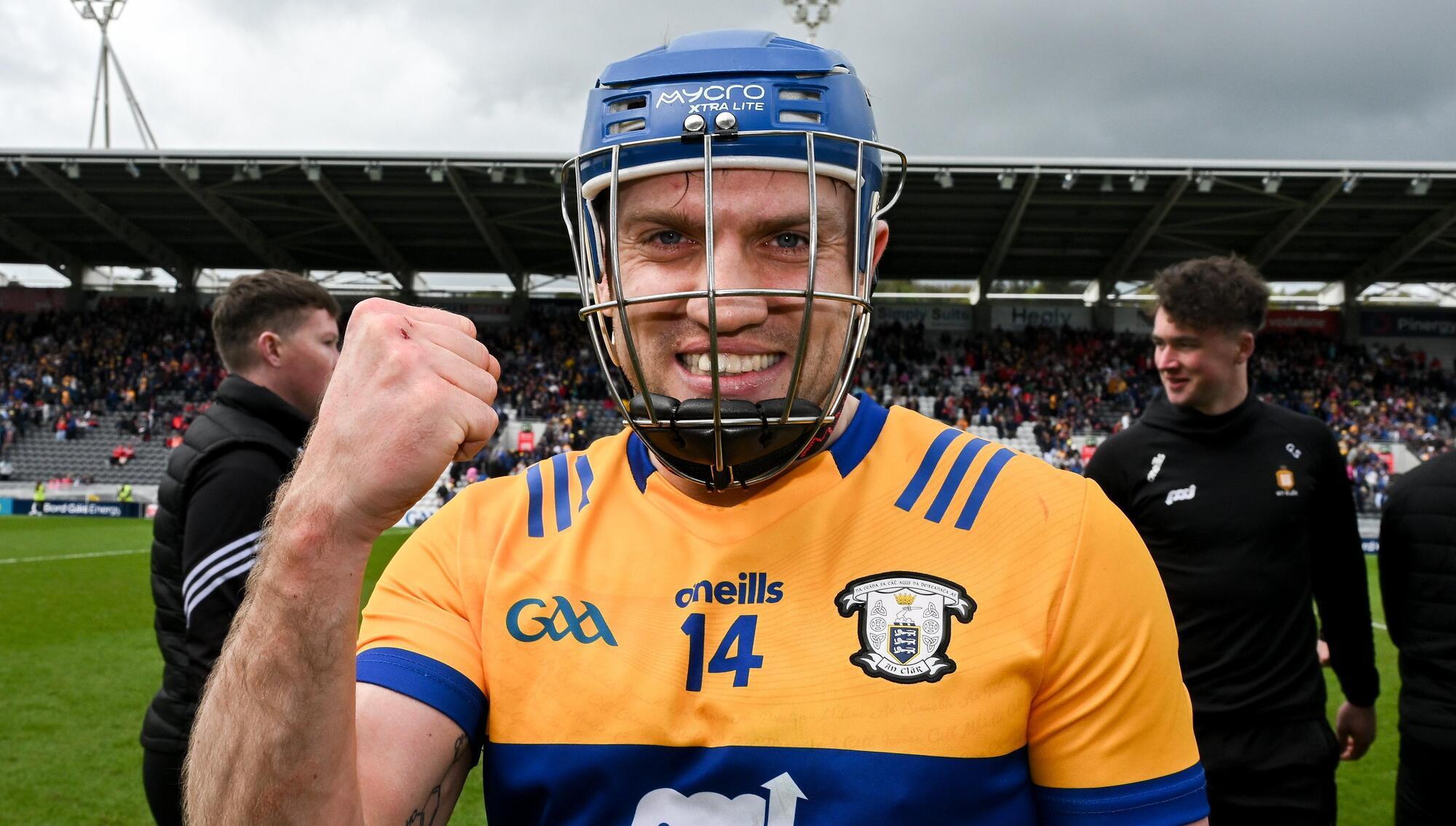
Shane O'Donnell of Clare after the Munster SHC victory over Cork. Picture: Ray McManus/Sportsfile
The split season is not perfect. It was never going to be a panacea for all the association’s ills. It shouldn’t be used as a scapegoat either.
On Sunday, RTÉ’s pre-match buildup to Galway vs Kilkenny included a prolonged segment on the ‘condensed calendar’. The bulk of the criticism focused on certain games being fixed for the same time and being difficult to watch. “I do think we are doing long-term damage to the association the way the season is being set up at the moment,” declared Dónal Óg Cusack.
Add promotion to the long list of evils laid at the split season’s door. Attendances, injuries, participation, the new format has been blamed for it all. It doesn’t matter that gate receipts are up by 15% or that the GPA’s extensive player welfare data indicates the split season isn’t an issue, or that the number of teams and players is growing in capable counties since the introduction of the split season.
In certain quarters they have failed to sufficiently adjust to the new calendar, without question. That doesn’t mean you can conflate national policy with local issues. Nor is it fair to ignore many of the proposed challenges existed long before 2021. The promotion of intercounty games is an age-old problem.
None of this is to say these aren’t legitimate concerns. But even this compromise is better than it was before. Sure, it is a complete pain that Galway took on Kilkenny at the same time as Cork played Clare but a simple tweak to Saturday night solves that issue. At least hurling fans could watch it back.
When Galway played Kilkenny in 2018, Tipperary v Cork was the other televised game. That meant Clare v Waterford wasn’t available at all. Football lost out on the same day. Derry’s bout with Donegal and Carlow's stunner against Kildare weren’t broadcast live either. The only difference is that no one could blame it all on the split season back then.
Here are eight observations from the hurling championship.
From the off on Sunday, Clare forward Shane O’Donnell sent sparks flying across SuperValu Páirc Uí Chaoimh in a clash that ended with fireworks. His first three plays were explosive. A thundering shoulder to pave the way for Mark Rodgers’ opening point, fouled for a converted free, an over-the-shoulder point from close to the sideline.
The 29-year-old is the prototype focal point. A proven ball winner, selfless while still maintaining a goalscorer’s instinct. When Clare’s attack fires, he is at the heart of it.
In total, he scored 1-1 from three shots. He was fouled for four scored frees. He assisted 1-2. From 15 involvements, only two were negative.
Liam Óg McGovern’s well-taken score in the 44th minute had Wexford seven points clear of Antrim. At that stage, the home outfit had only mustered one point in the second half. They needed relief.
Conor McDonald provided it with a silly infringement on an Antrim sideline, stepping in front of the taker to concede a free instead. James McNaughton drilled it from inside his own 65. That instigated a run of five unanswered points. McNaughton would later play a leading part in Niall McKenna’s vital goal.
Elsewhere, it was a Cork sideline that allowed Clare to stop the bleed when they were seven down. Diarmuid Ryan won the break and was fouled for Aidan McCarthy to convert. Ryan then picked off a Patrick Collins puckout and rifled an effort over for his first point from play.
With the sides level in the final quarter, Ryan won a Cork puckout on the other wing. This time he drove forward and laid off to O’Donnell for an outstanding goal. Those are the sort of clutch interventions that can define seasons.
One of the most interesting and innovative aspects of the game currently is around kick-outs and puckouts. Television broadcasts frequently fail to highlight that. Seamus Harnedy’s point immediately after Patrick Horgan’s genius goal came directly from a Clare puckout malfunction but it was missed due to the replay. Eibhear Quilligan evidently used a series of signals throughout and Peter Duggan was an inviable option but the high-behind was seldom used to show how.
The same occurs in Gaelic football. A huge talking point after their 2022 heartbreak against Galway was Armagh’s decision to drop off a late kick-out after going a point up. What did they do in a comparable position against Down last Saturday? Who knows. It was missed entirely.
The streaming service has recruited a superb list of pundits and occasionally utilises the split-screen function first deployed skilfully by TG4. Similar creativity would be a welcomed development as they continue to expand.
There was a revealing exchange on RTÉ during Kilkenny’s visit to Galway as Cork and Clare were simultaneously playing out a thriller on GAAGO. In the first half, Darren Morrissey went down in the Galway full-back line but play continued. Eventually, referee Thomas Walsh sounded his whistle once he realised that the injury was serious.
“He is going to have to stop it,” said co-commentator Brendan Cummins. “Morrissey's collarbone is in trouble. It is a new directive to referees that I wasn’t aware of until a month ago. When a player does down injured, they are told to play on unless they deem it serious.”
Cummins continued: “Think of all the years when we told fellas to take the helmets off and go down, this kind of thing. The repercussion of that now is it has been tightened up with a rule change. We will get frustrated over the course of the summer I expect with referees (and) why are you playing on but that is the reason they are doing it.”
Shortly after down south, Cork were incensed after play went on while Tim O’Mahony was down with an apparent cramp. Pat Ryan pointed out post-match that they conceded 1-1 during that period. It was a cruel outcome, but the officials were not to blame.
A nip-and-tuck match was blown open when Daithi Sands was shown a second yellow during Kerry’s Joe McDonagh Cup victory over Down. It was a fortuitous break for the Kingdom. Paul Sheehan dropped a scoreable free short and a loose hurl saw Sands in trouble. He immediately held up his hands in remorse but there was no leniency provided.
From that point on, Kerry outscored their opponents by nine points to one. Down boss Ronan Sheehan was full of praise for how Stephen Molumphy’s men used their spare man. It is a lesson others could learn from, particularly given the number of red cards across the weekend.
Speaking to Clubber, Molumphy explained it was something they had prepared for after previous struggles.
“We had that before. They lose a man; we lose our shape. We’ve seen it so many times. It is something we have drilled. It is good to practice. I don’t look forward to the day when we lose a man and have to adapt on the other side. Luckily it was on the other side.”
In the previous four Munster round-robin campaigns, only one team has scored fewer goals than Limerick. Waterford ranked just behind their 19 total on 16. Limerick scored six goals in the Munster championship last year, three of them against Cork. Everyone bar Tipperary scored more goals than them in 2022.
Is that starting to change? The demolition of Tipperary on Sunday brought their total to five in two games. Yet not all of that stemmed from a systematic change. There were kind breaks and defensive lapses along the way. What remains consistent is their relationship with green flags at the other end.
Limerick conceded 11 goals in the previous four round-robin Munster championships. The next closest? Cork with 22. What stays the same is that Limerick rarely go for broke and risk leaving themselves open. This supremacy has been built from the back up.
In the intense fallout from Galway’s 2023 All-Ireland semi-final loss against Limerick, a wave of change swept over the west. A new S&C coach, a new hurling coach and a new goalkeeper were the standout adjustments.
Darach Fahy has taken off between the posts from Eanna Murphy. His first big test came on Sunday as Henry Shefflin’s native county landed in Salthill. How did he fare?
It was a strong showing by the Ardrahan man. He retained 73% of his restarts. Owen Wall’s goal-bound shot in the second half was well saved. Galway scored 1-7 in total from their puckout, hitting 1-11 from turnovers, 0-4 from Kilkenny’s puckout and 0-1 from the throw-in.
A crippling problem against Limerick last July was an inability to work through the lines. The textbook example of what they needed was Gavin Lee’s goal on Sunday. A sweeping nine-pass move from a short puckout.
In two games, Lee Chin has scored 3-23, 1-7 from play. On Saturday he was fouled for three frees and assisted another 0-2. Galway at home is a massive fixture for Keith Rossiter’s side this Saturday. Chin can’t win it alone.


CONNECT WITH US TODAY



Be the first to know the latest news and updates