Pitching for more money: dual counties believe efforts must be rewarded
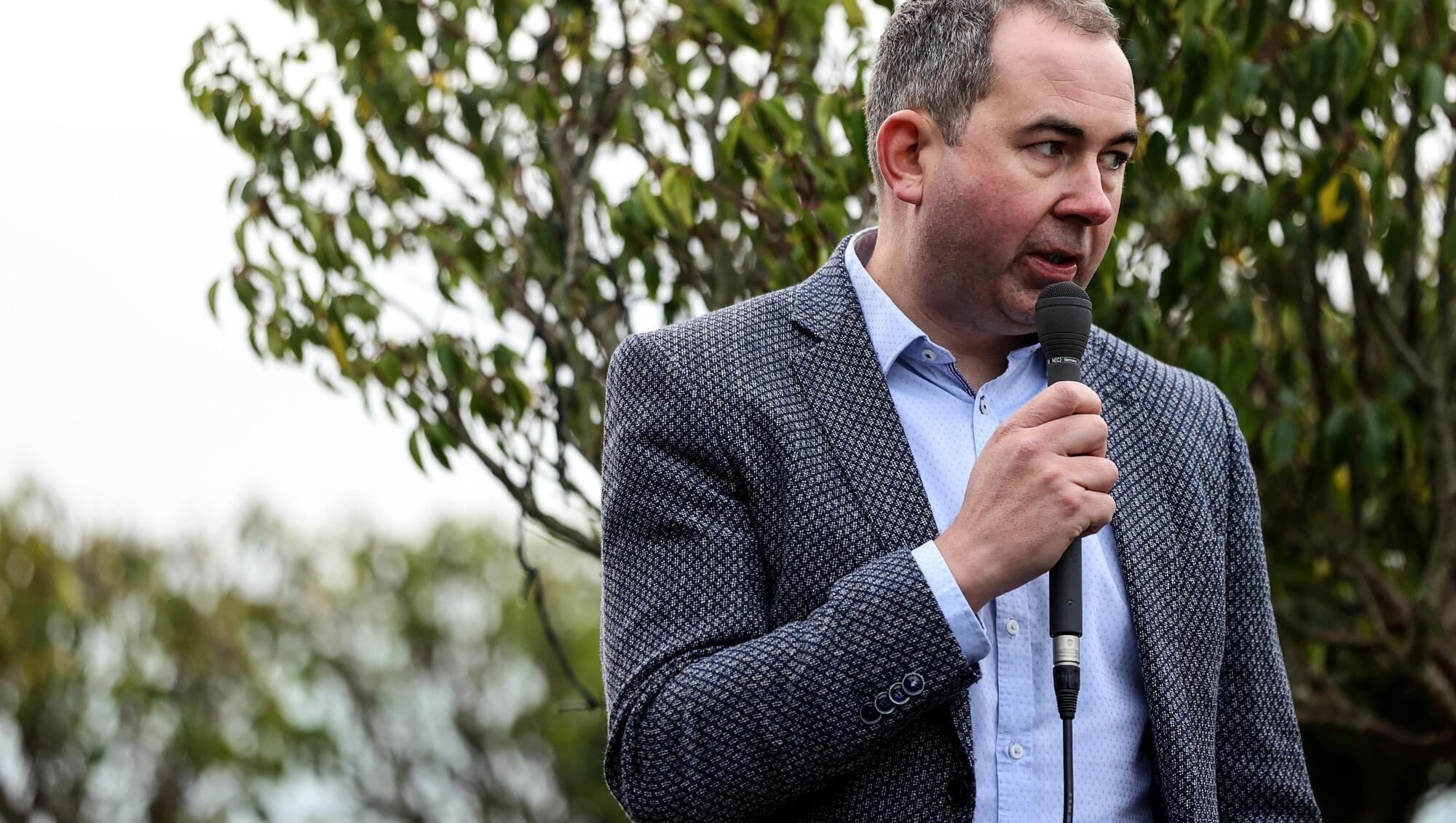
Galway GAA President Paul Bellew.
The one-code counties often regard them, pejoratively, as the holier-than-thous - the goody-two-shoes who give both football and hurling due consideration.
Dual counties are often conflated as hurling ones who have either have a healthy football scene or inter-county team or both.
It’s a rough science but there can be no question that in that bracket Cork, Dublin and Galway are tier one outfits followed by Carlow, Clare, Laois, Limerick, Offaly, Tipperary, Waterford, Westmeath and Wexford.
Not surprisingly, they often feature in the top team spenders at the end of each year. Of the top 10 in 2022, only Kerry could be considered a one-code county and even at that, their hurling teams cost them at least €424,523. In 2023, that jumped to a minimum of €468,289.
For their commitment and in the context of the spiralling costs of teams and other financial demands that lay ahead, the dual counties are beginning to get uneasy about their lot. Speaking to 'Off The Ball' earlier this month, Galway chairman Paul Bellew made no bones about that he felt the county should be receiving more money for being a fully-fledged dual county.
“My question is, and it’s a hard question certain counties won’t like it, should we be looking at counties that are investing properly in both their teams? Our split on that €2.5 million was 51% on football, 49% on hurling. It was 52-48 last year (2022). We’re spending across six teams, not just senior, and I’d be asking where is the incentive or reward for counties that benefit both?
“I know that mightn’t be too popular when it’s asked like that but if you’re doing all that and promoting both codes equally should you not be rewarded from a facilities, from a coaching and games perspective? Not about taking away money from anybody else, I’m on about where is the reward for promoting these two codes equally?”
In his convention address, Bellew doubled down on his comments and questioned just how dedicated some other counties were to both games “Why are other counties, so-called dual counties in certain areas, and spending is lopsided 70/30?”
Irrespective of Bellew’s claim that Galway are the truest form of the dual county right now, his concerns are shared by other county chairmen. In a discussion document issued earlier this month, Wexford’s Micheál Martin’s words chimed with Bellew’s.
“While there is a national debate as to the need for support to develop hurling in non-traditional areas, there is no suggestion for additional support for a club or county who genuinely promotes both codes equally, despite the additional cost, additional administration and significant amount of extra time required.”
Martin was followed by Leinster chairman and Martin’s predecessor in Wexford Derek Kent, who addressed the fixture challenges faced by dual counties on local radio: “A lot of counties don’t understand what a dual county means. It doesn’t understand the issues a dual county faces. Waterford understands, Tipperary understands, Offaly understands, Laois.”
Bearing in mind nearly half of Leinster would consider itself dual, Kent put forward a proposal to give counties an additional two weeks to complete their county championships.
Finding venues for fully-fledged football and hurling league and championship games will become a more onerous task when integration comes about. At least six county secretaries or chairpersons in their end-of-year reports highlighted the facilities difficulties that will be forthcoming.
In his outgoing address as Tipperary chairman a few weeks ago, Joe Kennedy warned of how much financial stress integration will put on the county without aid.
“Some people think if all three organisations join together, the problems that currently exist will disappear. I would suggest that the first step in this process should be the amalgamation of the Camogie and LGFA as they both cater for the same group of players.
“As you can see from our accounts, we are struggling to fund the activities of the GAA in the county. We are just about able to cater for our county teams with all our facilities in Dr Morris Park. If all three were to join, it would require significant funding from Government to fund all three associations and provide facilities.”
At least Tipperary have a centre of excellence. Cork, still hailed as the dual bastion, don’t. What’s more, they have close to a €5m cashflow crisis caused by the Páirc Ui Chaoimh debt, recently described as “stark” by Cork GAA chief executive Kevin O’Donovan. How they can be expected to fund two strong female codes on top of what they are already doing for both men’s doesn’t require maths but magic.
And yet in difficulty, O’Donovan sees opportunity. “The Holy Grail that is a centre of excellence with several playing fields available to the four codes will ultimately represent the true embodiment of equal access for all and we will continue to pursue that initiative despite the obvious financial challenges facing the board currently.”
With valid reason, the tightening ecumenicism of the Gaelic game family is clearly being signalled by counties to Croke Park and the Government as a virtuous reason to be rewarded. Seeing as most will be asked of them on this great flight, it’s understandable dual counties, as they become quads, are insisting on priority boarding.