Kilcoo solicitor on GAA appeals: 'There are no loopholes — there are just rules'
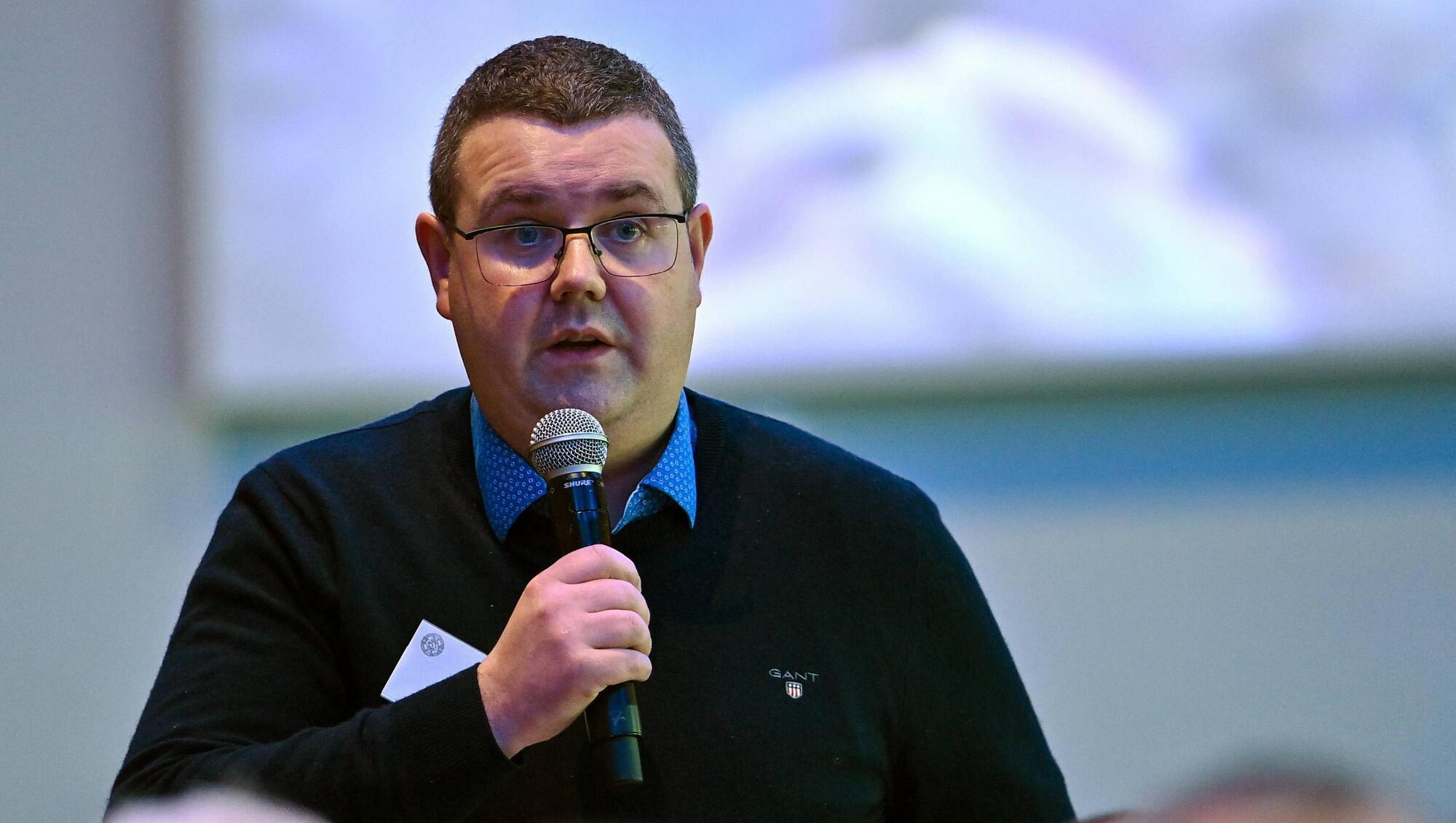
Tyrone delegate Conor Sally speaking during day two of the GAA Annual Congress 2023 at Croke Park in Dublin. Photo by Piaras Ó Mídheach/Sportsfile
By his estimation, last Saturday was Conor Sally’s seventh Disputes Resolution Authority (DRA) hearing meeting this year.
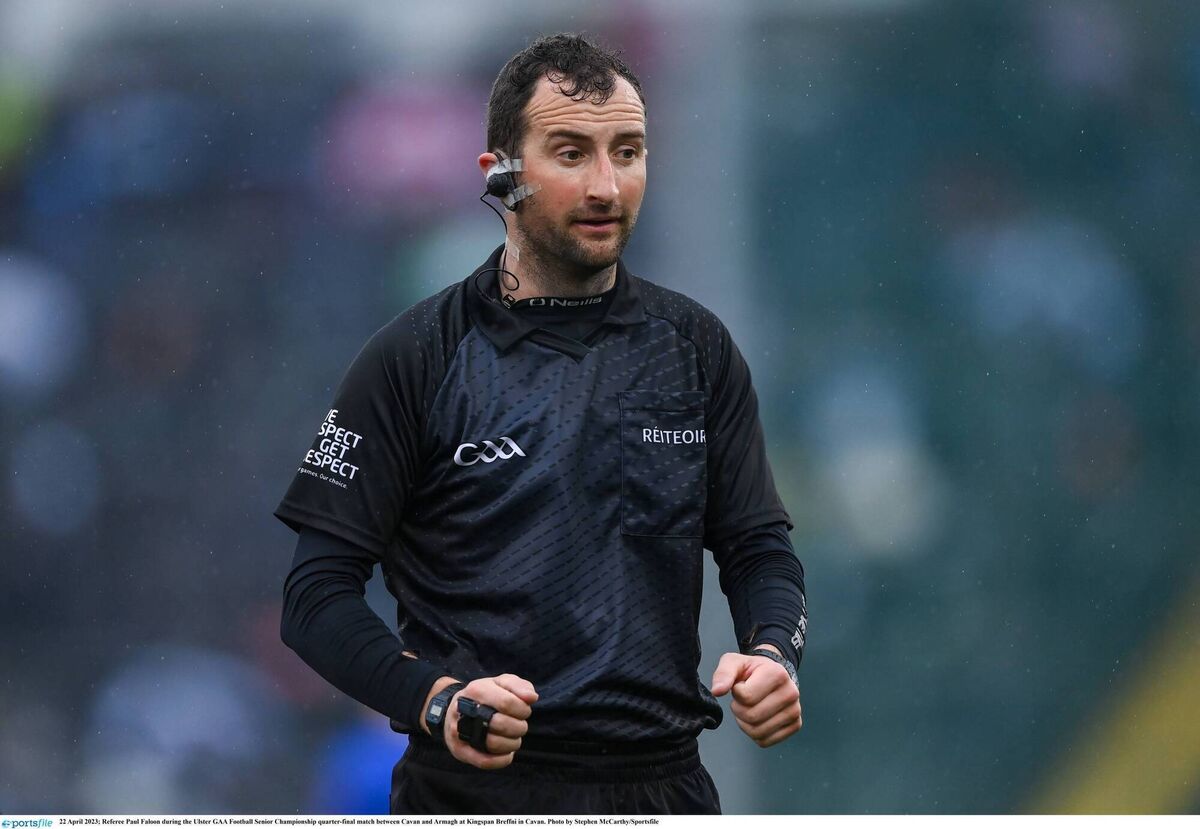
The Omagh solicitor doesn’t believe the GAA rules should entitle any unit to appeal against the appointment of a referee. Paul Faloon he rates as an excellent match official, even once filling in for him as an umpire.
Yet when he was contacted by Kilcoo, it was his professional responsibility to inform them they were permitted as per the GAA Official Guide to appeal Down’s decision to appoint Faloon to last Sunday’s county senior football final.
Sally also knew it would be a high bar to prove Faloon was biased against the club and he told Kilcoo as much. Nevertheless, when he was approached by them he understood a case could be made for interim relief seeing as the GAA’s Official Guide does not prevent a unit from contesting the appointment of a referee.
That wasn’t always the case. Up to early 2012, the rulebook did not facilitate such an appeal and other county committee decisions such as the arrangement for the date and venue of a game providing required notice is given.

However, the rule changed following Congress that year to state that no appeal could be made “outside the county”.
Therefore, one could be launched inside it. For that very reason, Sally was able to successfully make a case for Tinryland that the date for the Carlow Division 1 football final against Éire Óg as set by the county’s competitions control committee was not in keeping with the league’s regulations.
A member of Ulster’s competitions control committee as well as being chairman of his club Omagh St Enda’s, part of the Tyrone executive and one of their Annual Congress delegates, Sally has sat and often sits on both sides of the table. He is immersed in the association but his perspective is rounded by his day job.
“The very fact the rulebook allows a rule to appeal against the referee must mean in some circumstances it’s successful. You can’t have a rule to allow an appeal that’s going to fail 100% of the time.
“You’ll often hear ‘he’s using a technicality’ or ‘he’s using a loophole’. Well, there are no loopholes – there are just rules. All the people are using rules. The DRA panel have lawyers and an administrator or experienced GAA member and they judge the case as it stands before them.
“The hearing is about whether or not the infraction occurred or didn’t occur. The appeal don’t look at that, they look for a breach of rule or an injustice. If you don’t have that argument, it’s thrown out.” Sally fully expects the GAA, be it the Down County Board or the rules advisory committee, to shore up the rule that allowed Kilcoo bring their case as far as the DRA.
“You shouldn’t be allowed to appeal against a referee or a fixture or a venue. It’s hard enough for people to make fixtures and appointments and it’s hard enough work especially at county level where a lot of it is done by volunteers.
“It means at provincial and national level where there are a lot of full-time employees dealing with these matters you can’t appeal these things whereas perversely you’re entitled to at club level. I have no doubt somebody come Congress will have a motion to rectify this.
“There is enough common sense within governing bodies of the GAA that issues with referees can be discussed. We’re all GAA people and we can overcome a lot of things even though we don’t get on with each other. I don’t think we need a rule to allow for it because it’s a very hard judgement call for anybody to make.”
No sooner had Saturday’s hearing finished when Sally was being contacted again about a possible DRA case. ‘Tis the season for it, he says.
“At this time of year when you have county semi-finals and finals, somebody gets sent off and the club want every nth analysed. The same way they might order in an extra physio or masseuse to keep their players, they’ll do all they can to have them.
“Quite often, we will tell clubs and managers to take it on the chin, there’s nothing in it for them. What I find is when people get 48 or 96-week bans they have nothing to lose so they’re always going to request a hearing and appeal.
“I think it was brilliant the GAA moved away from the four-week ban. I remember (in 2008) Darragh Ó Sé walking off the field thinking he was going to miss the All-Ireland final because of the ban only for Cork to force a semi-final replay.”
Through his club and county, Sally put forward a motion that a player who hits another on the field of play and inflicts harm should receive a minimum ban of three months. However, the rules advisory committee did not sanction it be put on the Clár of Congress. “We had a player who had his jaw broke in a minor game and the guy who did it got a one-match ban. There’s not enough of a deterrent.”
He disputes the point often made that not enough players and management figures take their medicine.
“A lot of the time the media drive a negative narrative about a case and it’s understandable because most matches on our the weekends, the reports are published in the newspapers on Monday and during the summer Tuesday, Wednesday and Thursday the column inches have to be filled. So what better than ‘there’s an appeal in Croke Park tonight’. It catches the imagination of people.
“An awful lot of people believe if you do the crime, you do the time but that’s a very lazy attitude because sometimes some of these players have done nothing wrong.
“We have to remember that when we make rules in the GAA they apply to Con O’Callaghan and to the reserve footballer in Division 3 in the county. The inter-county player has the advantage of his incident being on eight different camera angles. The reserve player that was sent off, the referee mightn’t have seen it but his marker is lying on the ground with blood running out of him.
“I have encountered cases that have gone to the criminal court with incidents that happened on the field and in one instance a referee who gave his statement to the police said, ‘I didn’t see the incident, I was 90 metres from it. However, when I went down the field, the No 3 was lying on the ground with blood coming out of his nose so I sent off the No 14.’
“That player received a suspension but that evidence for a police statement was absolutely useless because the referee hadn’t seen the incident. He had done what he thought was right.
“The perception is that the inter-county player has an easier run but they have the advantages of camera angles and by the time they’re out of the stadium everyone knows if they did or didn’t do it.”
A prime example of the benefits of inter-county came in 2021 when Sally advised the Limerick hurlers and forward Peter Casey in challenging his red card against Waterford in the All-Ireland SHC semi-final. A recording of referee John Keenan’s in-game audio was sought and provided in which he was found to take the advice of his umpire over his linesman in dismissing Casey, the suspension was overturned and Casey played the final.
After a failed attempt by Tipperary in the wake of Jason Forde's ban in 2017 to define the “contributing to a melee” rule, Sally would like to clear it up once and for all.
“Right now, it could mean going in to separate two people because you’re still contributing to it.”
He also takes issue with the “at the discretion of the committee-in-charge” line dotted around the rulebook. “If you look at the statute, you’ll always have a maximum sentence but we have this discretion line. That’s unlimited and could be anything.”
Sally says the GAA owe a debt to DRA secretary, former Offaly hurler Rory Hanniffy, who he expects by year’s end will have organised 50 hearings in 2023. That nobody has sought to go beyond it to the High Court is an indication of the respect in which both it and the GAA disciplinary system is now held.
“These are all worked out within the organisation. The system works, the system’s good. It can always be made better but by and large the process is phenomenal when you think you have a hearing, an appeal and the DRA to right what you think is wrong. That avenue’s open to the inter-county player as it is the reserve player.”


CONNECT WITH US TODAY



Be the first to know the latest news and updates