Maurice Brosnan: A first look at the new hurling rule trials
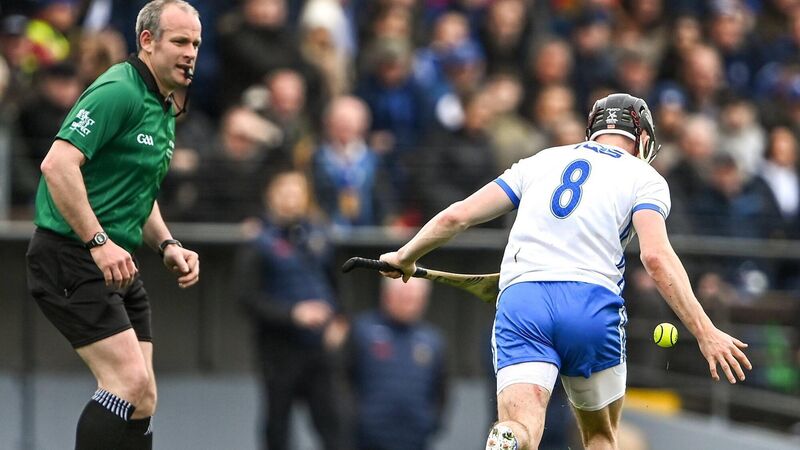
TRIAL AND ERROR: Darragh Lyons of Waterford handpasses the ball as referee Johnny Murphy looks on. Photo by Piaras Ó Mídheach/Sportsfile
Why are we here? Not here physically, reporting from Dangan in a deluge as the University of Galway welcome UL for the opening game of the freshers’ hurling league.
Attendance here is proof of psychosis. The sole reserve of the stone mad.
It is a sickness that entices anyone out to watch a game in such conditions and it is a sickness they will surely depart with. But here we are, standing on a sideline in the type of rain that is intent on ensuring you remember it until your last, sodden day.
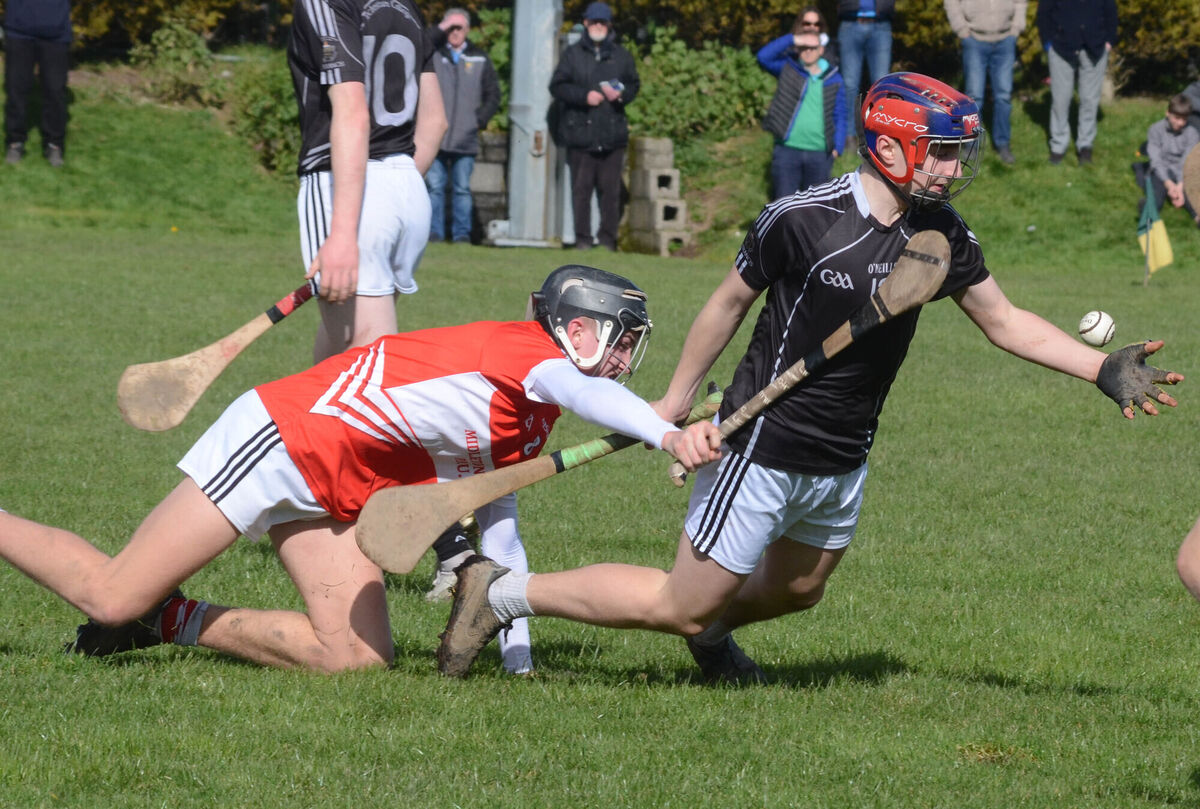
College GAA remains an unrestricted and joyous thing and that endures despite the climate. Two days after striking seven points for Kilcormac-Killoughey in a dream Offaly SHC final success, Adam Screeney is sliding full-stretch across the field to win a dirty ball. This is a day defined by dirty ball.
Those crammed into the campus’ spanking new dugout or huddled under umbrellas and branches on the hilly bank are predominately friends and family of the participants.

There is the odd header who just loves the small of freshly cut grass, the sound as bas meets sliotar flush and the feel of drenched shoes but by and large, everyone has a defence of sorts against any accusation of insanity.
The real question is why are we here as an association, trialling new rules for hurling despite a thrilling 2023 intercounty championship? Players can’t understand it. They preach bewilderment again and again.
“I do not see why we need these things. Has the game of hurling ever been in a better state in terms of the quality of matches over the last few years,” declared five-time All-Ireland winner Gearóid Hegarty last week.
It was a Munster championship of the ages. The Clare vs Kilkenny semi-final almost rivalled it. We have it good. Can it be better? The two experiments on Tuesday night orientate around the handpass and the puckout.
All puckouts have to travel past a team’s own 45 metre line. The handpass rule limits players options to transferring the ball from the hand not holding the sliotar as well as after bouncing the ball on their hurley.
Hurling’s feast or famine tendency is a poisoned recipe that leaves few satisfied. The lack of progress in closing the gap between the glutted and hungry should be an overwhelming priority and in the face of that threat, new rules is like moving the deckchairs for large swathes of the county where the game is threatening to sink.
Both a better spectacle and a broader base can be simultaneously achieved. And both have been called for. Cast your mind back to before the championship.
“The restart and the continuous use of the handpass,” was Jackie Tyrrell’s major issue with hurling earlier this year. On social media, he posted a picture of an entire half with only four players in it. The replies were similarly dispirited. “The modern game is horrible.”
Speaking on RTÉ’s Sunday night highlights programme in April, the Kilkenny legend called for two rule changes. Limit the handpass to two and restarts have to travel past the 45. “It is something the GAA need to look at.”
This was not an isolated occurrence. The calls were growing. Too many scores, too many frees, too many handpasses, too much tippy-tappy stuff. The standing playing rules committee tried to tackle all of that. First impressions?
For 20 minutes or so it felt like a positive move. Puckouts overwhelmingly went high and long, leading to more contests.
Forwards withdrew to their own 45, with bodies colliding all over the middle third. Any ball collected before crossing the 45 was immediately greeted with a roar from the opposition of ‘inside!’ A throw-in at the 20-metre line was the punishment. Queue another savage spell of contested possession.
Players tried all sorts of adaptions to the handpass. Short stickwork, handpasses off the hurl, the occasional kick. The brick flick is back with a bang. On the flip side, frequently they reverted to the last resort and fired it blindly long.
There was an understandable degree of transition still evident, a vehement protest against a free from the line was met with a patient explanation. He switched hands but dropped the hurl while doing so. That’s what the foul was for.
The weather was an obvious factor and should be taken into consideration across this trial. When players were swarmed a last-ditch option was either pump ball away or drop it down. However, there are more rucks in winter hurling anyway. The Dangan diehards will tell you that.
Then a pattern started to emerge and we started to wonder, what exactly is it we want from the game? Boil down all the grievances and it mirrors much of what football has swallowed in recent years.
The sport is too possession-orientated. Short puckouts, a more difficult handpass, it is all a bid to make it harder to control the ball. That in turn will lead to the wildness so many desire.
Where hurling differs from football is that the disease is not as prevalent and the perfect template does exist. The 2009 and 2010 finals were a wonderful marriage between the old and the new.
A prototype and ideal starting point for any committee. The dial has continued to turn since then.
The essence of hurling now is short-passing, plus-ones, precision and percentages. The public may scorn it yet that is part of the player’s modern lexicon. It was striking how often the instruction on Tuesday night was to “win the ruck!” These are their terms.
How drastic a rule is required to change that? What will be lost in the process? That is the delicate balance the GAA are trying to strike.
This week, this trial, is a start. In starting out there is a need to be absolutely clear in two things: What do we have? What do we want?
CONNECT WITH US TODAY



Be the first to know the latest news and updates