Cork getting the job done despite pattern of slow starts
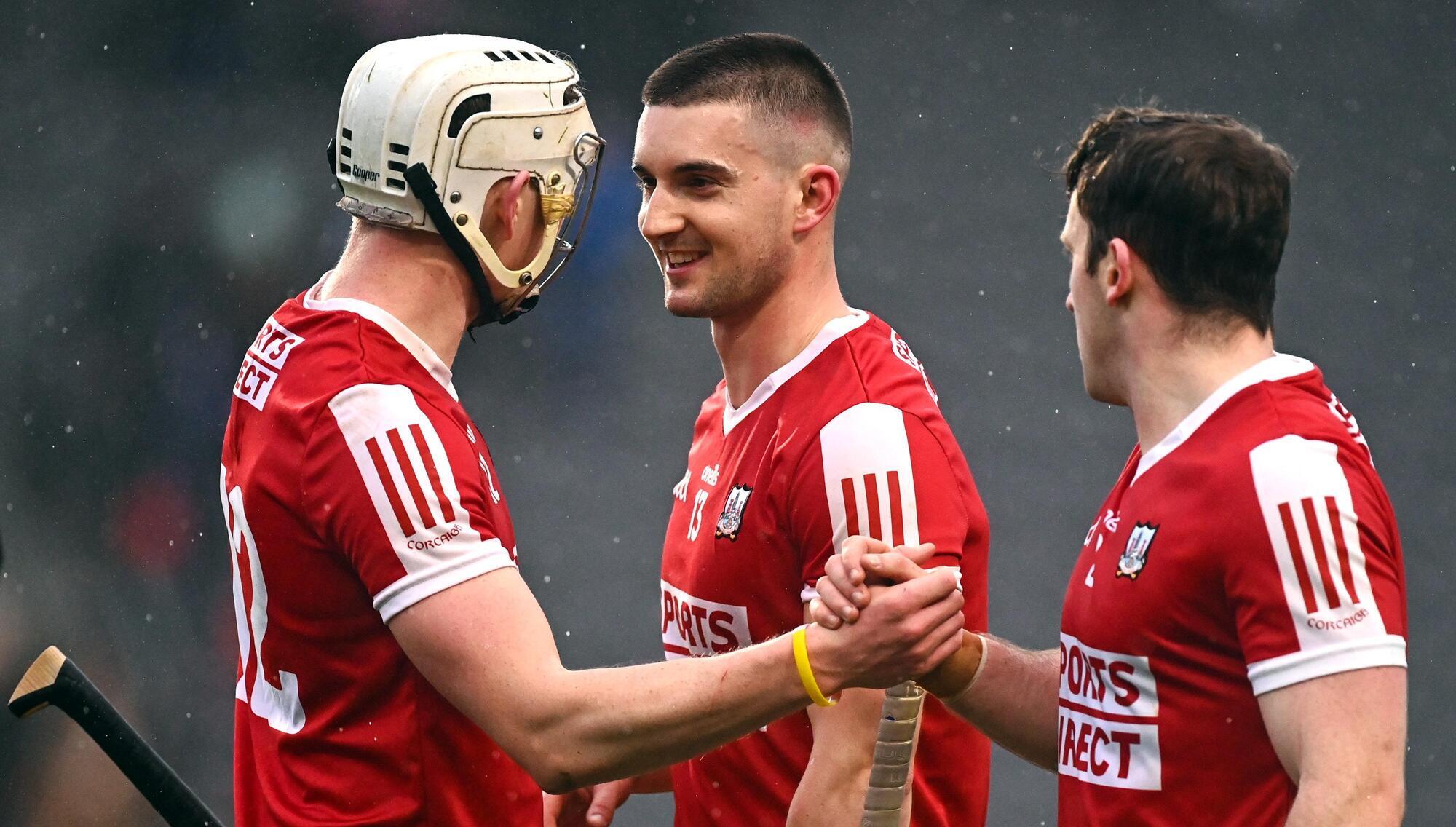
JOB DONE: Shane Kingston of Cork, centre, celebrate with teammates Shane Barrett, left, and Niall O’Leary after the Allianz Hurling League Division 1 Group A match against Wexford at Páirc Ui Chaoimh in Cork. Pic: Eóin Noonan/Sportsfile
On the afternoon of Cork’s exit from the 2022 All-Ireland championship - a self-inflicted quarter-final defeat to Galway - they spent the entire game giving chase.
Jack Grealish’s fortuitous goal put Cork in the chase position as early as the 14th second and there they remained right through to referee Paud O’Dwyer’s final whistle. The deficit was narrowed to a solitary point at different stages in the second half, but no equaliser ever followed.
Cork’s start to the 2023 season has been one long episode of giving chase. The outstanding difference, though, to last summer's championship exit has been the ability of Pat Ryan’s players to flick the right indicator late in their matchday journey and successfully overtake whatever vehicle is in front of them.
Cork’s closing-act resourcefulness has been the story of their spring.
Discounting the relatively comfortable wins over Kerry and Westmeath in the Munster SHL and Allianz League respectively, Cork's five other outings this year saw them produce come-from-behind efforts.
In their deciding Munster SHL group game against Limerick, they never once led the All-Ireland champions between the 41st and 72nd minute. Two injury-time points - courtesy of Conor Lehane and newcomer Brian Hayes - got them over the line by the minimum.
In the pre-season decider at home to Tipperary, they trailed their guests from the 29th to the 69th minute. Outgunning Tipp 1-5 to 0-1 from the 66th minute onward handed the hosts another one-point win.
Onto the league. Limerick, at home, again. The visitors led 0-16 to 0-8 at half-time. Cork spent each of the first 50 minutes in arrears. A three-in-a-row of injury-time points from Patrick Horgan, Lehane, and Shane Kingston delivered another one-point victory against the head.
Up to Salthill. Galway had constructed a five-point advantage by the end of the opening quarter. No injury-time rescue mission required here, the overtaking movement completed much earlier.
And finally to last Sunday. Jack O’Connor’s equalising point 10 seconds from the end of the regulation 70 minutes was the first time all afternoon that Cork stood level with Wexford. Cormac Beausang’s 72nd minute goal moved the hosts in front for the first time.
Following the January win over Tipp, Pat Ryan praised the final quarter attitude and resolve of his players.
“I think that has been questioned in Cork an awful lot at times and we’ve been trying to make sure that fellas play until the final whistle. You could see here that we want to play silky hurling and show off our skills, but we need fellas that are dying in the effort for us and lads did that in the end.”
It’s a compliment Ryan could easily have paid after each of the five matches outlined. But the more comeback efforts that Cork produce and the more final quarter resolve is shown, the more the manager is questioning why his team constantly find themselves giving chase.
“It’s a recurring theme now. We need to figure out exactly why we’re leaving teams get ahead of us,” he said last Sunday.
It was a sentiment echoed by Shane Kingston.
“We left ourselves go down a fair bit in the first 20 minutes. It was 0-6 to 0-0, so we were chasing the game from then on.”
In those opening 20 minutes before Kingston opened their account from the placed ball, Cork had only four shots on target. A desperate tally.
In the opening 16 minutes against Limerick in the league opener, there was just one point from play and three white flags in total.
One obvious theory for why Cork are taking an age to get out of the blocks is the experimentation with inexperienced players by management.
Of the 20 players used against Wexford, half won an All-Ireland U20 medal under Ryan's watch in the summer of 2021. In the league overall, he has handed gametime to 36 players. Exactly half of that 36-man group are graduates of the All-Ireland winning U20 set-ups from two years ago.
It’s quite clear that these younger players are taking time to settle into games. They are still finding their feet at this top level.
Moreover, injuries to older personnel means the experienced hands that should be guiding them along on matchday have been in decreasing supply. No Mark Coleman, Tim O’Mahony or Darragh Fitzgibbon at all. No Sean O’Donoghue, Damien Cahalane, Patrick Horgan or Robbie O’Flynn since Round 1. No Seamus Harnedy until Sunday just gone.
While their slow starts are no doubt a source of frustration for management, in the long run it might be no bad thing that so many youngsters are being thrown in together from the first whistle and told to sink or swim. There's been a lot of learning on the job this spring.
The job now for management is to strike the correct balance between the returning experienced hands and the not so experienced newcomers when it comes to settling on their strongest 15 for championship. As recent weeks have shown, the options are plenty.
CONNECT WITH US TODAY



Be the first to know the latest news and updates