'No physiological reason' GAA referees can't continue beyond 50
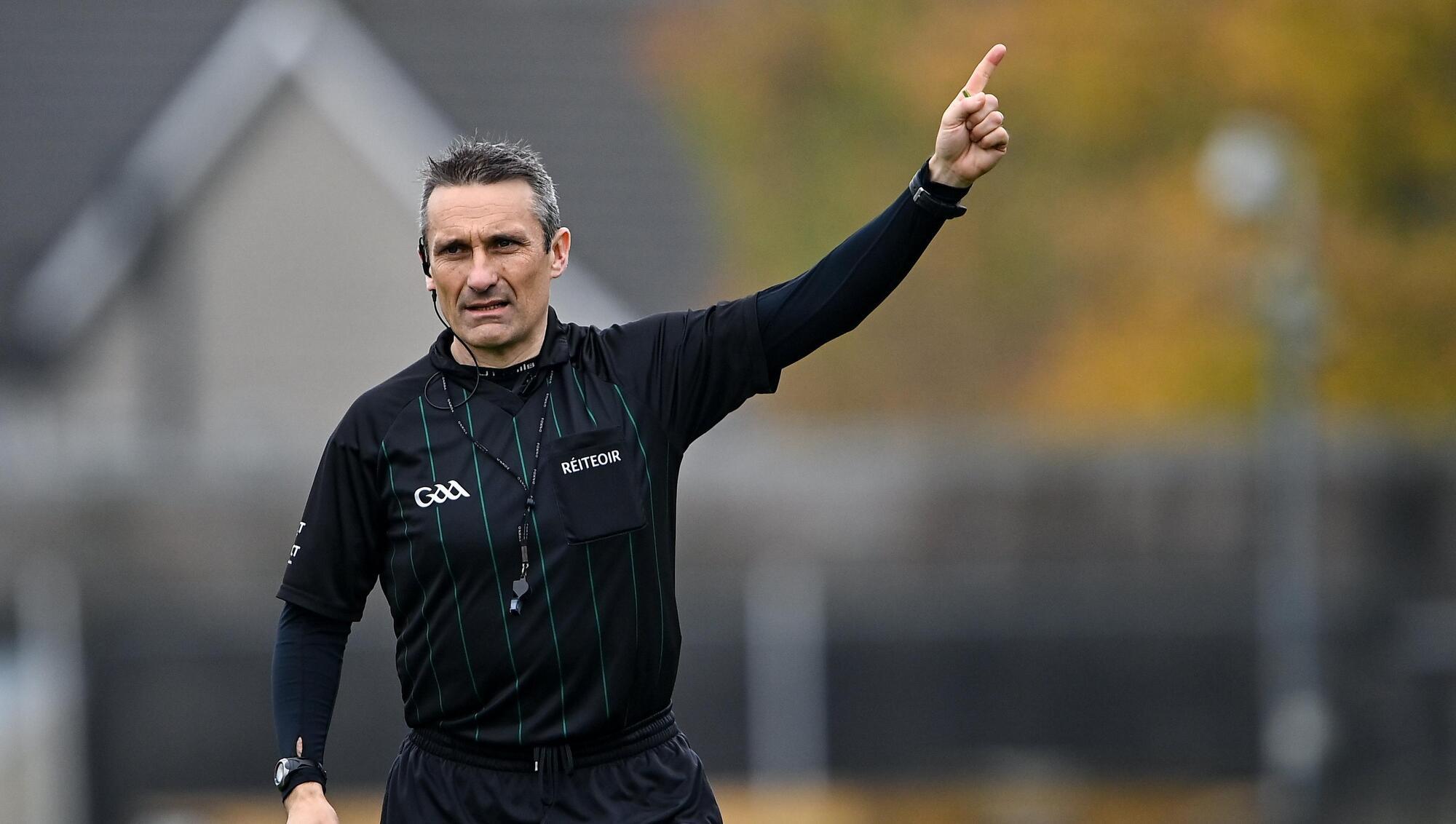
RETIRED: Former inter-county referee Maurice Deegan stepped away last year. Pic: Piaras Ó Mídheach/Sportsfile
Professor Niall Moyna says there is no physiological reason why a referee can’t officiate inter-county games after the age of 50.
Since 2011, match officials on the GAA’s national panels have had to retire after turning 50. The measure was introduced to reflect the growing physical demands of supervising the games while incentivising younger referees.
For the last 13 years, DCU academic and former Dublin senior football trainer Moyna has put together the fitness supports for the GAA’s national referees panels as well as the physical tests in the GAA’s games development centre in Abbotstown they must pass to take charge of games.
The professor of clinical exercise physiology in the Dublin college, who recently spoke against the age limit of 35 on new Garda recruits in the Labour Court, believes the only reason for retaining the inter-county age limit is the organisation’s determination to promote aspiring match officials.
“There are two sides to it. You are losing enormous experience and there are a number of guys who are getting close to 50 who probably could go for another three or four years. The top guys have built up such knowledge and they are hard to replace.
“The other side of the argument is if the young lads are coming in and see that it is a closed shop and if they are going to have to wait a decade before they get a big game they’re not going to stick around.
“There is no physiological reason why a referee should have to retire at 50. If they’re able to pass the minimum physical test that we have every year, if they are able to pass that and their eyesight is good and getting good grades in their assessments I don’t see any reason why they shouldn’t continue other than it could discourage young referees because it takes too long to rise to the top.”
Last year, the GAA gave strong consideration to lifting the age limit as it was felt in some quarters that it was arbitrary, deprived fit and able match officials from continuing their careers at inter-county level and as a result impacted on the inter-county game negatively. However, the restriction was maintained. Last year, football referees, Laois’ Maurice Deegan and Cormac Reilly of Meath stepped away while other leading national match officials David Coldrick and Joe McQuillan will follow suit in the coming years.
Moyna has recently supervised a PhD study that used machine learning to track GAA match officials’ movements.
“The next stage is to take all their movements and then relate it to decisions made during the game, where they are in relation to the ball etc,” he added.


CONNECT WITH US TODAY



Be the first to know the latest news and updates