GAA talking points: Waterford ready to go the extra mile this season
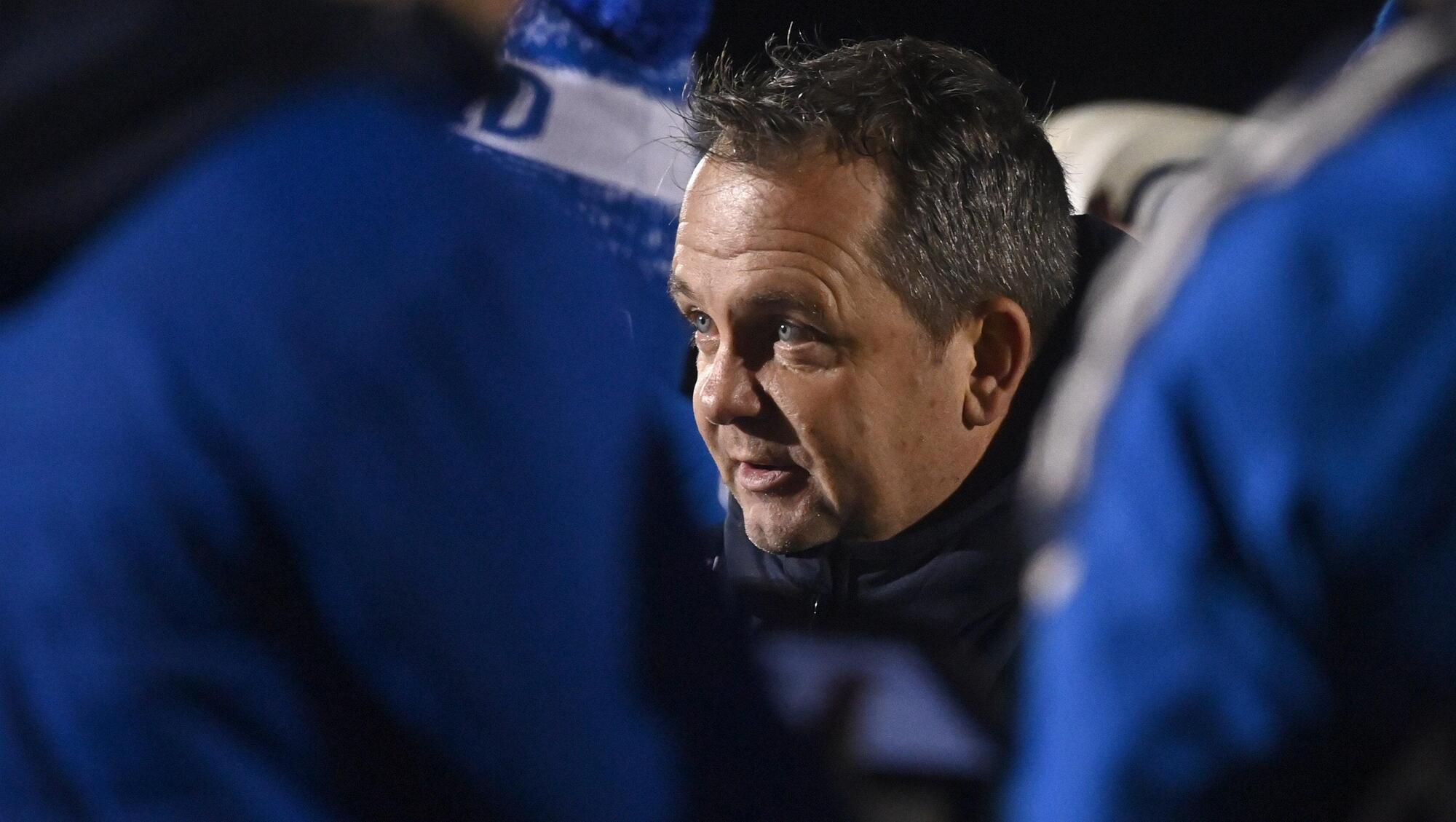
AWAY DAYS: Returning Waterford manager Davy Fitzgerald. Pic: Eóin Noonan/Sportsfile
At a Waterford county board meeting earlier this week, the news was bound to be swallowed like an ocean of cod liver oil. Whatever about Waterford having to play all but two of their guaranteed nine league and championship matches away, their two homes now carry an asterisk; Fraher Field Dungarvan will only be able to accommodate 3,600 supporters for Sunday’s game against Dublin.
After secretary Pat Flynn held talks with Croke Park, the capacity was confirmed at the county board meeting. With a thousand season ticket holders between both counties also being facilitated, the capacity is nowhere near what Waterford would like it to be for their only two home games in 2023.
Frustration was inevitable. After the sod was turned on Phase 1 of the Walsh Park redevelopment in early December, county board chairman Seán Michael O’Regan confirmed that the city ground would be available to the Waterford hurlers for this year’s Munster championship.
Not long afterwards, it was announced that Waterford would play their two home games away, with the venue subsequently confirmed as Semple Stadium. O’Regan went on local radio to outline the position and express his disappointment with what had transpired – while work on site would continue, the games as scheduled could not.
Waterford’s home league game with Kilkenny was another casualty. The anticipated crowd couldn’t be accommodated in Dungarvan so the match on March 19 was conceded to Nolan Park.
Work in Walsh Park is ongoing. Phase 1 will involve the construction of a new uncovered Northern Stand with 3,404 seats along with the refurbishment of the existing Southern Stand. The pitch will also be widened by at least three metres.
When Phase 1 is finished, it’s Waterford’s intention to play club championship matches there from July. Phase 2 is expected to start next year, which will take up a large part of the season again. The project is hoped to be completed by the end of 2025, when the capacity of Walsh Park could increase to 15,000.
Being forced to play games away from home is never ideal. It certainly didn’t do Waterford any favours in 2018 when they had to travel to Limerick and Thurles to play Tipperary and Cork in the round robin, but the mindset amongst the players is different now. The tight confines of Walsh Park clearly didn’t suit Waterford in recent seasons, but Semple Stadium certainly will.
In any case, Waterford are entering this league in a good place. They beat Wexford comprehensively last weekend in a challenge game. Training has gone well. In one way, having only two home games in this league is no real hindrance - because Waterford need to get used to hitting the road.
On a Tyrone counter-attack last Sunday midway through the second half, Tyrone suddenly had a three-on-two in acres of space. The Roscommon defence were desperately scrambling before a couple of quick passes between Cormac Munroe and Darragh Canavan played in Darren McCurry for a glorious goal chance. McCurry was inside the 13-metre line but he misjudged the hop from Canavan’s pass and spilled the ball.
A goal at that stage would have put Tyrone six points up and in the driving seat with the wind at their backs. But Roscommon scored a goal from their next attack and the match suddenly jack-knifed back in their direction.
Roscommon are a good side but when it comes to perception, inches often add up to miles - how would the mood in Tyrone be this week if McCurry had scored that goal and Tyrone had won the game? After another defeat, the narrative has continued to portray Tyrone as a side in freefall since the 2021 All-Ireland final.
“It’s very worrying for Tyrone,” said Seán Cavanagh on League Sunday that night. “After a seriously bad year last year, there are going to be a lot of questions asked if their form doesn’t pick up soon.”
A couple of days later, Peter Canavan, who has two sons on the squad, gave a more worrying assessment on where he feels Tyrone are at. "They don’t appear to be playing as a unit at the minute,” Canavan told RTÉ. “They are tiring badly. I think it’s too simplistic just to say fitness is a problem in the last couple of games.”
It’s still only early February but Tyrone’s form has been so consistently poor for so long now that last Sunday’s result was bound to trigger even more question marks. Unlike most of the top teams, Tyrone have been playing the majority of their top players, a handful of whom are still struggling to find any consistent form.
Derry took Tyrone apart in the McKenna Cup final. They have conceded six goals in their last two games. Tyrone’s play has been too slow and pedestrian. And the squad has been lacking that ruthless edge and chip on the shoulder mentality that has always been the poison in their bite.
After seven members of the 2021 All-Ireland winning squad stepped away last year, their options became thinner again at the outset of this season when Conor McKenna returned to the AFL.
With Donegal coming to town on Sunday, Tyrone are desperately craving a spark to ignite their season. Whatever about the result, Tyrone need to show something, anything, to stop the bleed.
Otherwise, the narrative is going to continue to portray Tyrone as a side in freefall.
When Brian Cody stepped down last July after 24 years in charge, it was almost fitting that Derek Lyng was chosen to replace him. Lyng was the ultimate exemplar of Cody’s philosophy because of how richly he espoused his values.
Much like Alex Ferguson after he left Manchester United, there was never a doubt that Cody would have a massive influence on the appointment of his successor. After being involved with Cody as a selector between 2014-19, Lyng took over as Kilkenny U-20 manager. The backroom team he assembled – which included Peter Barry and Michael Rice, two more hugely respected players during Cody’s reign – immediately had the look of a senior management team in waiting.
Lyng’s three years in the U-20 job weren’t always easy, especially the first two when Kilkenny were well beaten by Galway, before winning last year’s All-Ireland. It was a huge boost for the county but there was an even deeper respect for Lyng afterwards in how he had quietly and diligently gone about his business.
Henry Shefflin’s status as the most natural successor to Cody radically changed after he took over Galway. When Cody departed, there was some talk that Shefflin would leave Galway to step into that vacancy, but that was never a runner. In the huge vacuum, Lyng was the only candidate cut out to fill that void. And nobody would have argued that case more than Cody.
Lyng’s arrival has blended freshness with a fundamental grasp of the Kilkenny way. His starting points are obvious, especially in trying to make Kilkenny more tactically fluid and adaptable. Lyng’s three-year term will also require a serious level of reconstruction.
Yet however he goes about the job, Lyng will do it the Kilkenny way.
His way.


CONNECT WITH US TODAY



Be the first to know the latest news and updates