Hurling Tactics: Clash of provincial styles brings uncertainty and intrigue to Semple
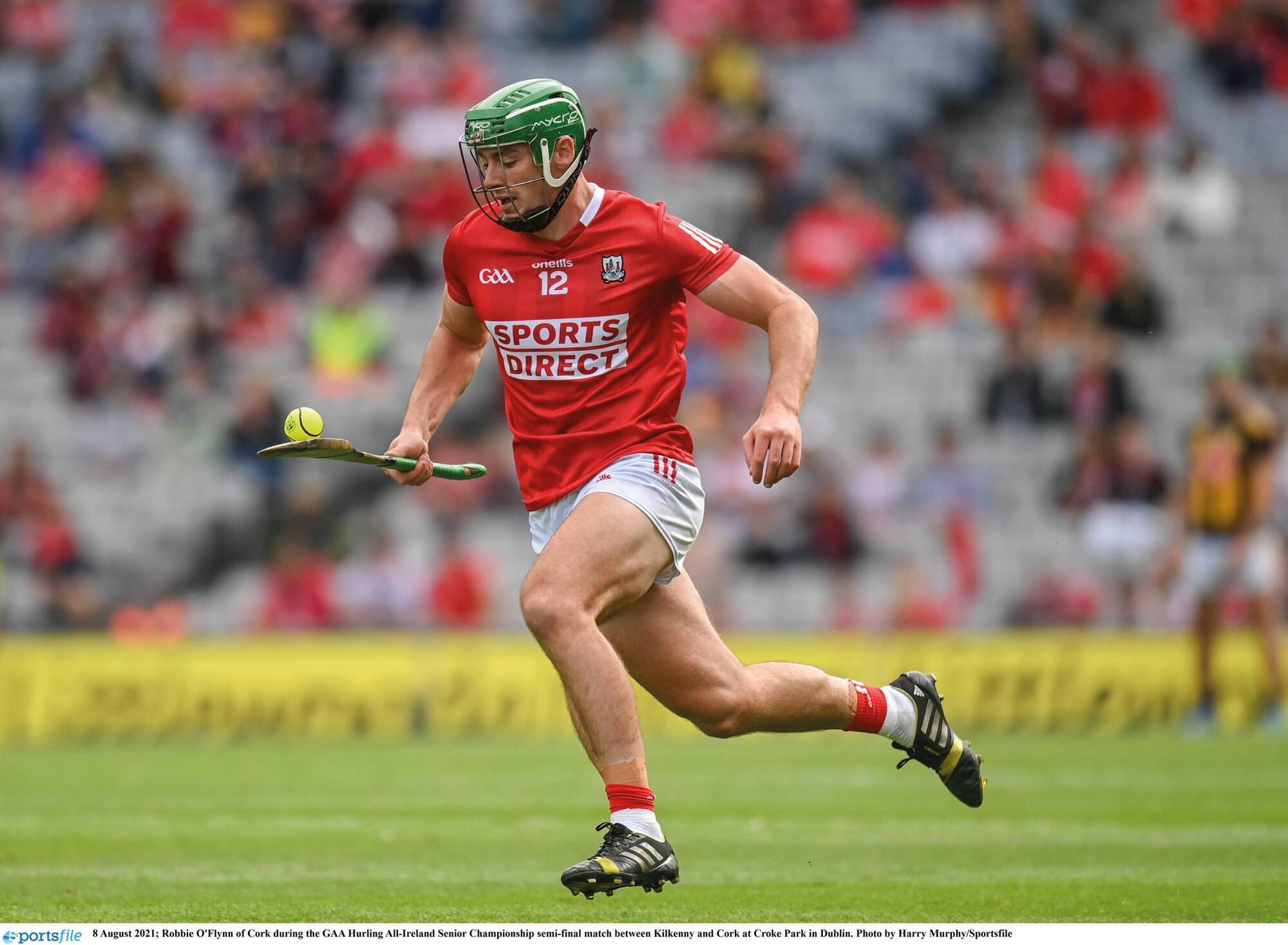
Robbie O'Flynn of Cork brings the kind of pace that may require a Galway realignment
Which style of play will prove more dominant in Cork v Galway. During their Munster campaign, Cork reimagined themselves as a free-flowing, fast, direct team. Their slow-passing, precise, short game wasn’t working. A toothless showing against Limerick, followed by a turnover-riddled defeat to Clare, seems to have forced Kieran Kingston to return Cork to a simpler plan that suits them best.
In Semple Stadium against Tipperary they counter-attacked with direct deliveries from their own third into space for the forwards to cut loose. No longer were wing-backs dithering and procrastinating, looking for the perfect ball. They burned the Tipp defence and reminded Cork fans how vicious their forwards can be when given quick ball.
Galway, on the other hand, came through Leinster playing in games more akin to Rugby Union. Using long aerial bombardments from puckouts mixed with sometimes over-zealous tackling, their games have been full of turnovers, whistles and lacked pace and flow.
The question for Cork is can they force their free-flowing style on this quarter-final or will they find themselves frustrated and shackled by the Tribesmen's physical, structured play?
Counter attacking at pace off winning an opponent’s puckout mightn’t be so easy when the likes of Cianan Fahy and Conor Whelan are on the hunt.
Galway forced 48 turnovers on average during their Leinster games. Cork's two big wins over Waterford and Tipperary saw games with an average of 36 turnovers per team - less play breaking down, more free-flowing attacks to shots.
Shefflin’s men don’t give up space easy and have reduced teams to 33 shots on average, 10 less than the average number of shots Cork have taken over the past three wins. Can Cork find space to get the likes of Lehane humming or will they be ground into a territorial battle?
But Shefflin's Galway haven't yet faced the Cork style in this championship. Conor Lehane, Shane Kingston, Seamus Harnedy and Robbie O'Flynn bring raw pace and movement that ask serious questions of any defence. Can Galway keep their settled back six in place and cover players capable of making yards of space when running for possession?
Galway have two tactical options:
Galway have a mix of pace and strength in their back six. They can switch around defenders to counter the raw pace in Cork's half-forward line. They may move Jack Grealish, a fast corner back, out to handle the speed of Shane Kingston. Switching roles and being flexible key for modern defenders — this year Liam Cahill moved his full back Conor Prunty out to mark Gearóid Hegarty at wing forward. Wexford moved Damien Reck from centre back to mark Kilkenny’s Eoin Cody at corner-back.
But these changes can disrupt the workings of a defensive unit. Limerick have refused to change positions to match up styles. Some coaches look for a mental match-up over the physical skillset. Do you have an ultra-competitive defender who would relish facing the opponent’s key men despite not having the pace or strength to match. Some men find a way to win the battle.
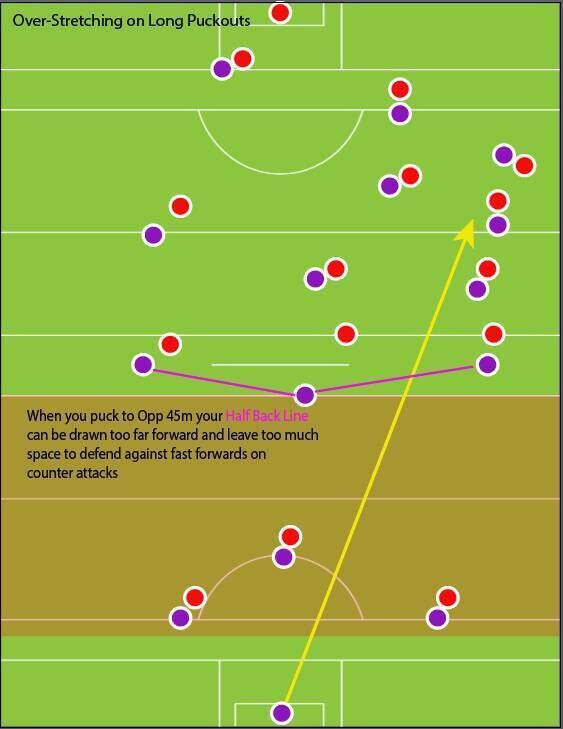
The biggest driver of space between defensive lines is the choices made when taking long puckouts. The modern day long puckout commonly lands on or inside the opposition 45m. The opposition usually brings their half forwards back to help win breaks. This in turn draws half forwards up the field and suddenly teams find themselves with their own half back line at midfield and 45 metres of open space from midfield to the full back line. This is where the Cork counter-attack can punish any team.
Galway might be slightly more conservative on long puckouts, making sure they aren’t drawn out too far, and not overstretching their team, as a lost long puckout can be devastating.
Asking your forwards to contest puckouts in packs and make sure your half back line and midfielders can hold a solid shape within your half. This may seem a very negative approach to your own restart. But the top teams, especially Limerick, ensure they are not wide open when losing their own puckout.
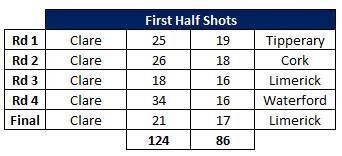
A striking element of Clare’s games to date has been their ability to start well. Through their five matches, they have outshot their opponents 124-86 by half-time. 38 more shots in 5 games. Tipperary were 13 points down at the half, Waterford 14 and Cork found themselves 0-15 to 0-4 behind after 28 minutes. Limerick trailed throughout the first halves of both encounters before forcing the score level just before half-time.
These fast starts have been driven by high-energy, full commitment hurling, every man fighting for the cause. Clare’s half-time positions have allowed them the luxury of 'losing' the second half to Tipperary, Cork and Waterford.
Wexford have been very slow starters in the Championship. Through their opening games against Galway and Dublin in Wexford Park they trailed by 0-6 and 0-4 at the half, behind on the scoreboard for 30 minutes of both opening halves. Unconvincing first halves against Laois and Westmeath followed and when Kilkenny were four points up in Nowlan Park after 15 minutes, Wexford must have been wondering about their pre-match routine. Though the adrenaline of a do-or-die scenario appeared to rouse the Wexford spirit and they fought back to lead Kilkenny by the half.
Clare will look to throw different attacking shapes and looks at Wexford from the off. Tony Kelly and Peter Duggan may swap roles for the opening period, asking questions of defensive preparations and match-ups. Kelly sprints to the corners when full forward and is then replaced on the edge of the square by Peter Duggan’s strength and wits. Shane O Donnell will tease out his opponent, moving and probing on where he can find space or best disrupt.
If Wexford are not alert and flexible then Clare will once again have a strong hand to bring into the half-time debrief with Brian Lohan. Darragh Egan needs to find a rousing start from his men and meet Clare head on, bring both sets of passionate supporters into the game.
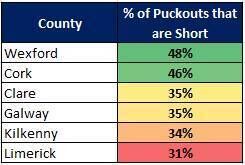
Key for Wexford in Nowlan Park was the confidence of Mark Fanning to hit a short puckout to Liam Ryan in the last 20 minutes of the tense battle. Kilkenny have been the strongest team at defending long puckouts this year and had won 10 of Wexford’s 14 long puckouts up to that point. Liam Ryan was able to carry possession out from defence and start a short passing game that lead to three key points that helped Wexford get the win.
In Semple Stadium, Clare must make this a harder plan to execute. Clare’s Munster rivals Cork have a similar profile to Wexford in using short puckouts often. Cork played 18 short puckouts against Clare in their Munster encounter and gained very little success with only three shots generated for 0-2. They also conceded a point from an intercepted puckout.
Clare were aggressive from the start and pounced on the second phase of Cork's short puckout play, McInerney and Conlon refused to allow their men an easy collection in the middle third. The Clare forwards chased and harried every ball, closing space and forcing poor deliveries.
In the 2021 Championship meeting of the sides, Clare offered Wexford an easy option on the short puckout, allowing them carry possession to the Wexford 45m line – but not allowing them pass any of the Bannermen. This gave Wexford few options and disrupted their short puckout plans.
Wexford took 12 puckouts short in the first half resulting in a single point in injury time and Wexford were 10 points in arrears when they scored that point. Wexford abandoned the short option in the second half.
Added to the multiple tactical battles going on in each quarter-final is the style difference between Munster and Leinster hurling. It means this weekend’s games carry uncertainty for the management teams.
Backroom analysis by the likes of Áine Kinsella with Wexford and Eamonn Myers in Clare will aim to guide coaches on what key issues they’ll need to address heading to Thurles. Hopefully the clashes of styles will bring two exciting close games.
CONNECT WITH US TODAY



Be the first to know the latest news and updates