Hurlers will quickly handle clampdown on the throw, says ref Barry Kelly
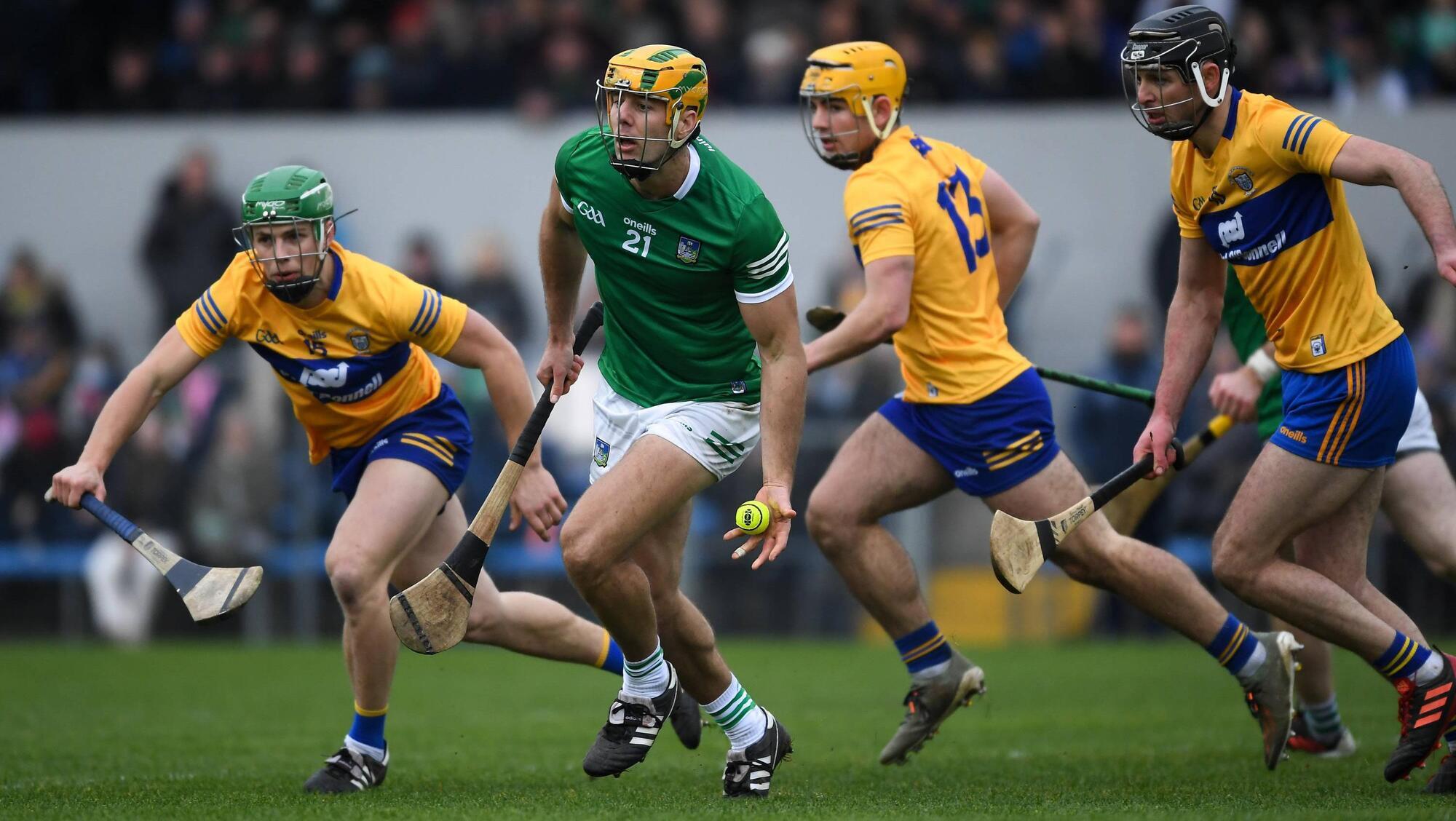
23 January 2022; Dan Morrissey of Limerick handpasses the sliothar to a teammate during the 2022 Co-op Superstores Munster Hurling Cup Final match between Limerick and Clare at Cusack Park in Ennis, Clare. Photo by Ray McManus/Sportsfile
Former All-Ireland hurling final referee Barry Kelly says enforcement of the handpass rule will force players to “adapt very quickly” to avoid being penalised.
Last Sunday there were several instances of handpasses being penalised by referees in the NHL, and Kelly said: “There is a rule in place, it’s not as if a new rule is needed. It’s just that the rule has been ignored by players — and by referees at times, being honest.
“It’s a release and strike for a handpass. Not just a release.
“A team like Limerick, the handpass is a vital part of their game, and the quicker it’s done the better.
“With anything like this players adapt incredibly quickly, as do mentors. Most mentors may not know the exact rules — they may never have done a rules course — but when a new rule comes in they’re very quick to latch onto it and play accordingly.
“For instance, I refereed a Gaelic football game last week and every time there was a sideline kick the crowd and half the players were saying ‘over the line’ because they know it’s a foul to kick the ball when you’re over the line.
“In hurling, players realised very quickly that the handpass wasn’t being policed, and they’ve played accordingly.”
Kelly can refer to his own experience to illustrate how the game has changed — or how tolerance has changed, at least.
“I remember whistling Dónal Óg Cusack in the 2006 All-Ireland final, Cork v Kilkenny, when he gave a handpass out to Pat Mulcahy at the Hill 16 end.
“Going by today’s standards it was probably a good handpass — but I thought he threw it at the time.
“Last Sunday (referee) Sean Stack blew for a few throws in the Limerick-Cork game but by and large players don’t argue when they’re caught — their attitude is far more likely to be ‘fair cop, I’ve been caught, but I’ve been doing it for a few years’.
“If you went to any training session run by the top 10 county teams this week, for instance, you can be sure they’re running handpassing drills and the coaches are saying, ‘lads, they’re clamping down on this so we have to be sure we’re doing it right - release and strike, the two parts of it’.
“There has to be a clear strike — a clear, definite action, that’s what the referees are now looking for. At present a lot of the handpasses are just players pushing the ball out of their hands rather than showing that definite action.”
Gaelic football had to be “tidied up” a couple of decades back, he points out: “My father umpired for (referee) Paddy Collins and I went to a lot of games — you saw the likes of Mikey Sheehy running through and handpassing the ball past Billy Morgan and there was no skill involved, it was terrible.
“The football handpass was tidied up successfully, though — the only time there seems to be an issue is someone passing the ball over his head, because it’s harder to show an underhand action.
“The best exponents of a proper hurling handpass tend to be the lads who’ve played handball — the likes of Richie Hogan and DJ Carey. Not just because they can pass the ball 30 or 40 yards but they never do the Cian Lynch-type one, which is just a release.
“Obviously it’s quicker to do that, but equally obviously it’s being coached into players.
“Coaches will do that, as they do when they tell players ‘we’ll take six steps and strike on the seventh until we get blown up for it’.
“Once players are getting blown up for illegal handpasses they’ll adapt very quickly, though, and you’ll see fewer of those throws.”
CONNECT WITH US TODAY
Be the first to know the latest news and updates