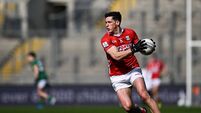
Shot-stopper, playmaker, free-taker: The changing skillset of GAA goalkeeping
The risk will always exist but is balancing it with reward worth the gamble in how managers and coaches now view the position?
Shot-stopper, playmaker, free-taker: The changing skillset of GAA goalkeeping

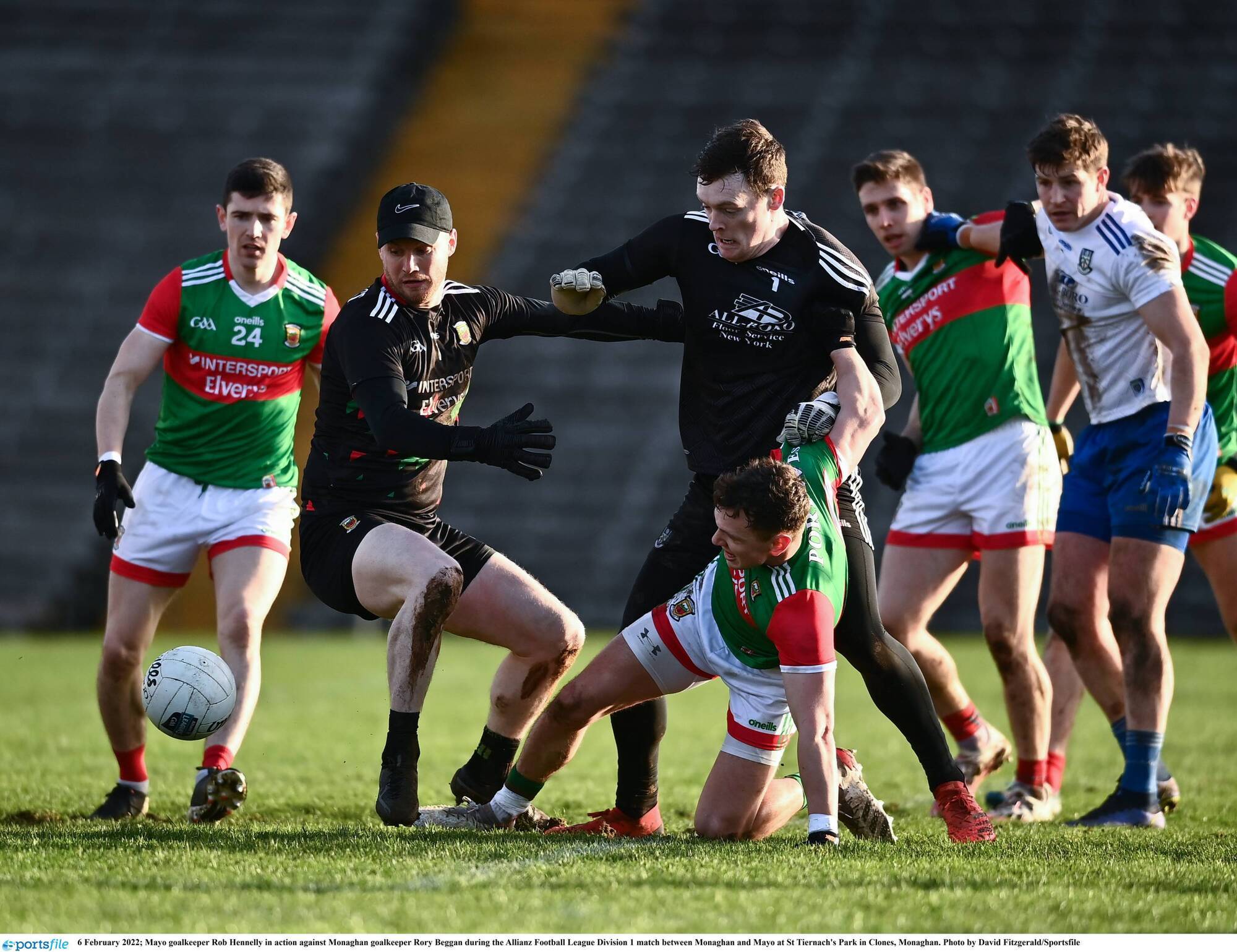
A LONG WAY FROM HOME: Mayo goalkeeper Rob Hennelly and Monaghan goalkeeper Rory Beggan battle for possession during a recent Division 1 match. Picture: David Fitzgerald/Sportsfile

A few weeks before Armagh played Cavan in the 2016 Ulster Championship, Armagh and Derry met in a challenge game in Tullysaran. The game was fully open to the public. Armagh’s high-scoring win was widely reported in the local media. Nobody seemed to take any notice that Paul Courtney was the goalkeeper.

When Courtney started against Cavan, with number 16 on his back, the core narrative of the post-match discussion was that Kieran McGeeney decided to play an outfield player in goal on a whim of fancy. Courtney spent most of that afternoon looking and playing like an outfield player. At one stage, Courtney was on the Cavan ’45 looking for the final pass of a move he initiated. The goalkeeper didn’t even wear gloves.

McGeeney was savaged for the audacity of, allegedly, playing someone in goal with zero experience of the position. Of course, that wasn’t true, but the story was too good for there to be any real place, or need, to explain the full truth.

Courtney grew up as an outfield player, but he was such a good kicker of the ball that he played in goal for his club, Ballyhegan, in the senior championship at just 16. A year later, he was the Armagh minor ’keeper in 2003. By the following season, he had graduated to full-back on the minor team. Courtney was midfield on the Armagh U21 team that won the 2007 Ulster title.

He spent a handful of years on the senior panel afterwards until a back injury forced him off the squad. When Courtney finally got the recall, he was 30.

The championship was only weeks away when Armagh goalkeeper Paddy Morrison broke a bone in his vertebrae. Courtney hadn’t played in goal for 13 years but that’s where McGeeney intended him to play.

“I was called in on the basis of doing nets, but I said I wouldn’t do it,” says Courtney now. “I was playing well for my club at the time (St Jude’s in Dublin) and I didn’t want to lose my spot there.

“They [the management] said that they had an idea of what they wanted me to do in terms of goalkeeping and that I’d get more of a chance to express myself than I thought. I was happy with that.”

McGeeney and coach Aidan O’Rourke wanted Courtney to be heavily involved in the game as a playmaker. In that challenge game against Derry, Courtney went on regular forays up the field. He was even more adventurous in another challenge game against Roscommon.

The tactic makes perfect sense now, but back then the public weren’t ready to accept it.

“I used to laugh at this notion that I had never played as a goalkeeper before and that this was just a rabbit pulled out of a hat by McGeeney,” says Courtney. “Everything I did that day was all planned.

“I had to do what I needed to do to keep possession of the ball. We just saw it as me being the first point of attack. An opposition forward isn’t going to track you if he’s tired and you’re fresh. When I got off the short kickout and then took the next pass, I was going to be powering past the forward. It was a simple plan. The advice was, ‘If you see an opening, go for it.’”

Armagh coughed up three points off their own kickouts that afternoon but they still won 17 of their 24 restarts. Courtney couldn’t be blamed for the two goals he conceded, but an eight-point defeat with a maverick ’keeper made him a natural scapegoat; Courtney never played championship for Armagh again.

The real truth was more nuanced. On one of his roaming adventures, Courtney got blocked down, his knee hyper-extended and he tore his patella tendon. Courtney was sidelined for four months.

“I probably should have stayed in goal and I wouldn’t have got hurt,” he laughs now.

Back then the whole episode was a laughing matter but hindsight has shown it was a move far ahead of its time.

The 2020 All-Star ‘keeper Raymond Galligan began his inter-county career with Cavan as a forward. The current All-Star ’keeper, Niall Morgan, has graduated to a full-time midfielder for Edendork. Kerry ’keeper Shane Ryan also plays outfield for his club; so does Conor Gleeson, the Galway ’keeper for last year’s championship.

The evolution of the goalkeeper has accelerated in tandem with the evolution of the game. Morgan has kicked points from play for Tyrone. In their opening league game against Tyrone three weeks ago, Rory Beggan scored his first point from play for Monaghan.

Stephen Cluxton has been at the heart of the modern trend but that was more around kickouts and long-range frees.

Roscommon’s Shane Curran was the original maverick before Laois’s Graham Brody became the modern face of the more ‘adventurous’ goalkeeper in the last decade.

Curran was a pioneering mind with the personality to try something different. Back then, in the late 1990s and early 2000s, the full impact and application of an attacking ’keeper in football was largely uncharted but the modern game has increasingly facilitated those expeditions.

“It’s much easier for a goalkeeper to come out of goal now than it was when I was playing because there is often nobody in sight 40-50 yards from goal,” says Curran. “I often had to try and beat four or five forwards, which was way riskier. I was just lucky that I never had a manager who stopped me from using my skills for the betterment of the team.”

There is always risk involved with such a strategy but the increasing evolution of the position has added further dimensions to how a ’keeper can affect the flow of games and contribute in open play.

Beggan and Morgan are so strong at attacking and winning the ball in the air that both ’keepers pressed each other’s kickout high up the field, even contesting them in the air, in last year’s Ulster final.

It was novel but that tactic certainly wasn’t new in the Ulster Championship.

Last summer, Seán McNally, Raymond Galligan, Blaine Hughes, Odhrán Lynch, and Shaun Patton, along with Beggan and Morgan, operated at various stages to try to fill that pocket of space on the opposition kickouts.

Becoming more active and more engaged on the opposition kickout is another level again but modern coaching and analysis has become so advanced and detailed that innovative minds will seek to coach around that tactic and exploit the risk it entails.

Tyrone did as much last July because, when Beggan advanced on Morgan’s long kickout, the Tyrone ’keeper twice drove the ball straight down on top of Beggan. On both occasions, Tyrone won the break, one of which required Beggan to make a brilliant recovery in stealing the ball from Mattie Donnelly as he raced to the Hill 16 goal.

The risk will always exist but is balancing it with reward worth the gamble in how managers and coaches now view the position?

“A lot of managers seem to think now that a hybrid goalkeeper is the way forward,” says Curran. “I don’t think it is.

“From a technical point of view, you still need to be a competent goalkeeper. The most important aspect of goalkeeping hasn’t changed. I don’t think you can base your goalkeeping metrics on your ’keeper just being a good kicker or playmaker. My contention is that you can’t win an All-Ireland without a technically good goalkeeper.”

Finding the right balance is the key in any trade-off.

“Are you going to need an outfield player?” asks former Donegal ’keeper Paul Durcan. “You can’t forget either that it comes down to the basics. When you get a very good outfield player, it is very hard to put them into goals and get them as a shot-stopper.”

Where is all this leading to? If the evolution continues at such pace, the ’keeper of the future will be a dead-ball specialist, fast, athletic, comfortable in possession and under dropping balls in heavy traffic, one of the team’s best passers, a competent playmaker in building the play from defence, and an excellent shot-stopper.

Curran has long been a student of the position, having also played soccer at a high level.

“The key to the future is evolving and developing the perceptual coaching and thinking of the goalkeeper,” says Curran, who is undertaking a masters in sports performance with Setanta College. “The ’keeper will need to be able to see the vision in front of them and be able to sequence what’s going to happen prior to, and after, the play. To me, that’s how coaches will drive the development of goalkeeping.”

That will also have implications for how teams train and prepare.

As well as the goalkeeper needing the athleticism of a half back, certain defenders will be required to be quasi goalkeepers.

The changing narrative around a goalkeeper’s role has also transformed the whole culture and perception around the position. In many county underage development squads, some of the best outfield players, especially kickers, are already being earmarked as future goalkeepers.

“People laughed at a ’keeper wearing no gloves but why would I wear gloves on a dry day?” says Courtney. “I hated wearing gloves so why would I wear them just because I was doing nets? The position has changed so much now and you need so many different skills. It’s brilliant to see but it also shows the confidence the other players have in their ’keepers being able to influence the game from more than just being a traditional goalkeeper.”

In the six years since Courtney seemingly went rogue, tradition has been turned on its head. Nobody is laughing now.

x

More in this section

Cookie Policy Privacy Policy Brand Safety FAQ Help Contact Us Terms and Conditions

© Examiner Echo Group Limited