GAA face losses of over €30m due to Covid restrictions
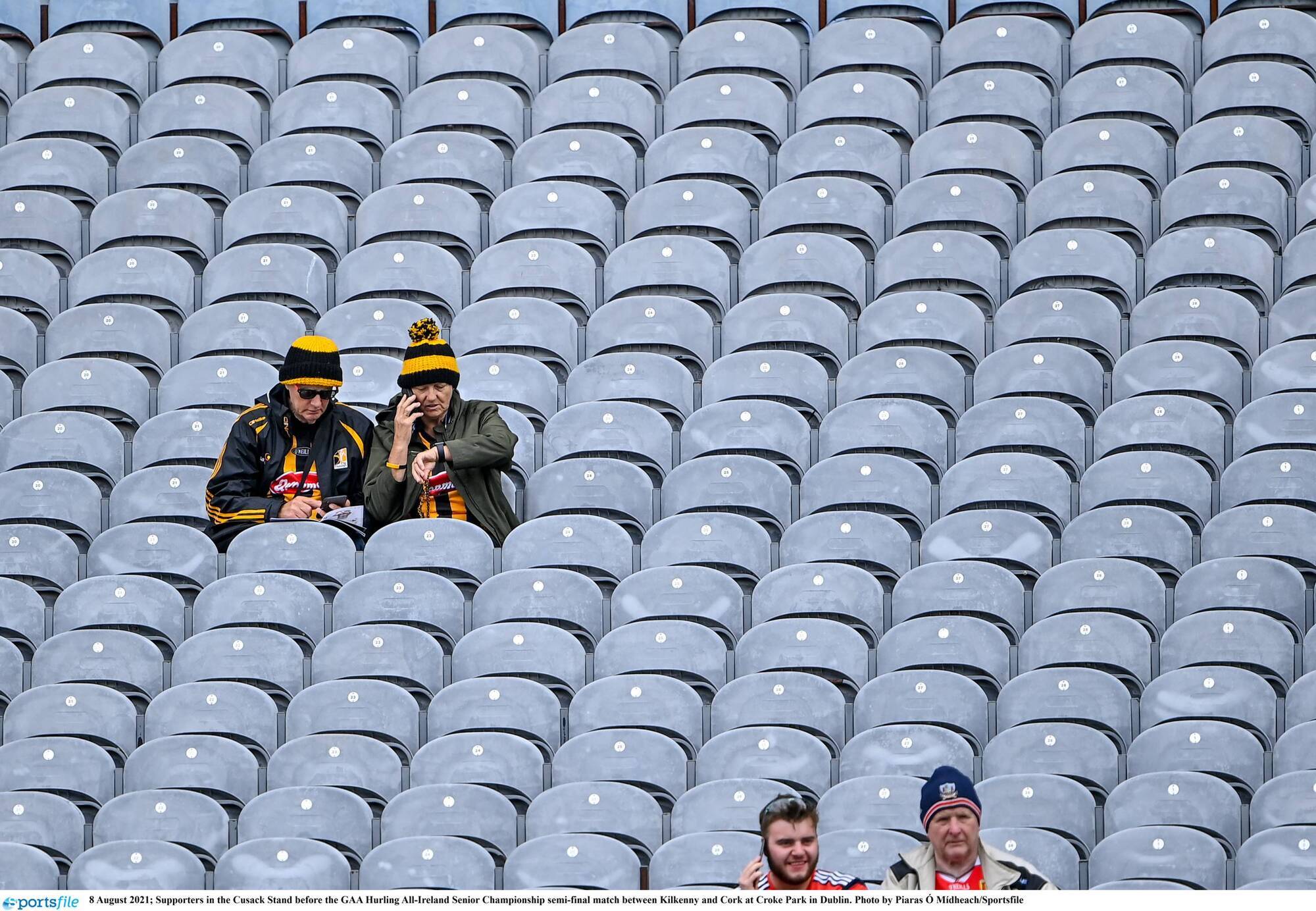
Just like in 2020, this year’s deficit for the GAA is directly impacted by the loss of ticketing revenues, during a year that began with empty stadia for all sports, before a graduated return of spectators to full houses by the end of the year for soccer and rugby internationals.
The GAA is expected to report losses of approximately €33m for 2021, the has learned.
The figure will show only a slight improvement on 2020 results when the Association revealed a deficit of €34.1m after revenues were first devastated by the onset of Covid-19.
The financial results for this year — which will be reported to members in February — mark year-on-year losses which almost wipe out record profits for 2019, when the GAA reported financial gains of €74m.
Just like in 2020, this year’s deficit for the GAA is directly impacted by the loss of ticketing revenues, during a year that began with empty stadia for all sports, before a graduated return of spectators to full houses by the end of the year for soccer and rugby internationals.
However, the ‘return to spectate’ working group which the GAA, FAI and IRFU worked on together as a powerful single lobby and operational grouping — under the chairmanship of Martin Murphy of the Aviva Stadium — only allowed for half full Croke Park attendances at the August and September All-Ireland finals.
The stadium revenue challenges for the past two years are in sharp contrast with 2019 when ticketing receipts resulted in incomes of €36m, amounting to almost half — 48% — of the GAA’s overall revenues.
That figure shrunk by 90% for 2020 to €3.6m, with some gains expected for this year once the final ticketing receipts have been audited.
This year’s championship deciders in Croke Park were played in front of limited capacity audiences — set at 50% — or 41,500 attendances for both the football and hurling finals.
This year was in sharp contrast to 2020 when both matches were played in an empty stadium, behind closed doors.
While fans made it through the turnstiles this year, their spending once inside the ground was limited, with heavy impacts on additional matchday food and drink revenue, as well as corporate hospitality and premium seating bar options — all of which are large revenue drivers for Croke Park.
In an exclusive interview with the which will be published next week, GAA commercial director and Croke Park stadium director Peter McKenna declined to confirm the size of the deficit for the Association.
However, he admitted: “We’re (certainly) going to shoulder a loss this year — the figures are better this year than they were last year, but not by a whole lot.”
McKenna said the losses suffered by the major sports bodies — including the FAI and IRFU — demonstrated the enormity and importance of Government support — which recently resulted in €19m in Government funding awarded to the Association through Sport Ireland Covid-relief grant payments.
McKenna said without such funding neither the GAA or the other large sports associations would be operational.
“The subvention that they (Department of Sport and Sport Ireland) gave ourselves, IRFU and FAI has been an absolute lifesaver,” he said.
“We could not continue to operate without it and all of us are very conscious that that is taxpayers’ money.
“Nobody really wants to be beholden to taxpayers’ money, there are other areas that money needs to be invested in so we want to get out of it as quickly as possible.”
The end-of-year results are currently being audited by PricewaterhouseCoopers (PwC Ireland).
The breakdown of this year’s losses are expected to be on a similar scale as 2020, when €27.1m of the €34m losses comprised of a consolidated deficit at Croke Park (Central Council), with a shortfall of €7m at country and provincial level.
For the record-breaking successes of 2019, a significant element for driving large income was the hosting of two highly profitable Westlife concerts at the stadium, something that hasn’t been possible throughout Covid.
There are high hopes for 2022 with HQ set to host the most concerts ever at the venue, with seven sell out shows set to flush millions of euro through the association thanks to five Gareth Brooks and two Ed Sheerin shows.
Losing these events would represent a multi-million euro catastrophe for the GAA, with more than half a million tickets sold out.
The Government’s current measures to deal with Omicron, immediately limiting attendances to just 5,000 has created a certain amount of fear at Croke Park that worse may come for the GAA, as well as the IRFU and FAI if the pandemic intensifies.
Peter McKenna has expressed disappointment that outdoor spectator events were swiftly reduced creating havoc across the Christmas sports programmes with Munster v Leinster impacted, along with (initially) limited attendance at Leopardstown.
The race meeting was eventually ruled behind closed doors due to additional challenges with staff at the track due to close contacts issues.
Of most frustration to Mr McKenna is the data that proves that outdoor spectator events have been safe since the return of fans to venues.
The GAA, IRFU and FAI’s working group has had access to the Department of Health analysis which McKenna says does not show any transmissions of Covid at any spectator event, particularly through the sell-out rugby and soccer internationals in November.
“I think the Department (of Sport) worked with us very well on that basis, so I see that as a huge success and the autumn internationals (in November) were full houses, and that’s why maybe there’s a degree of disappointment with the decisions now,” he explained “We felt that we had established a very sensible way of bringing people in, that there was no reported transmissions at any of the games, FAI, IRFU or GAA games around the country.
“I think what we were saying to them is that there is something inherently safe about people coming together in the outdoors and we were very strict about letting people into the building in terms of bars and restaurants and so on.” If the worst were to happen and stadia were forced to feature ‘behind-closed-doors’ in 2022 McKenna admits that the seven sell out concerts would be lost, with no flexibility to flip them into 2023, such is the nature of the music business.
“No, there’s no middle ground, they don’t get pushed back into (the) next year,” he explained.
“It’s almost impossible to push back such big artists, because schedules change and dates are forward booked.”
McKenna and the GAA’s frustrations are measured considerably with a clear understanding that health and safety must be the primary concern for all federations. “We all want and respect that public health has to come first and that’s far, far more important than sport or any other activity, keeping essential services open,” he said.


CONNECT WITH US TODAY



Be the first to know the latest news and updates