The innovative backroom teams driving a high-performance culture in the GAA
Management teams now have to try to cope with new challenges that never existed before, but they have found ways to adapt
The innovative backroom teams driving a high-performance culture in the GAA

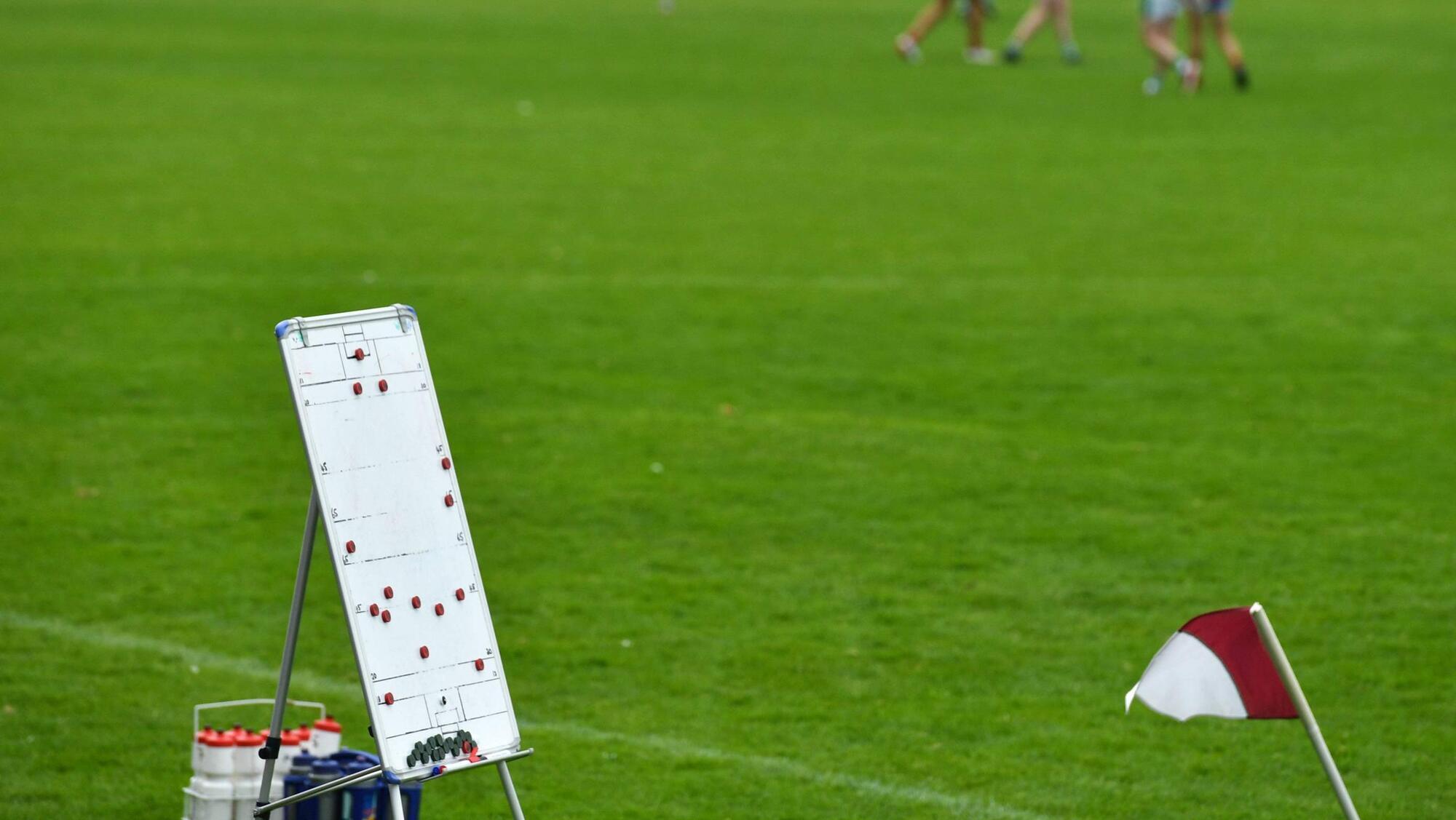
A tactics board on the sideline. Photo by Ramsey Cardy/Sportsfile

In the spring of 2002, Armagh manager Joe Kernan and his logistics manager Eamon Mackle discussed the possibility of a warm-weather training camp in La Manga.

By the middle of that decade foreign training camps were the norm for all of the top teams but not back then.

Kernan and Mackle sought counsel from the players, who were excited by the prospect, but they wondered if Armagh could afford it. Mackle didn’t hang around to find out; the following day, he provisionally booked 42 seats on a plane to Alicante and told the travel agent that he’d be back with money in a couple of days. The total cost was €30,000. 

Kernan still hadn’t approached the county board; they still didn’t have approval. The money was raised. Armagh went.

Stories of that trip heaped huge pressure on Armagh ahead of the championship. Benny Tierney, the goalkeeper, once recalled the Tyrone supporters roaring at him throughout the drawn Ulster quarter-final — in a nice way — to ‘show us your tan’.

Going was a risk but it also reflected Armagh’s attitude: A week of collective, warm-weather training was what professional sports teams routinely did. They were in that frame of mind because Armagh were pushing boundaries in terms of how inter-county teams prepared. And that supreme level of detail delivered Armagh their first All-Ireland.

Armagh were pioneers because their backroom team was also a reflection of their attitude; it was different to any other GAA team in history. It was bigger, more diverse, incorporating the wider world of sports science, strength and conditioning, stats analysis.

Nothing was left to chance. In an excellent radio documentary on Newstalk last year, Hugh Campbell recalled the fascinating background story around convincing Muhammed Ali to send a letter of support to the squad, which was delivered under their door of the hotel room of each player on the morning of the 2002 All-Ireland final.

Armagh raised the bar and set a new standard, opening the players’ minds to new ways of achieving elite performance. Roles were found for anyone who Kernan felt could contribute to the cause. By the time Kernan finished in 2007 the support structure around the team had grown to 14 people, a massive number in those days.

By that stage, the Cork hurlers had also taken it to another level. Donal O’Grady had initially built the high-performance architecture around the team, before the enterprise grew further again when John Allen took over from O’Grady in 2005. By the time of the 2006 All-Ireland final, Cork had a backroom staff of 15.

Everyone was clear of their place in the operation, but the system worked so well because of the trust developed around the set-up. No matter how big or how small the roles were, everyone had a private belief that the system couldn’t work without them.

The dye was cast. There was no turning back. By the middle of the last decade, it was standard for many set-ups to travel in two buses, one for the squad and management team, another for the rest of the backroom. When Davy Fitzgerald led Clare to the 2013 All-Ireland title, Clare had a backroom team of 23.

John O’Mahoney was one of the first to start recruiting specialists when he was Mayo manager in the late 1980s, but the trend exploded in the last decade. Those people arrived from every walk of life, sporting or non-sporting, inside the GAA or from completely outside the Association.

Bernard Dunne had no GAA background, but football had nothing to do with his appointment as sports performance and lifestyle coach under Jim Gavin; his focus was on the players, and on individually assisting them in their preparation, match approach, and mindset.

“Honestly, and without fudging the lines or you thinking I am not telling you anything, I literally will do whatever Jim tells me what to do,” Dunne said after taking over as the high-performance director of the IABA, Ireland amateur boxing’s governing body.

“That’s as simple as being a maor uisce, sitting in at a training session, or kicking balls back out to boys.”

Not everyone was swept up on that wave of mass backroom teams but, any support group, especially a large one, can’t function without a serious element of trust and loyalty. That must be generated from the top, but the best managers are also good delegators. They have to be for such a layered structure to operate successfully. 

‘Attention to detail’ is a loose endorsement for every successful coach and manager. But applying that detail in the best possible way is what really drives high performance to another level.

The term ‘high performance’ has become a popular reference point in elite sport but there are two parts to the concept; the high performance apparatus and structure around the squad and the culture that guides and drives it. One can’t function without the other.

“High performance sport,” Gary Keegan once said, “is all about solving problems better than your competitor.”

Everyone must trust in what they are doing, in what their culture says about them as a group, especially when trying to drive the culture of ‘high performance’ in the face of so many new challenges.

Recovery has always been a fundamental part of elite sporting performance but GAA players were driving to championship matches on their own last year, which presented a whole new mental and physical challenge before the game even began.

Players had to manage their own recovery individually too after games, especially when there were none of the normal avenues open; swimming pools were closed; with dressing rooms effectively out-of-bounds on match-days, ice-baths afterwards were a non-runner; if players lived close to the sea, it wasn’t really feasible to go for a dip in the dark that evening to ease muscle strains.

Optimising recovery in such an intense period was all the more difficult again when the championship formats were so condensed.

So much of the normal post-match routine has been abandoned; players either swallow their post-match food under an empty stand, or eat it alone in the car. Players can’t stretch their legs on a bus or unwind on the way home through engagement with their team-mates.

Hurlers and footballers everywhere still showed how adaptable, durable, and resilient modern players are. The last year though, has presented new challenges right across the board, especially with backroom teams still restricted to just 12 members on inter-county match days.

That limits key game-day personnel like additional physios, doctors, masseurs and performance analysts, but it has also forced backroom teams to be more flexible and to adapt to ongoing and evolving challenges.

Management teams now have to try to cope with new challenges that never existed before, but they have found ways to adapt. One of the top inter-county sides enlisted the help of an IT company during last year’s championship, who set up their sizeable stats teams in a specialised room on match-days, with a high-speed link-up directly to their head statistician at the ground.

Other teams had their stats teams based in hotels, or individually in their own home, where they linked up to those at the ground through computer, radio, or WhatsApp.

Everyone has to adapt. Double-jobbing is a necessity for all backroom teams on game-day in the modern environment, but high performance culture now relates to much more than just performance.

Because values — right across the board — equates to higher standards everywhere.

On, off and around the field.

- You can read the Irish Examiner's 20-page special publication looking forward to the Allianz Hurling League and Championship with your Friday edition of the Irish Examiner in stores or from our epaper site.

x

More in this section

Cookie Policy Privacy Policy Brand Safety FAQ Help Contact Us Terms and Conditions

© Examiner Echo Group Limited