GAA return to play: 18 experts on how counties will make best use of the condensed pre-season
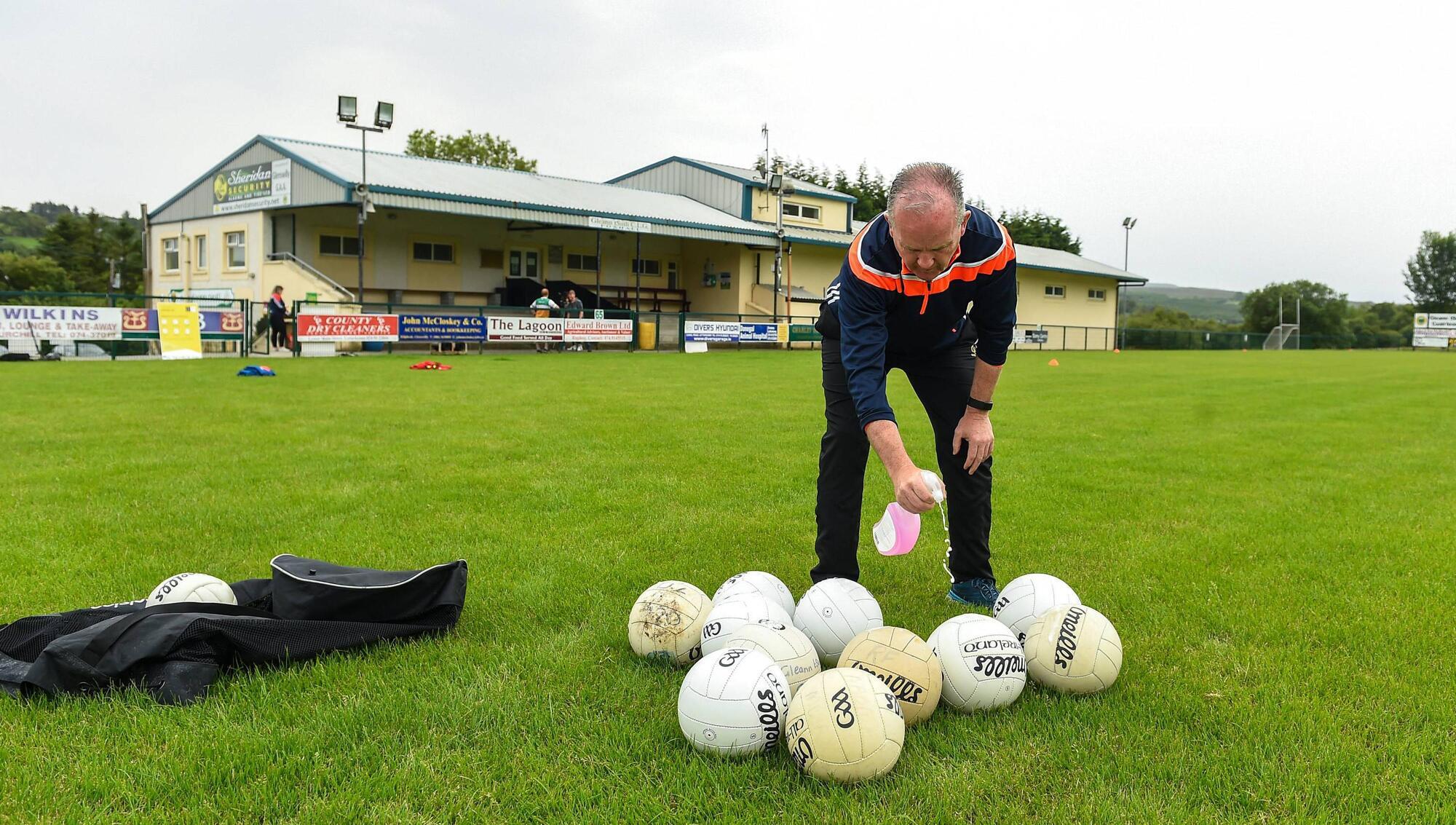
Paul Gallagher, team official, sanitising the balls before a Glenswilly GAA Club training session at Glenkerragh in Donegal.Â
If youâre Dublin or Monaghan, youâre grand because youâve been at it the last wee while! Theyâll fire into the lads and the same thing will happen as what happened when the clubs went back last year after the first lockdown and we will have all those calf, hamstring and groin injuries, which shouldnât really happen if the training is managed correctly.

For most inter-county panels, one would presume players took the lead over the last number of months in keeping on top of their physical fitness and skill work. Zoom sessions, then, would have been used to focus, motivate, and discuss tactical issues, as well as working on mental preparation strategies and scenario role plays. Therefore, one can argue teams have never been as well prepared.
As players get back on the field, the issue will, as always, centre around trust. Does the management trust that the players have done the hard work and do the players trust themselves that they have indeed put it in to the standards required? If the trust is there, then priority can be given to play development in the sessions running up to the start of the League. If trust is missing, then no amount of time will be enough.
It will be tough to cover everything, but it is important not to overload players during the next four weeks. Given the base of work done by players on their own over the past number of months, I donât think getting back up to speed will be a problem and therefore on-field cramming wonât be required. Angelaâs son Conor [Browne] is on the Kilkenny panel and he has been working away at home and out on the road running. All players will have known to have got themselves to a certain level of fitness before the time came to get back on the field.
Our group said they never felt a strain on them like they did during the five weeks we had to prepare for our championship opener last year because it was essentially a knock-out fixture. Had we lost, that would have been us gone. This time, you have a five-week run-in to a National League where you will have three games. I am much happier looking at this system than I was last time out. What would be a concern is that the girls, during lockdown, wouldnât have had access to a gym for the purposes of conditioning and injury prevention.
There will be cramming - thereâs no doubt about it. A lot of players will have been following conditional plans and trying to get in what I call âskill maintenanceâ. But the work they have been doing up to now is not in sync with the preparation you have to do for a match. Performance skills in those environments are different to what you need in matches so coming back I think youâre going to need as much football/hurling as possible. But in doing that there wonât be other areas that wonât be up to speed.

Any inter-county player worth his salt should be coming back with a really solid base as regards strength and conditioning. I think the break might have helped re-energise not just the players but everybodyâs appetite for the game. Hunger or enthusiasm shouldnât be an issue. This enforced time-out might make us realise that the pre-season has been overdone in the recent past. Most of the focus will be on the technical and tactical side of the game while maintaining a level of conditioning that will naturally improve over the league campaign.
We figured it was going to be a four-week lead-in so plans havenât changed. The guys have been given conditional and weights programmes going back to January so Iâd imagine theyâre all very fit at the minute. Iâd like to think the number of players doing everything is in the high 90%s. Weâve run a couple of remote fitness tests just to create some competition and keep an eye on them. For a couple of stages during the lockdown, we shut it down just to give the lads a breather but interestingly we found they craved the accountability when they were told not to do anything. Some guys love routine. We have done a lot of work, a couple of really heavy blocks, that should keep them in good stead. So when we go back on Monday it will be game-based and working on skills. I envisage getting a lot of the conditioning done from that game-based work.
Four weeks will have to be enough, put it that way. I donât think squads will cram because they canât. Teams will be looking to the Championship and will train their teams with that in mind because itâs knock-out. The league is important for some and it's welcome training will be tailored towards Championship. You can still only train three times a week and 48 hours between each session. Ideally, youâd like two challenge games for four league games in a row but if theyâre not allowed until May 4 youâll likely only get one. Another thing to consider is the hard ground. We didnât play on it last year, itâs a year and a half since inter-county teams last played on it and itâs October since many teams last kicked a ball in anger. You will have to be really careful of ankle, knee and shoulder injuries with the hard sod in mind.
This is where the players and set ups who have trained smartly during lockdown will reap the rewards of that well-thought-out programme. The teamâs multi-disciplinary support staff would have designed a return to play (RTP) programme. The plan would have included technical skills work from the coach, tactical analysis from the manager, physical loadings from the S&C coach and analysing the response to training from the sport scientist. If the appropriate work was done, 4 weeks is now enough to get prepared for League. There will be a spike in workload, so I would advise as much recovery as training!
The temptation will be there, of course. However, it is important to look at the level players have been able to prepare to until this point in the year. A gradual return to contact playing with emphasis on simplicity may be a good approach. Players have not been exposed to high intensity with high concentration over a prolonged period for a while (session lasts 80-90 min compared with 45-60 min simple conditioning sessions), so frustrations can appear quickly if allowed but realistic expectations are important starting out.

I think three to four weeks is enough time because with players nowadays, their lifestyles are so active and dynamic compared to 15 or 20 years ago. Itâs not as if inter-county players are ever unfit, at any time of the year. Three to four weeks is short but itâs doable, particularly with good use of small sided games. I think any team with a good S&C or athletic development coach will have worked and prepared their players to be robust enough to take on the physical demands of training.
Itâs definitely not enough time in our case. Weâre lucky we have a full year of data collection from last year. We have a very good bank of information from the GPS perspective. We know which drills give us which outcomes. Itâs not ideal but players have done a lot of work individually, theyâve hit a lot of the aerobic bases and markers weâve asked them to so theyâre coming back in reasonable shape. Then itâs about giving guys as much recovery as possible between sessions. Itâs a challenge to get as much benefit as we can out of these few weeks while making sure the high injury risk players are well managed.
Would I like more time? Yes. I think you need at least six weeks to prepare for competitive football. So there is an element of rushing to get back to competitive matches. But weâre in the middle of a pandemic so Iâm not going to complain. Weâve given the players programmes over the last three and a half months and weâve tested them remotely and theyâve sent in their scores. Weâve tried to be sensible in our approach while keeping them in the best shape possible.
Theyâll be cramming, which I think is fairly self-evident given the time constraints and the schedule. Obviously teams have to catch up on physical sessions and tactical and football sessions. I donât think thereâs any alternative to that so you just move on and do your best. One thing to be aware of is that if you do more than three sessions a week then itâs not sanctioned by the GAA in respect to mileage expenses and stuff. So if teams do want to do more than that, or if they do plan to cram that way, itâs something theyâd need to keep in mind.
If they are, they shouldnât. Nerve and experience will be important for management teams up and down the country in this regard. Getting the players and squad back to where they need to be will be a gradual process over the course of the four-week training block and the three initial league matches, with speed bumps along the way. Cramming will lead to injuries and forcing form rarely works. Managements will have a plan, will trust and stick to it, tweaking it as required to have their squads ready to compete when the gun goes off.
I would imagine from a group perspective, most managers will be keen to have their panel together as much as possible over the four week pre-season thatâs envisaged. I think few enough teams have new managers in place, so a quality four weeks should be enough to be prepared considering the amount of training that players have done individually leading into this.
There was an article in the which described inter-county players as elite athletes, and everything is monitored for those players, whether thatâs through GPS systems, strength and conditioning coaches, nutritionists, everything. That means theyâre monitored to a T and they should come back with no injuries. The other element is that the nature of the hurling league means that for many teams there isnât really a threat of relegation, and the management teams will be able to time it right around how much they can expose their players to over the weeks. I donât think thereâll be any cramming, really, when it comes to physical preparation.
I think theyâll look at their championship games and plan backwards from that, using the league games almost as bonus training sessions. Thereâll be a couple of league games targeted by managers, there are always a couple of key games that have to be won, but thereâll also be games when a manager will say, âweâll play as many panellists in that one as we canâ. I donât see managers cramming everything into the next three weeks because these players are always ticking over: the likes of Limerick will probably roll on the way they have done, for instance, whereas a team like Clare would have a different approach because they were going well in last yearâs league until it went wallop in the first lockdown.

From a coaching perspective, it would be to progressively load the players. Your end point is 100% so you work yourself backwards from that within that four-week block. So you might go 60% the first week, 70% the following week and work it up that way. The other big thing is as the training increases the recovery has to match that.
Even with the short run in time, we must try hard to keep the balance between preparation and development. Short-sightedness will not serve the team or the county in the immediate or long-term.
We donât know how players will cope with the return to play â having not played since last November, or even before that. We need to be open to that fact and reflexive in how we approach each return. There is a place that exists where the familiar meets the fresh, and it is there that a new experience is born. For management, it must be about creating that environment so that the players are afforded the opportunity to find again that sweet spot. If that happens, youâll be dealing with a player fired up and ready to go.
The focus has to be on the skills, particularly a playerâs first touch. I imagine there will be some amount of games-based training, and that will also help in getting the fitness levels closer to match level. Reestablishing the spirit of a panel would be another priority. You have to rekindle the spirit of a panel because some players will have left since last year, some new faces will have been added, and obviously, it will have been so long since everyone was on the field together.
Because players didnât have gym access the last few months, the juggle will be between S&C priorities and skills-based priorities. It is key that the players have a high skillset, but it is equally important they are conditioned to do what you are asking them to do. A lot of their conditioning is going to be done through small-sided games. You are serving two masters that way.
Also, while we have our defence coaches, offence coaches, goalkeeping coach, and conditioning coach, everyone is looking for a piece of the pie and you have to ensure everybody has their time during a session. Key to it all is that the players understand how they are going to play.
Itâs having everyone available for that first league game. Barring collision injuries, itâs a must for us to avoid soft tissue injuries. To achieve that, we have to plan and for me that comes in three cycles â your micro, your meso and your macro cycle. Macro is long, meso would be in a block like a month and micro would be short term. Micro would relate to the first week so we will go back on the Monday and the reason weâre going back on the first day is we want to give players as much recovery as we can after it. Players are going to have DOMS (delayed onset muscle soreness) so weâre hoping to ease into raising the intensity. So it would be low intensity Monday, recovery and individual work Tuesday, gym work Wednesday, Thursday a pitch session of moderate to high intensity, rest on Friday and on Saturday something like a double session with the am session being high intensity and the pm one being tactical and walkthroughs. Thatâs a loose plan.
The macro cycle would involve taking our championship date and working back from that.
Key priorities will be different for every county but the paramount thing is quality games and training for players. Itâs one thing having a good level of strength and conditioning off the field but itâs that variation of it in the games when you get the hits and have to do things under pressure that you want. Itâs a different kind of fitness and the more of that, the better. Whether itâs in the in-house games or the league, that will inevitably lead to injuries and preventing them is going to be a challenge in the short term.
Five games in six weeks, you have to accept there are going to be knocks. We have a lot of young players and getting them used to playing with intensity and composure in equal measure will be out goal.
Weâre going back the first night on Monday and I genuinely think itâs just going to be all ball work and no emphasis on fitness. It all be about enjoyment and hopefully the sun is shining. Everybody should be in good form coming back to playing the game that they love. The priority is to keep them smiling and playing because you donât want to lose your soldiers before the battle. A big emphasis will be put on recovery and using GPS to monitor the load and we have a wellness app as well to make sure the metrics are all correct. We probably will have one fitness test during the week but nothing too extreme, just something to see if some extra work is needed by fellas. I would expect the vast majority of inter-county footballers and hurlers will return in good shape because there hasnât been much else to do the last few months.
Youâre going to have to get the skillset up and running pretty quickly but in a structured way. Theyâll all be mad for road and eager to impress. Most squads wonât be finalised yet and things have to be weighed up â do you wait to properly integrate young lads into the squad or do you bring them in straight away? Conditioning through games goes for everybody and you have to re-establish that connection with players again, the physical connection of being a squad, getting to know the playersâ ways and what makes them tick.
Covid responsibilities have to be kept in mind, who players are mixing with outside of the camp and the risk of them bringing something into it if theyâre not careful. We might not get vaccinated until the Championship is over so it has to be considered. As management, we will have to be patient with the players that while they will be eager to impress their skillset wonât be anywhere near where it was last September when they came back having honed it with their clubs. In that regard, this National League is nearly like a pre-season even though itâs a serious competition.
My priorities over the coming four weeks would be very simple: give the players what they didnât get over the lockdown period. Split the programme across the 4-Corner Approach: technical, tactical, physical, and psycho-social, and analyse 1) what are the big rocks of the programme that are most important to you and your team; and 2) where are the empty or half-filled buckets that need topping up? In lockdown, players had their fill of skills practice, aerobic development and virtual meetingsâŠso key priority for coaches should be lots of games, pitch tactical work and anaerobic power and repeatability.

Key priorities may include getting players a programme of training which is sustainable and reduces injury incidence/risk. Achieving clarity on a game-plan (again, simplicity to begin and layer up based on success with the initial concept). Moving the players gradually over the 8-10 weeks to peak physical performance for championship time. Peaking too soon or forcing a short-term peak may not reap long-term rewards within this season.
From 15 years of being involved with teams, my key priority would be to make sure the body is robust enough to get through training. There are a lot of very good S&C coaches working with inter-county teams and Iâd be very surprised if players arenât prepared. From my experience, a lot of inter-county players get out and get the job done and do the work they need to away from the public eye. Theyâre not singing from the rooftops about what theyâre doing but Iâd be fairly sure theyâll come back ready to go and to get through the training thatâs coming up.
There are a couple of key ones for us. Firstly, that weâre slowly increasing the high speed running over the course of weeks. Then, tactically, youâre trying to go from closed type drills with less contact to more open drills. Youâve got to make sure youâre bringing along everyone and that guys are able to progress over the weeks. Then as much games as possible, just to get used to the field running, the changes of direction, all of that stuff. Nothing compares to those dynamic settings, reacting to the chaos around you and to other players.
Really solid planning is key in terms of how you roll out the training sessions. Having that schedule, a plan in advance and a detailed programme is crucial and weâve been working a lot on that as a backroom over the last number of weeks. For the pitch sessions you need to coordinate with the coaching staff in terms of the intensity of the sessions and the timing of them. Then youâve got to really invest time in recovery and mobility between sessions. Thereâs no way around it, itâs going to be a shock to the system for players who havenât played collectively for months.
The key priorities for me as a new manager in Sligo will be different to those of a manager in, say, his second, third or fourth year with a group. For me itâs about familiarisation with players first and foremost. I got the job in November so thatâs obviously been very difficult to do so far. The second thing then is to implement some sort of playing style and the third piece is to identify my panel. At the minute we have a broad panel which weâve been working off since Christmas. That hasnât been cut down yet so thereâs a few things there to get through as a new manager.
Football, football, football. Managements and players have had a lot of time to think about their approach for the coming season. In the impending sprint of a season they will realise they need to hit the ground running. They will be anxious to work on skills, set plays, kickouts, tackling, shape with and without the ball, game based scenarios and open football. The most elusive aspect for many teams may be getting the chemistry and understanding going in their forward units in a short timeframe after a prolonged layoff.
I think management obviously have to ensure that players are ready for a very intensive three- to four-month period. Getting players up to speed for inter-county games is crucial, particularly when you consider nobody has played a match in four to five months. Challenge games have been prohibited by the Government, so I think this means thereâs probably a need for in-house games more than anything else. However, going from individual physical training, which players have been doing, to full matches immediately runs an obvious risk.
I think teams will be honing in on how it is they want to play. By this morning the championship draws will have been made, so in the hurling if Waterford draw Cork, for instance, then the managers will be thinking, âright, this is how weâll organise ourselves for that gameâ. I think teams will look at it in that way, how they want to approach those championship games - but theyâll also be looking at how much exposure they want to give players.

By that I mean in a normal league, starting in February, theyâd be thinking about how to strengthen the panel and using games there, maybe setting a target of getting three new players in. Thatâs trickier now with this league but I still think youâll see managers taking a double approach â concentrating on game-specific tactics while also trying to get a couple of newer players for the panel.
In terms of priorities, will there be changes in personnel? Whatâs interesting is there arenât new managers in hurling with the exception of Cheddar Plunkett, who would have been following Laois closely anyway, but it depends on the county involved. In Tipp, Liam Sheedy and Tommy Dunne would be looking at lads in a different way to John Kiely in Limerick. Davy Fitzgerald is probably in his last year in Wexford, Shane OâNeill probably came closest to Limerick last year with Galway so they both probably wonât make huge changes â but for different reasons. Brian Lohan and Kieran Kingston will want to do better but again, will they make huge changes? Itâs possible, but I doubt it. Tactics could be the other focus, and I presume there was a lot of discussing that on Zoom, so thatâll be a priority when you get on the field.
If a guy has been given an individual training plan and has stuck to it, then he should be returning on Monday with his general fitness sky high. So you would think skill work will be the priority from here until the first game, that and formations and game-plans. Contact injuries you canât control but soft tissue injuries such as calf, hamstring, and groin injuries are avoidable. If youâre leading up to the start of the inter-county season and progressing your training with each week and the work has been done by players individually, it should be all skill from here on in but it wonât be because players will be flogged by some coaches.

As I have previously mentioned, players never had as much time to develop core strength, flexibility, and injury prevention routines as they have had over the last six months. Never did the S&C coaches the length and breadth of the country have as clear a run with teams. So, in theory at least, this time should stand to players. And, in my opinion, it will.
While management and S&C coaches will be trying to phase in the activity and minimise injury, it wouldnât be the worst use of common sense if the GAA allowed more subs to be used â especially for the League â to allow for such situations.
The layoff has been beneficial to players in enabling them to sort out small, niggly injuries that might have been hampering them previously, but went overlooked. Before last yearâs National Camogie League, Kilkenny had a lot of injury problems. But when they got back together after the first lockdown, the vast majority of those injuries had been sorted out. The S&C personnel in a panel have a responsibility to speak up and make sure players are not being overloaded throughout the next month.
For as long as I am involved in coaching, I will prioritise skills over anything else. People talk about decision-making and how you improve it, well, improve your skillset. The more skills you have, the better the menu you have to choose from, and therefore, the higher the likelihood you are going to make a good decision. Because the league is first, we wonât be rushing. That should lessen the risk of injury.
Can I add that the dreams of the new recruits in the panel are going to be very difficult to serve at the moment because the opportunity to experiment is certainly taken away given the number of games you get in the League.
For me it comes down to a thing called comparative time on feet. What I mean by that is getting as close to game intensity over a number of weeks we have to prepare. Weâre really lucky with our conditioning and medical teams that they have the data and along with the plans theyâll monitor the time and the loads. Weâll probably target time on our feet in terms of building up intensities to match the time equations of the games. For instance, a match lasts 80 minutes approximately. We canât go straight into an 80-minute intense sessions, we have to build it up. Weâll do as much conditioning through the ball as possible but if there are times when we donât hit the distances or required intensities they may very well do runs at the end and things like that. Donât get me wrong, you could do 80-minute sessions at the beginning but they wonât be intense. Using GPS, players will be measured so midfielders usually do 10km of high intensity work so itâs about getting to that target and getting them used to doing them distances again. It worked quite well for us last year and weâll be doing it again and, look, all these players have questionnaires to fill out about how they feel, RPEs (rate of perceived exertion) so it will be a joint effort to monitor all of that.
Itâs the balancing act that will be occupying the minds of every management team in the country. Because whether you like it or not skills is an area where players will not have been able to improve upon because of being isolated and restricted to individual work. The technical aspect is going to be vital and small-sided games will be the starting point and, God forgive me for saying this, some closed drills might be required before that, just to get back to basics. Then you add the pressure of game situations.The workload of the coaches and the medical team is going to increase because time is so tight and each training session will have to be adjusted on the basis of the previous session. So if there is a deficiency in a certain skill set that will need priority in the next session or if there have been injuries row back on the intensity so as to allow players to recover.
From an Offaly perspective, last year was extremely gut-wrenching the way it finished up but we have to move forward together. One thing I will say is we have a really good group of players who are so honest and want to do the best for their county and supporters. As a coaching and backroom team, we want to do the best for them and get the sessions right for them.
Weâre looking at the in-house and small-sided games for a lot of the conditioning. We will have little top-ups over the four weeks, thatâs for sure, but the lads have been working for the best part of four months up to this and the last thing we want to do is heap more running on them when thatâs almost all they have been doing. Put too much load on these guys and they will break down so it has to be managed carefully. We got it just about right last year, we had a couple of soft tissue injuries, but that was probably lower than the average at senior inter-county level. We have a great medical team and weâre pretty confident that we will be able to have everybody on the field come battle-time.
Players have been waiting for this day to return and most of them will be in good shape. But being fit competitively is different and that will have to be attained through games. There is no doubt there are going to be soft tissue injuries and your squad will have to be prepared to absorb that but weâre in a time now where the GAA donât want big numbers in around training. What you could see happening is the league panel being very different to the Championship panel. You might have to parachute five or six lads in if there are injuries.
If there isnât much on the line for you in the league, youâre going to all the focus on having as many players right for the Championship.
Skill development should not be the focus in the coming weeks. Lockdown ticked that box. The priority from a playerâs point of view needs to be on 1) rediscovering pitch relationships with teammates (for example how a player likes to receive the ball), 2) getting to know your pitch geography again (dimensions of your positioning on the field), and 3) getting to know their role in the overall game plan and his/her job essentials.
From professional sports we can see there will be an unavoidable spike in injuries. An efficient periodised plan and appropriate loading programme might help mitigate this.
Balance of approach should help in this regard, most physical preparation can involve some degree of skills work and vice versa. Players have had a great chance to recuperate from long seasons of high intensity multi-directional playing/training. They should be in good physical condition presently, with only gradual exposure to volume of contact and highest intensity movement to be developed. Soft tissue injuries will inevitably happen to players pushing their bodies. Letâs not over-analyse this. Letâs enjoy and embrace the concept of a return rather than fear it.
If you go with a games-based approach then the technical and tactical elements are integrated. As I keep saying, the job of the sports scientists and the S&C guy is to make the body robust enough to get through each training session. This year, you donât have time for everything youâll want to do so itâs important to keep things on even keel; technical, tactical and robustness should all come together. I donât think you can go off and do any of those in isolation, given the time constraints. The pressure will be on to management the entire management team very well to bring all those things together.
Itâs a fine balance. The big thing for us that we have a game in four weeks â not next weekend. And we know what the demands on us are from a game perspective so itâs about taking a common-sense approach and working back from those game demands, from week four or five back to week one. You understand the high risk players within that and manage their load accordingly. There are risks but I feel we have a good management team that works well together and weâve a lot of data and information on the players that should help us navigate our way through.
Itâs all about football now and with good return to play protocols from the S&C side of things in place, it should be okay. There are going to be risks because weâve only got four weeks. The risks are there and I canât guarantee thereâll be no injuries but we can plan to avoid them. We have a lot of GPS data there and weâll plan appropriately. If we end up with three or four injuries in May, thatâll be a concern. Like any pre-season, thereâs an element of luck, or bad luck, involved with injuries but Iâve a very good relationship with the management and with Colm Nally who has his own fitness background so weâll have a really tight plan in place.
Thereâs a couple of questions in that. For me, for the reasons Iâve already expressed and the circumstances of this being our first season, I think thereâll be more of a focus on the football part of it. There is a risk of injuries that comes with that, thereâs no denying that. Clearly our football will be based on trying to replicate match scenarios, itâll be high intensity and that could potentially lead to injuries in the squad. Players wonât be as used to turns and twists and taking contact. Weâve just got to manage our way through that and make sensible decisions.
No. The individual physical preparation done throughout lockdown will now be brought to the football pitch. The physical will be combined with football through a games based approach. The load and intensity will be monitored by GPS units allowing teams to ramp up the intensity levels gradually through the four-week training block and the first league game or two. Because of the condensed nature of the season, the graph may be steeper than normal, but if injuries start to crop up the reins will be pulled for a session. Impact injuries because of lack of football are probably more likely.
I think at this stage that inter-county players are probably sick of physical training on their own. However, fitness shouldnât be an issue for them. Returning to playing games, and the inherent movements associated with matches, however, will expose them to risk obviously enough â most especially due to the long lay-off theyâve gone through.
I donât think so, particularly in the light of what I answered to question 1 (above), the way players are monitored now. Last year there were a couple of players who picked up hamstring injuries, but the run-in to the championship was a bit more rushed and everyone is on the same page now. In some championships last year â like Corkâs â there might have been a sense of âother counties are training and weâre still playing club gamesâ, but the fact that the clubs are not back should help inter-county teams, particularly in terms of managing injuries.
The first thing any manager will do is look at his players, whether theyâre coming in without a pick on them or not. Thatâs the obvious first step. The change in how teams are prepared is important here. In our time Ger Loughnane would take us off Mike McNamara for a month of hurling, not physical training â though youâd do more running with Loughnaneâs drills, nearly â but that day is gone. These players are usually in gyms two to four nights a week but since gyms closed theyâre doing that work with weight equipment at home, most of them, and hard at it.
The times are unprecedented, but some things donât change. The manager knows the fella whoâs a serial hamstring victim, for instance â if youâre a new manager and someone pulls up with it then a selector usually says âthatâs always happening to himâ. There are often a few lads who keep getting the injury, so the manager has the physio on their case to make sure they donât break down.