'Let's build a Gaelic games family': Merger will deliver equity, says incoming camogie president
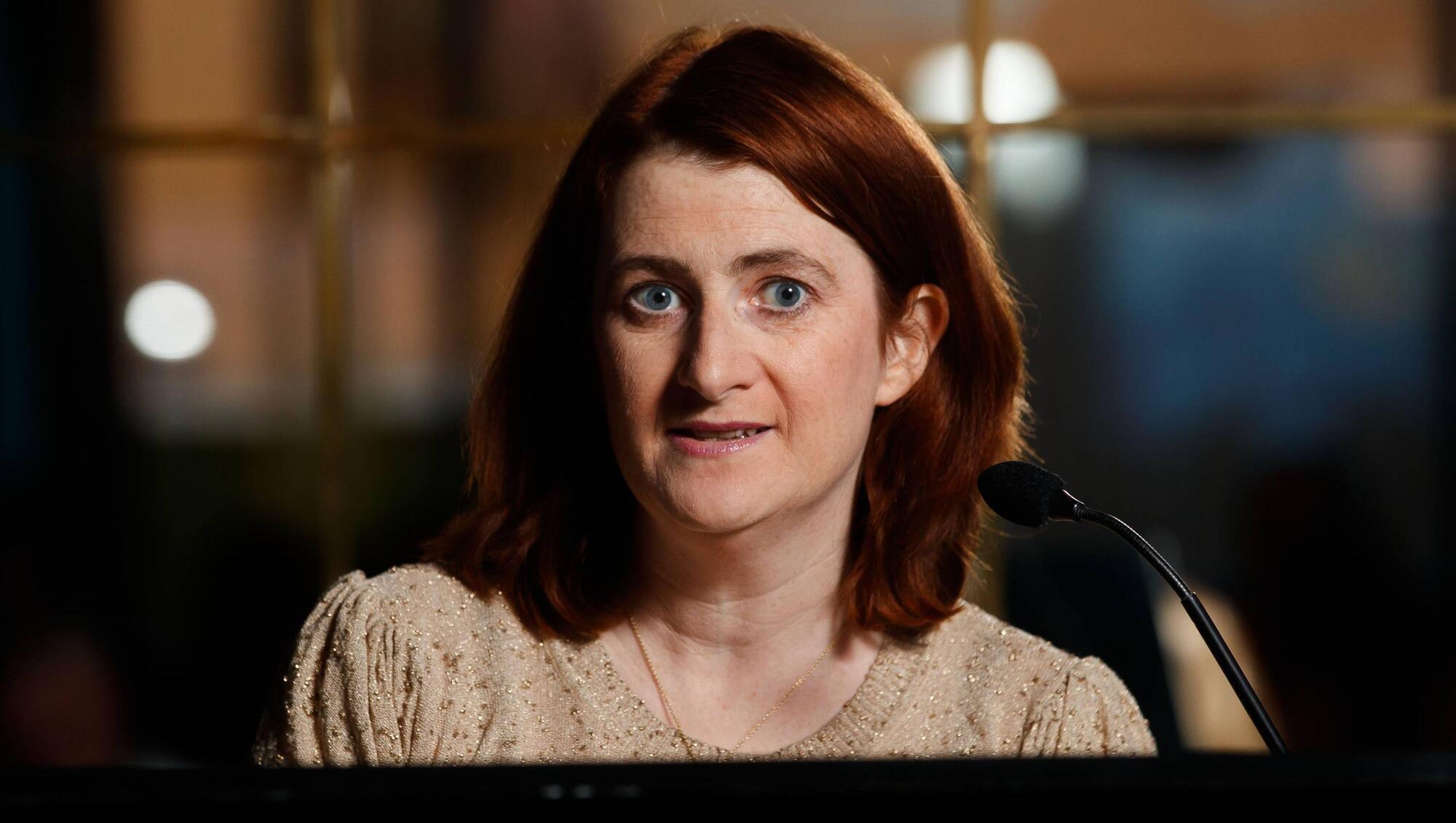
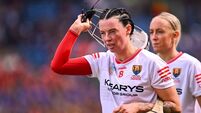
Hilda Breslin: 'If we are treating everybody the same, then we have got to be one association, one family, and treat all of our members and all of our players the same'. Picture: INPHO/Tommy Dickson
Merging the GAA, Camogie Association, and LGFA will deliver “equity of opportunity” and bring an end to the unequal treatment of male and female players, incoming Camogie Association president Hilda Breslin has said.
Athy native Breslin will succeed Kathleen Woods as Camogie Association president next month and is determined during her three-year term in office to play a leading role in bringing about one association for Gaelic games.
Breslin is firmly in favour of the three governing bodies joining forces and it is her intention to secure from the membership of the Camogie Association a “very strong mandate” for such a merger.
It is up to the other associations, she added, to outline their respective positions and whether or not they want to come under one roof.
Breslin said some of the arguments against a one association model “don’t stand up”. She also refuted the oft-repeated remark that top-ranking officials within an association are fearful of ceding power if a larger, more encompassing governing structure is delivered. From a Camogie Association perspective, this is patently untrue, she stressed.
“People say that the people around the top table don't want it, they think they'll lose power. I wouldn't speak for any other association, but certainly around the Camogie table, that is not the view,” Breslin told the
“But it is very important that any one association is done in a fair manner where everybody is treated with fairness and equality.”
The latter is a theme which runs right through our conversation.
She noted how many clubs across the country already operate as one unit, where there is no separate camogie or ladies football club, “but then as we move up the ranks, we replicate structures, we have double structures, and we start to see that maybe our members are treated differently or our players are treated differently as they move up the ranks and get older”.
For Breslin, that has to stop.
“If we are treating everybody the same, then we have got to be one association, one family, and treat all of our members and all of our players the same. I don't see any association as having something to fear from that.”
Back in 2018, the GAA, Camogie Association, and LGFA agreed a memorandum of understanding to strengthen links between the associations, and while last year’s return to play protocols and the more recent player pathway initiative offer examples of cooperation and collaboration between the three, no clear path or timeline towards one single association has been outlined.
"If we are saying it is about equity of opportunity for all members of the Gaelic games family, which to me it is, then one association is the logical conclusion of that. That, to me, is the end goal.
“I'd like somebody to tell me why they don't want it, rather than us constantly saying why it should happen. Maybe people should actually be saying why it shouldn't happen and then we can address those arguments as leaders and put to rest some of those arguments because they don't stand up in my book.”
As for the next step in achieving full integration, Breslin continued: “As leaders around the table, we have to be very brave and we have to say, this is what we want. If it is not what we want, then we need to come out and say this is not the format that we are heading towards. But we have got to be very honest and very realistic on what we are looking for.
“[A merger] is a benefit to everybody within the Gaelic games family. We are one community. We have been built by communities and families over generations and we are without doubt one family, so if it just means us putting in place a mechanism that we formally become that, then the leaders need to step forward and put that in place and put a timeline on that.
“We are the same volunteers, the same communities, the same families. We are the same people hopping into a car driving up to the club, but yet when we get out of the car, we are different associations. That doesn't make sense.
Breslin returns to the theme of equality when addressing the Government grant allocations to male and female inter-county players. At present, male inter-county players receive an annual grant of €3m, over four times greater than the €700,000 team grant distributed among female inter-county set-ups.
“I absolutely believe Government funding should not be based on gender. I do not believe that there should be a difference between funding male and female players, that is quite unfair. Government funding should be based on equity, and we have got to move towards that.”
The incoming president said a chief focus over the next two months is getting young girls back out on the field. She expressed concern that the shutdown of sport in recent months will lead to increased dropout rates among teenage girls.
“We have to get them back out, give them some sort of support so they have a purpose. The lockdown has probably affected our teenagers disproportionately and I would certainly say we would be naive to think it hasn't affected teenage girls at a greater expense than teenage boys because females always drop out of sport quicker. And it is so much harder to get them back than it is to retain them.”

CONNECT WITH US TODAY



Be the first to know the latest news and updates