Challenges new and old as planning and financial issues linger in Cork GAA and beyond
If sport reflects society, then it reflects change in that society as well as constancy.
Gaelic games are a case in point, perfectly illustrating how changes in attitude across Irish society resonate within those sports, and changes accelerated by the lockdown in particular.
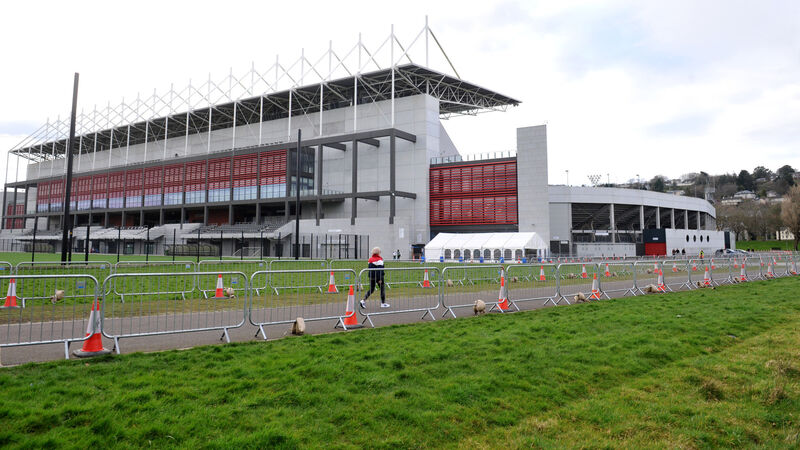
Earlier this week Eoin English of this parish wrote that Cork GAA was seeking planning permission for a new GAA museum, exhibition and visitor centre and licensed restaurants and café in Páirc Uí Chaoimh — as well as extra parking spaces
This latter proposal is a plan to convert a green area near the Blackrock end of the stadium, close to the entrance to the Atlantic Pond, to a parking zone with 124 spaces for use on match days, with coach parking for school and conference groups.
Cork city councillors reacted negatively to the parking proposal, with one describing it as “Outrageous... it is also disingenuous to suggest that it will benefit Marina Park, the Marina walkway, and the disabled.”
The reference to the Marina walkway is the perfect illustration of how public attitudes change.
This stretch of roadway along the river was converted to pedestrian use during last year’s lockdown and is one of the most-used amenities in the city, with large crowds using it to walk and cycle every day.
The negative reaction to a proposed car park from elected representatives and on social media shows the growing sense among urban dwellers of the need for pedestrian and cycling routes within cities for health and recreation, as well as the need for more ecological responsibility — not to mention the decline of the primacy of the car in determining public policy.
There will be plenty more heat and light (sorry) generated by the thorny issue of street lighting along the approaches to the stadium, and the discrepancy between the sums cited by the Board and the City Council for same.
But the backlash against the car park is indicative of a wider societal trend than a disagreement about a planning condition. Call it the pandemic accelerant effect.
On the other hand, the headaches facing an embattled Clare County Board have a longer history.
In recent weeks there has been a near-constant rumble coming out of the Banner County. Sharp accusations, pointed questions and photographs of unfinished facilities have been the weapons of choice so far, but the battle that is being conducted may be decided on far less exciting grounds: financial governance. At least it seems far less exciting.
However, there was an example just last week of how powerful an influence financial governance has in Irish life when a high-powered committee which was to carry out an assessment of various Clare GAA activities suffered a high-powered withdrawal.
The committee was the subject of a much-anticipated meeting of the Clare County Board in late February, but it has already lost one of its members, Ennis native Tony Garry.
Garry is a former chief executive of Davy Group, and as is now well known, early this month the company was fined €4.13m and formally reprimanded by the Central Bank for its actions in a controversial 2014 bond deal.
Garry subsequently stepped down from positions such as the board of the Mater Misericordiae University Hospital — as well as the Clare GAA review committee.
The precise level of public distaste with lack of financial oversight may be difficult to gauge, but all organisations in modern Ireland know that even the perception of deficiencies in governance can be toxic.
This is why Clare GAA’s troubles may not be at an end yet.
Questions are now being raised about the county’s supporters club, a matter addressed by former Clare hurling manager Davy Fitzgerald in his 2018 autobiography: “...even to this day, some smart-asses toss out that lazy question, ‘Where did all the money go?’ about the Supporters’ Club in Clare. Open your eyes. Ask the audit committee. Ask the county board.”
However, Clare GAA PRO Michael O’Connor was quoted last weekend as saying: “As to how the money is raised or who they get it from or anything else, (that) has nothing to do with the county board...
“As I understand it, the supporters club to which you refer to, had its own committee and the intention was to raise funds both in Ireland and the United States to help defray the costs for the Clare senior hurling team. It is my understanding that the committee remained in existence from 2012 to 2015.”
More questions to come here, then.
What happens when these two streams collide - pandemic-driven change and financial reality?
Several county boards have spoken up recently about the GAA’s decision to pause the cover for loss of wages in its injury benefit fund.
Waterford, Cork and Offaly are among the counties which have raised this issue: as noted above, Waterford are expected to raise it at this evening’s Central Council meeting with a view to having the cover reinstated.
The GAA’s head of finance, Ger Mulryan, has stated the case pretty clearly more than once: the fund can only pay out what it takes in, and with the loss of revenue in the last twelve months there is nothing being taken in.
On the other hand, club officers have expressed concerns that their players may not return to action when restrictions are lifted if this scheme is not reinstated.
This creates quite the tension for Croke Park as it balances its commitment to participation with its need for finance — specifically, finance from the government this year, as happened in 2020.
The community support offered by GAA clubs in last year’s lockdown bolster Croke Park’s case; serious spikes in infection rates linked to club county finals doesn’t.
Presenting a persuasive case for finance and return to play when some units are seen as responsible for spreading the virus is one more example of the new challenges the GAA faces.
Both traditional and pandemic-related.
CONNECT WITH US TODAY



Be the first to know the latest news and updates