GAA has moral obligation to tackle cynicism and 'rugbyisation' of hurling
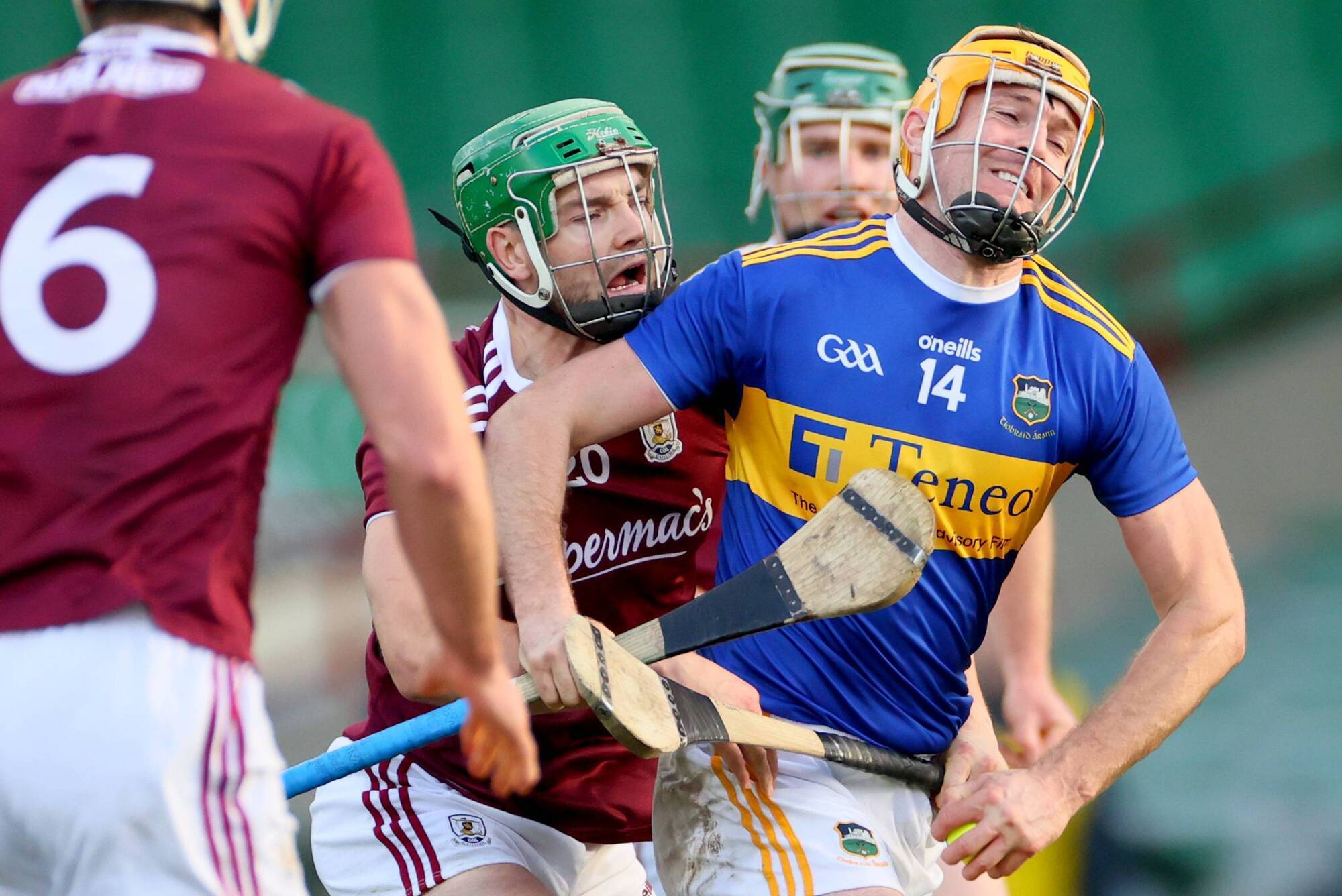
THOU SHALT NOT PASS: Tipperary’s Seamus Callanan is unceremoniously stopped in his tracks by Galway’s Adrian Tuohey in last year’s All-Ireland SHC quarter-final, one of a number of high-profile acts of cynicism in Championship 2020.
Perseverance is not something the GAA’s standing playing rules committee lack.
Twelve months after narrowly losing out on ending the role of the maor foirne, they are hoping to do so next month.
And 12 months after their proposal to introduce the black card to hurling was roundly opposed by 82% of delegates at Congress, they will once more try to tackle cynicism in the game.
“Dare I say it — the sin-bin in hurling is binned,” declared GAA president John Horan after the vote. But in the context of a winter championship pockmarked by cynicism, the winds have changed.
As per rule, such a heavy defeat would prohibit them from bringing the same motion to next month’s Annual Congress.
But this time they aren’t recommending a black card for one of listed cynical fouls as before only the sin bin for a deliberate pull-down or trip (they also include careless use of the hurley): A yellow card will be shown while the referee signifies the offending player is dismissed for 10 minutes. What’s more, the foul must have denied a goal-scoring opportunity but can be committed in or outside the large rectangle.
The motion, which would apply on an experimental basis to both this year’s All-Ireland senior football and hurling championships (a black card to be shown in football), is still to be rubberstamped by Central Council this month but in principle it has plenty of support.
Twelve years ago GAA director of games Pat Daly oversaw experimental rules, which saw the cynicism punished among other things with yellow card sin bins in both codes.
Now as the organisation’s director of organisational culture, planning, and development, he is part of the playing rules committee advocating this latest measure to tackle what has become a scourge in the game.
This, he stresses, is neither the recommendation of one or a few of the playing rules body but the entire group, from chairman David Hassan to former Cork secretary Frank Murphy.
And he highlights it is in keeping with the committee’s guiding principles, which were endorsed by Central Council in June 2019, not simply a kneejerk reaction to the previous Championship.
They include “to ensure the games are played in a fair manner and with total respect for match officials”, “to enhance the prevailing level of skill and reward players who make the ball the focal point of their attention”, to “make provision for physical contact while minimising the potential for injury and cynicism” as well as “to minimise the prospect of success arising from persistent rule violations”.
In a nutshell, Daly explains the proposed rule change: “If there is a reasonable effort to play the ball, there is no sin bin. There is only a sin bin if there is a cynical effort. You restore the goalscoring opportunity, which was denied, because that is currently not happening and instead of the yellow card, which is a complete cop-out for somebody taking one for the team. So as well as that he gets 10 minutes in the sin bin.
“I think that’s fair because if there is a genuine attempt to tackle then he won’t be punished and we have tried to make the provision for that.”
That, of course, would be at the discretion of the referee, which raises the question of consistent application. Is punishing cynicism on the double one step too far? Might it be too much for a hurling fraternity who up to now have been loath to see players dismissed for cynical play?
“This thing can be approached by a couple of angles,” Daly remarks. “You can say what will be accepted or you could say what’s needed. There may be a difference between the two.
“We’re looking at this objectively. This is not the thinking of any one individual or a number of individuals; this is the considered view of the entire committee. People like Willie Barrett and Frank Murphy who have been around the games a long time have contributed to this.
“We’re trying to address the issue on the basis of the guiding principles because in the absence of them you just move from one thing to the next thing and there is no overarching vision or philosophy for the entire thing.”
Daly admits to being alarmed by how hurling has changed. He notes Christy O’Connor’s recent piece in this newspaper comparing hurling’s collisions with rugby.
“What we’re dealing with here is only one aspect of a broader issue. By talking about an experiment at senior inter-county level, we’re being more than fair; we’re being more than objective and then when we get the data we’ll be able to analyse the extent to which behaviours change.
“That’s what effective rule-making is all about.”
And he knows in the context of what happened regularly between the end of October and middle of December there is a growing acceptance that there is a problem. Opinions about a sin bin among those at the coal face of the game has also changed.
“A lot of this thing is conscious awareness. Is there a consciousness around how the game is evolving? Can you track and see trends? From an administrative point of view, you proactively deal with trends and that’s what the standing committee is trying to do.
“I think any kind of a discerning individual or anyone with any degree of objectivity would realise something has to be done. Liam Cahill has been to the fore and others as well saying there is a problem. Brendan Cummins, Brian Gavin, Donal O’Grady in Limerick, there are fair-minded people saying this is headed in the wrong direction.
“The one stand-out incident in football was at the end of the Connacht final. Practically in nearly every Liam MacCarthy Cup game there was an incident. There were a good few in the Galway-Wexford and Dublin-Laois games and Galway-Kilkenny, Galway-Tipperary and in the All-Ireland final. What we’re doing here is approaching the thing in a minimalist way.”
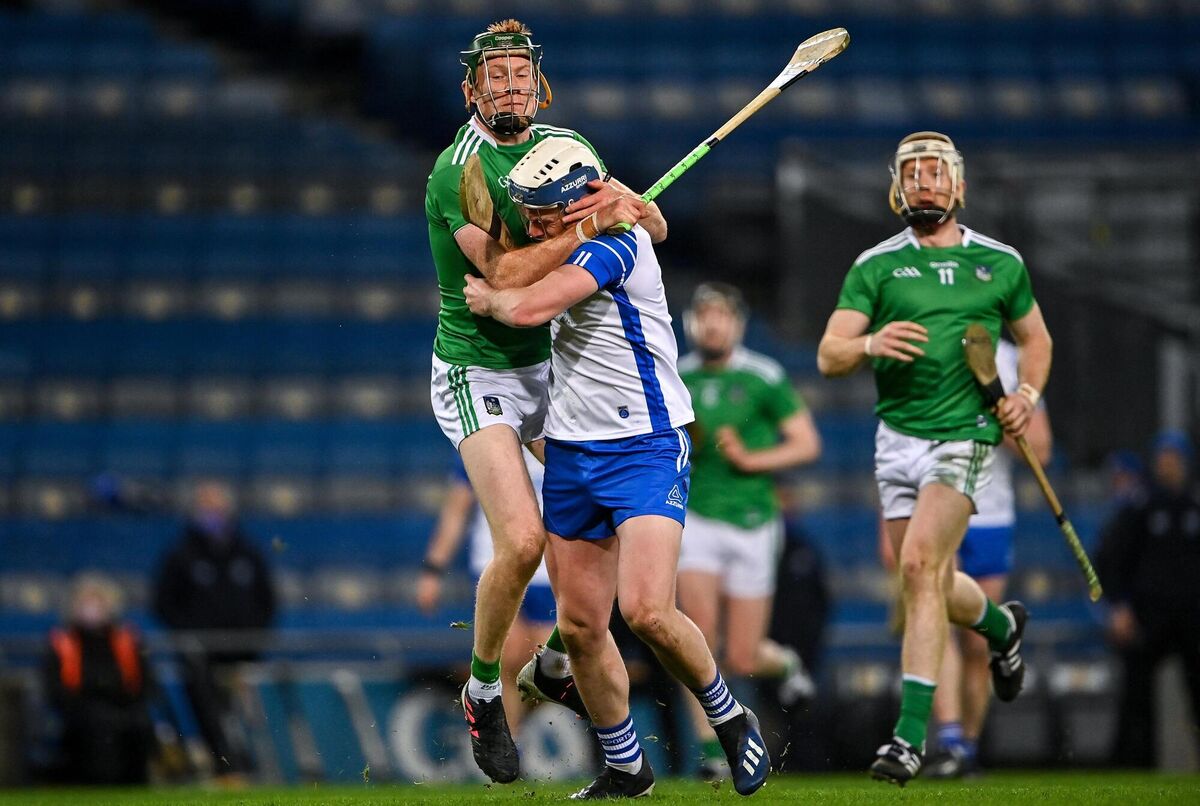
A vote on a sin bin on hurling the day after Limerick and Waterford faced each other last month would surely have passed but jets will be cooler by the end of February.
“The day after the hurling final, yeah people would say it was needed but that would have been an emotive response,” insists Daly. “But look at the thing objectively and ask is this fair and is it right and if we are going to experiment in one competition and you have evidence to prove or disprove something then you’re operating from a position of strength instead of relying on evidence that is anecdotal or subjective.”


CONNECT WITH US TODAY



Be the first to know the latest news and updates