Bloody Sunday: An illustrated guide to a murderous countdown to carnage
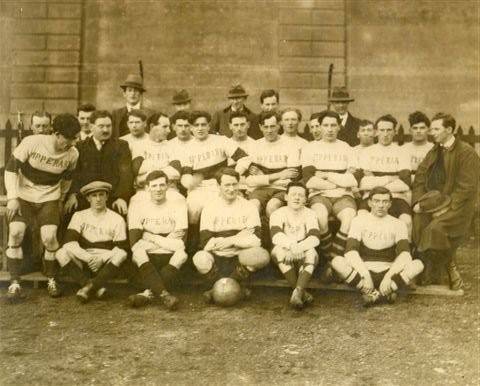
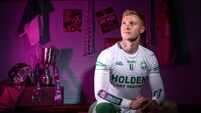
THE story of ‘Bloody Sunday’ does not begin on the day itself. It does not start on November 21 when this photograph of the Tipperary footballers was taken at Croke Park. For the GAA, no more than for others caught up in the carnage of that day, the story begins some weeks before.
“We were not told any details of what was being done. We just heard that there was a big job coming off in the morning.”
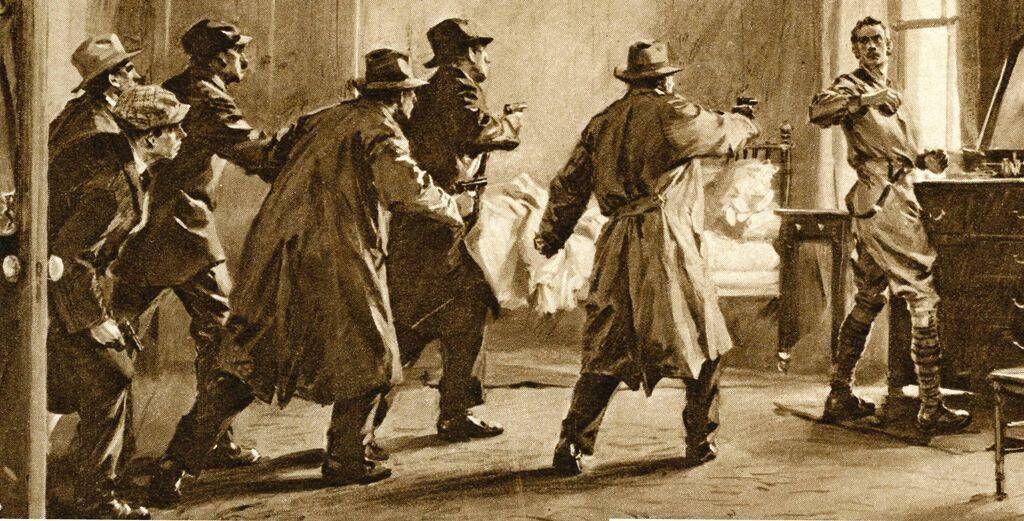
HE operation that was planned for Sunday morning, November 21, was an exercise in coordinated killing. As clocks ticked towards 9am, squads of IRA men fanned out across Dublin with the purpose, as one participant put it, “to liquidate members of the British Intelligence Service who resided in private houses and hotels throughout the city”.
This was as daring an enterprise as any yet undertaken by the IRA in a war of independence that had seen a momentum swing against them in the spring and summer of 1920.
The British government had overhauled its Irish administration and began the job of replenishing its depleted police force with new recruits — these were ‘Black and Tans’ and Auxiliaries who arrived in Ireland in March and July 1920, quickly earning themselves a reputation for acts of casual brutality against the civilian population. Yet it had an effect.
On November 9, British prime minister Lloyd George trumpeted that his government had “murder by the throat” in Ireland. It had nothing of the sort.
As the sketch from the makes clear, the killing that occurred the morning of November 21 was intimate and personal. Many of those killed were still in their pyjamas, and a number were in the company of their wives.
Of the killing of Captain Newbury at 92 Lower Baggot St, an IRA Volunteer recalled: “The man’s wife was standing in a corner of the room and was in a terrified and hysterical condition.”
Newbury was one of 14 killed at eight locations that morning — a 15th would die from his wounds in early December. Not all of them, it transpired, were spies. Yet for Michael Collins, the killings had been justified and necessary and, though not personally involved, he declared his conscience to be clear.
“By their destruction, the very air is made sweeter,” he remarked.
HE events of the morning transformed both the atmosphere in the city and the context in which that afternoon’s match at Croke Park would be held. Should it go ahead at all?
Not according to three members of Dublin IRA, who approached Croke Park prior to throw-in to warn the GAA of intelligence about an impending military raid. With spectators already in the ground and conscious of the difficulty of evacuating the ground at such a late stage, the GAA opted to press a head.
The match had not long started when the anticipated raid began. A mixed force of military, RIC, and Auxiliaries arrived in a dozen or more armoured lorries. With the suspicion that those involved in the morning’s killings had taken refuge amongst the attendance, their plan, it was claimed, was to mount a stop and search operation on all males leaving the ground. What they did was very different. What searching was done only occurred after they had fired indiscriminately into the Croke Park crowd.
A stampede ensued as players and spectators fled for safety. A reporter present described the scene as a “mass of running and shouting men and shrieking women and children”. The firing was short-lived and concentrated. And it was deadly.
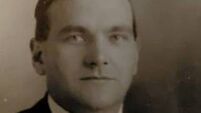
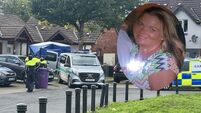
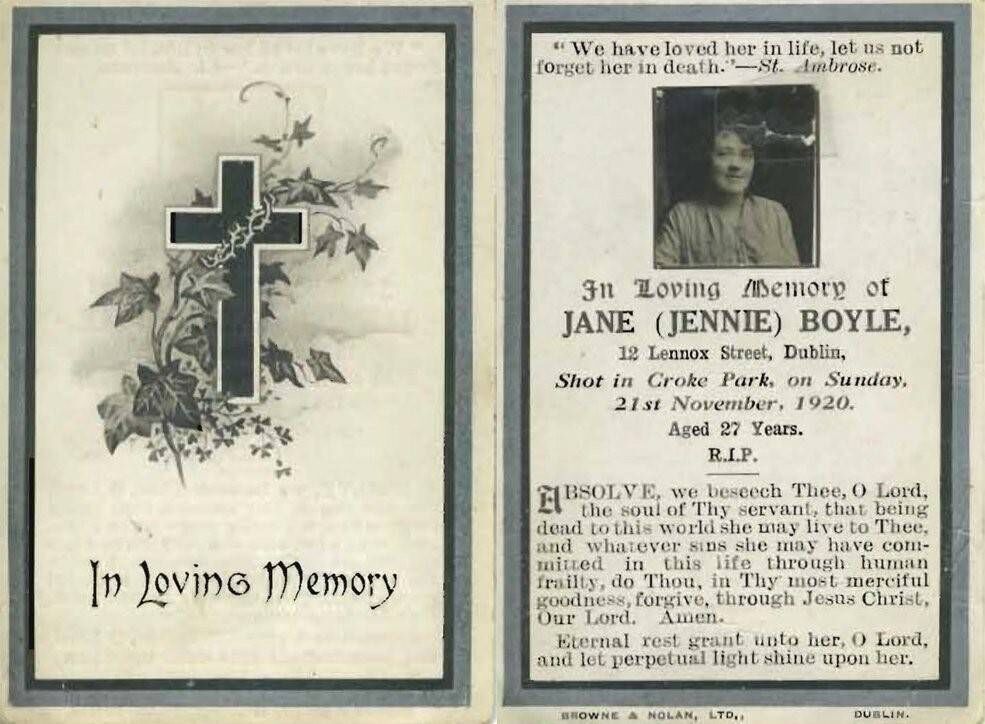
One player — Michael Hogan — and 13 spectators would be killed. The dead included three schoolchildren. Among their number, too, was Jane Boyle, pictured here, who was shot holding onto the arm of the fiancé she was due to marry the following week. Nor was the killing confined to Croke Park. That night, IRA leaders Dick McKee and Peadar Clancy, along with civilian Conor Clune, were shot in the grounds of Dublin Castle. The men, arrested the previous night, were believed to have been tortured and killed as a reprisal for that Sunday. morning.
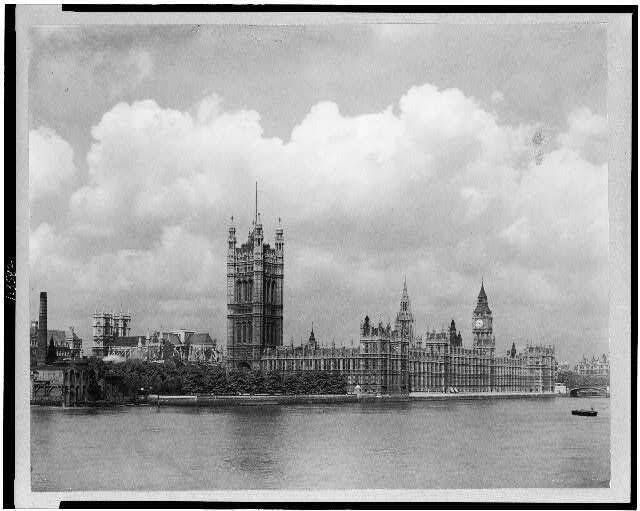
HAT happened at Croke Park was shocking. And yet, when the chief secretary for Ireland, Hamar Greenwood, spoke in the House of Commons (pictured above) on November 22, he started out by making no reference to Croke Park at all. He focused instead on the events of the previous morning, the better to “bring vividly before the House and the public the cruel reality of the Irish situation”.
When Irish Nationalist MP Joseph Devlin drew attention to the chief secretary’s omission, he was shouted down before being grabbed around the neck by a Conservative MP. Shouts of “Kill him, Kill him!” were heard in the chamber. The sitting had to be suspended.
When it resumed, Greenwood finally made a statement about Croke Park, it differed in detail from that first put out by Dublin Castle. The substance, however, was similar. The line put out by the British authorities sought to shift blame for the shootings away from Crown forces and onto the spectators — those Crown forces had not initiated the firing; they had reacted to it. ‘This force was fired upon and they fired back’, Greenwood asserted, adding, for good measure, that “30 revolvers and other firearms” had been found on the field in the search of the crowd that followed the firing.
Such claims were rubbished in the Irish nationalist press, the rejecting the British government’s claim that their forces had been fired upon first as “another base official lie” which would “deceive no one in Ireland”.
The man in Ireland agreed. He visited the scene, walked the bloodied field, talked to eye-witnesses and inspected the bullet-marks in the walls. The evidence, he concluded, did not point in the same direction as the official version of events.
T seems only too clear to me that the full story of Croke Park, when it can be told, will unveil one of the most awful incidents in the Irish troubles, and one for whose responsibility the authorities cannot be exonerated. The discipline of the forces evidently failed at the last moment.”
If the correspondent was not buying the narrative the British government was trying to sell on the Croke Park atrocity, he acknowledged too that the full story had yet to be told. Would the Military Tribunal of inquiry into those events shed any more light or reveal any more truth? The answer was no. Nor was it ever likely to. This was, in effect, the military investigating itself. And it was doing so in private. Counsel for Jane Boyle’s family told the inquiry he would not be producing witnesses as ‘closed doors’ inquiry was “so much opposed to the British ideal of sport”. When the inquiry delivered its verdict December 8 , it made for unsurprising reading. There was criticism of the RIC, but on the key point of who fired first, it confirmed the official position — the “firing was started by civilians unknown”.
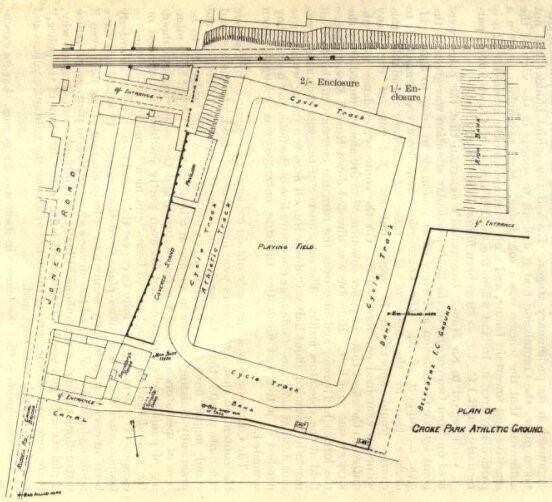
This judgement sat in contradiction to eye-witness testimony. But it was challenged too by a British Labour party delegation, which had arrived in Ireland on November 30 to conduct its own investigations into allegations of reprisals. A detailed report published by this Labour commission included the plan of Croke Park above, but it also included a clear rejection of many official statements in defence of what had occurred. The Labour Commission concluded that there was “no justification” for Crown forces actions it deemed to have been guided by a “spirit of calculated brutality and a lack of self-control”.
RAMATIC and deadly as they were, events of November 21 did not force a pause in the War of Independence.
No step back was taken by either the British authorities or the IRA. What followed instead was a wave of arrests and house raids by police and military in Dublin, while a week to the day of the events in Dublin, the Tom Barry-led West Cork brigade of the IRA ambushed and killed 17 Auxiliaries at Kilmichael in Cork.
The Anglo-Irish war, then, had already moved on as the dead of Bloody Sunday were being laid to rest. Nine of those killed on the Sunday morning were returned to London for burial, where they were afforded all the trappings of a state funeral — prime minister Lloyd George attended, as did Hamar Greenwood, Field Marshal Henry Wilson, and a representative of the king.
Before the bodies had been removed from Dublin, union jack-draped gun carriages carried their coffins through the streets of the city, accompanied by a cortege of more than a thousand troops.
Stricter rules applied to the funerals of the Croke Park victims, though their funeral Masses in Dublin and elsewhere attracted large crowds of local sympathisers. Among those victims, however, it was only Michael Hogan whose name would take hold in the public imagination, helped by the GAA who, in the 1920s alone, named their main Croke Park stand in his honour and erected a monument to his memory in his native Grangemockler.
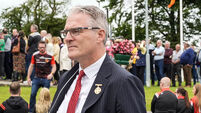
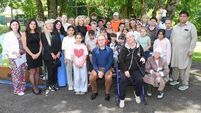
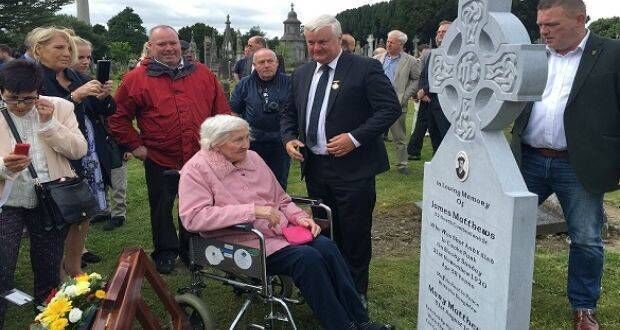
Of the 13 other Croke Park victims, little was known of their personal stories until the centenary of Bloody Sunday loomed into view and the GAA — with the assistance of relatives — launched a graves project, pictured here, to properly mark their loss. Those victims and their stories will be the fore this weekend.
CONNECT WITH US TODAY



Be the first to know the latest news and updates