Denis Coughlan book extract: The bitter Cork GAA row that even the Taoiseach couldn't defuse
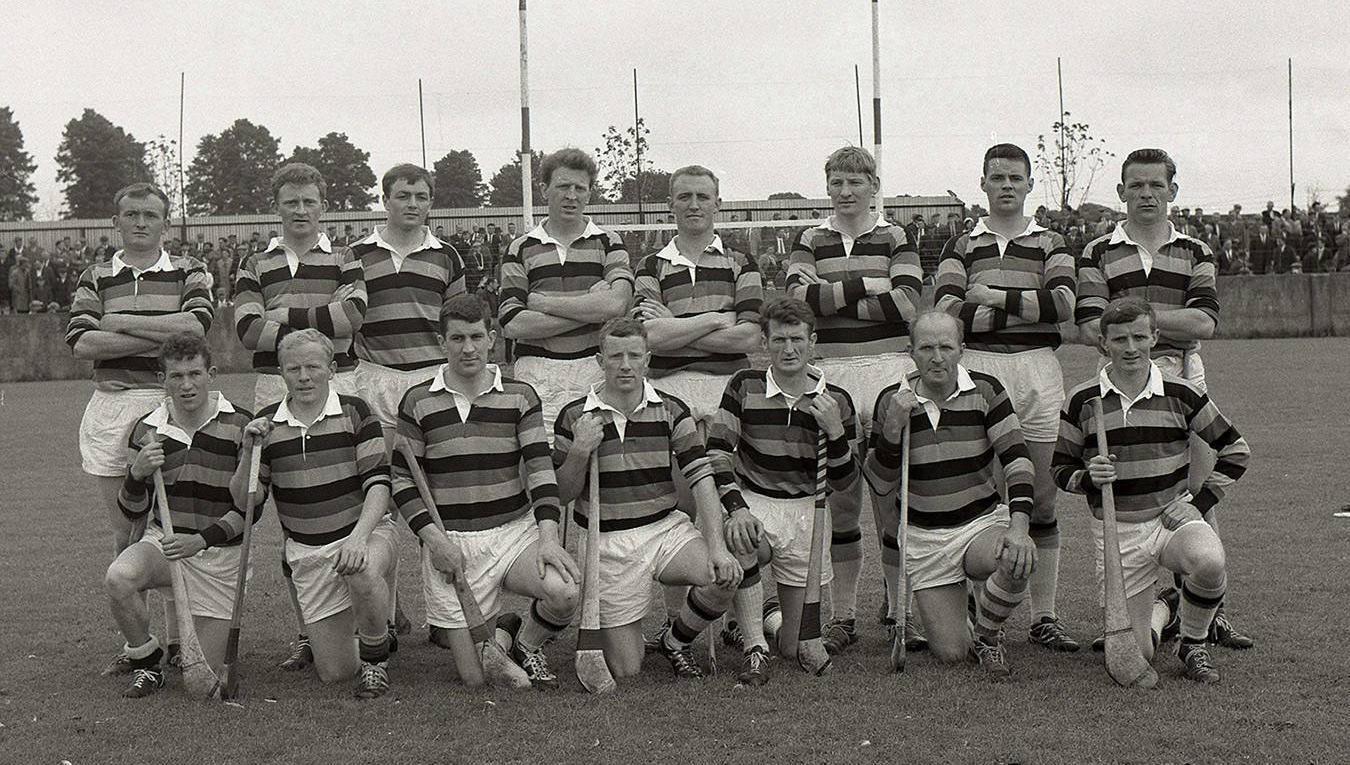
ON SUNDAY July 28th, 1968 Glen Rovers played UCC in the quarter-final of the county hurling championship and it was a tight game. UCC had a very good team including Ray Cummins, Billy Morgan, Tom Field, Paddy Crowley and John O’Halloran. With about a minute to go, we got a ‘70’.
Our man mis-hit it and I caught the ball – I was playing centre field – and I put it over the bar. So, we were two points up practically on the final whistle.
When I ran back to my position and turned to face the puck out, I noticed a schmozzle in the college goalmouth, which left one of the UCC players injured. There was a dispute afterwards whether or not a Glen Rovers player had been sent off before the final whistle; but whether or not he was, everybody was shocked a few weeks later when the county board expelled him from the association.
His previously exemplary record – he was also on the Cork panel at the time – counted for nothing. Three other Glen players were also suspended for six months and three months, but to have somebody actually expelled from ever being involved in the GAA again as long as he lived, shocked and angered everybody in the club – as far as I know he was the only person ever to have been expelled from the association. Now, I’m not forgetting the player who was injured, and whom I still know to this day and I play golf with him from time to time; and it was a serious injury too.
A factor in the decision of the board was the fact that Con Murphy, who was secretary of the county board, and Seán Ó Síocháin, who was secretary general of the GAA, were both at the match and saw what happened.
The club was also severely reprimanded by the board about the behaviour of its officials in the investigation of the incidents during the game.
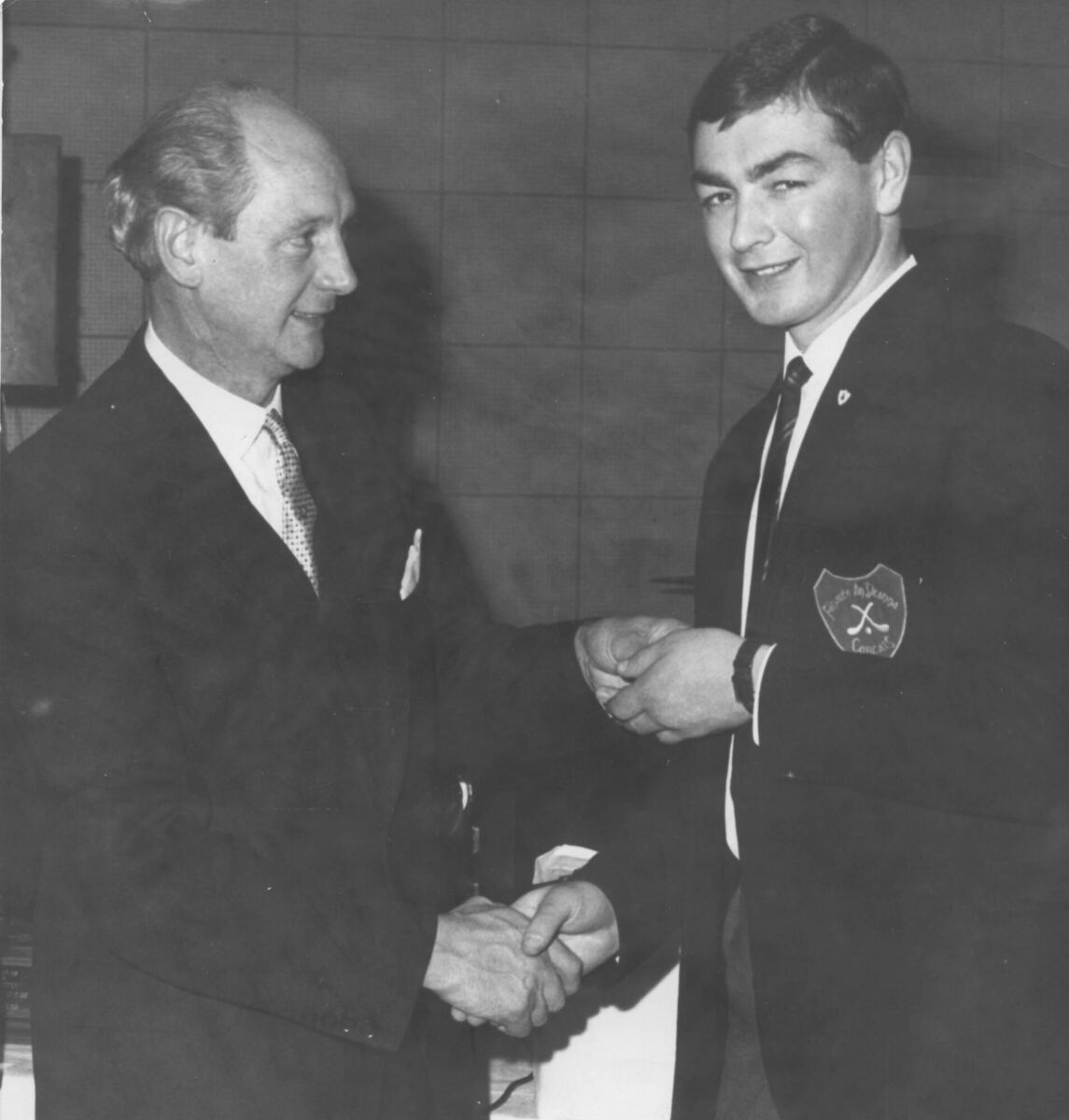
It was such a severe punishment that the Glen felt very aggrieved. The club called an extraordinary general meeting which Jack Lynch, who was Taoiseach at the time, attended.
It was the largest meeting ever held in the Glen Hall. At the meeting, Jim Young, who was the president of the club, said that the sentence was, ‘most severe, unjust and savage’. He spoke of a ‘personal vendetta by certain members of the county board against the club which has been carried on for many years’. The club chairman, Theo Lynch (Jack’s brother) said, ‘The findings of the board had dragged the name of one of the most famous clubs in the country in the mud and instead of benefitting the association, they had done great harm to it.’
It was unanimously decided, in the meeting of over 200 people – completely unanimous – that the Glen would pull out of the Cork county championship, even though we were through to the semi-final. Glen Rovers players would not play for Cork, and any of the club’s selectors for Cork teams would resign. Glen Rovers players would not attend any Cork games or any club games organised by the county board – the county final included. As far as I remember, St Nicks followed suit, but it was decided that underage teams would not be affected and would continue to play.
I think the only dissenting voice at the meeting was Jack Lynch and he was making the very sensible point that at some time in the future the club would want to return to playing. How long would the withdrawal last, and how would the Glen move forward in future years? And how would the club seek permission to get back into the championship?
It was a fair point, but emotions were running very high. Taoiseach or not, Glen Rovers and St Nicks hero or not, the proposal to withdraw was passed unanimously.
Of course, the club also appealed the decision of the board to the Munster Council, but that was not expected to be successful and the withdrawal stood. In September, the Munster Council rejected the appeal and the expulsion remained in place. And the Glen and St Nicks remained outside the Cork county board hurling and football fold.
Now, some players were affected more than others by all this. Myself, Denis O’Riordan and Jerry O’Sullivan were all playing hurling for Cork at the time. I was also playing football for Cork, so I was very seriously affected. How badly affected I wouldn’t know for some time, but I would find out to my bitter cost. The extraordinary thing was that everyone – every single person – obeyed the club’s decision. We didn’t go to any matches, we didn’t play with Cork in the National Leagues – Cork were out of the championship at the time.
And I remember distinctly where I was on the day of the county final, which I had never missed up to that day.
Myself and 10 others went off down to Carrauntoohil, and we climbed up to the highest point in Ireland. So that’s where we were, instead of possibly winning a county championship with the Glen.
It was a strange time for us, being so inactive and not playing games. And an uncertain time too. There was talk that the club was going to actually disband at the next AGM the following December and some newspapers ran with that story. Thankfully that didn’t happen.
In fact, the opposite was decided. The club decided to resume all GAA affairs in the county, and agreed to re-affiliate all teams in all grades of championships, while at the same time pressing at every opportunity to have our player’s expulsion from the association revoked. Again, this was decided unanimously.
At that AGM, Jack Lynch said that the action taken by the club was fully justified, that the club always had the best organisation of any unit in the association and down through the years those in authority were envious of the club’s success and spirit.
The extraordinary thing was that the lifetime ban that caused the whole furore was subsequently rescinded. Firstly, in 1972 it was, on appeal, reduced to 10 years. Within a year of that, congress decided that the maximum suspension for any offence would be two years and so our player was – thankfully – reinstated, and he did play again for Glen Rovers.
THE Glen being the Glen, we bounced back in 1969. We felt we had to. In Glen Rovers there is always a cause and the cause that year was our team-mate who had been wronged. And we were Glen Rovers. Being honest, we wanted to put it up to the county board too.
Now, we had to reapply to the county board to play. There was no truce or coming together or agreement or anything like that. We had to eat humble pie and reapply.
There was no backing down by the board; we had to send a formal letter from the club – which is exactly what Jack Lynch had foreseen the previous year but he wasn’t heeded at the time.
We were men with a mission in 1969. It was always drummed into us in the Glen how important it was to win the county championship and we desperately wanted to win our 22nd title that year.
We played UCC in the final on the 22nd of September and remember it was against them the previous year that all the trouble had happened. They had Ray Cummins, Seamus Looney, Pat McDonnell – and the best of players from other counties too.
The so-called ‘College Rule’ was in place those days which meant that all senior hurlers had to play for UCC and not their clubs, or they would not be allowed sit their exams. Thank God it was withdrawn later or UCC would have won a lot more.
But we had good players too and our captain was Denis O’Riordan. The game was billed very much as a veteran-laden team versus a talented array of youngsters. And it looked for a long time during that game that the UCC youngsters would come out on top. After 20 minutes they were leading by 0-8 to 0-2. Then Mick Kenneally got a great goal from a free. But we were still down by four points at half-time and then UCC started to pull away.
With 10 minutes of the second-half gone, UCC were well ahead, by 1-12 to 1-4 but we rallied and drove on, our momentum building minute on minute. We won the game by an amazing 12 points, 4-16 to 1-13, a 20-point turnaround in 20 minutes.
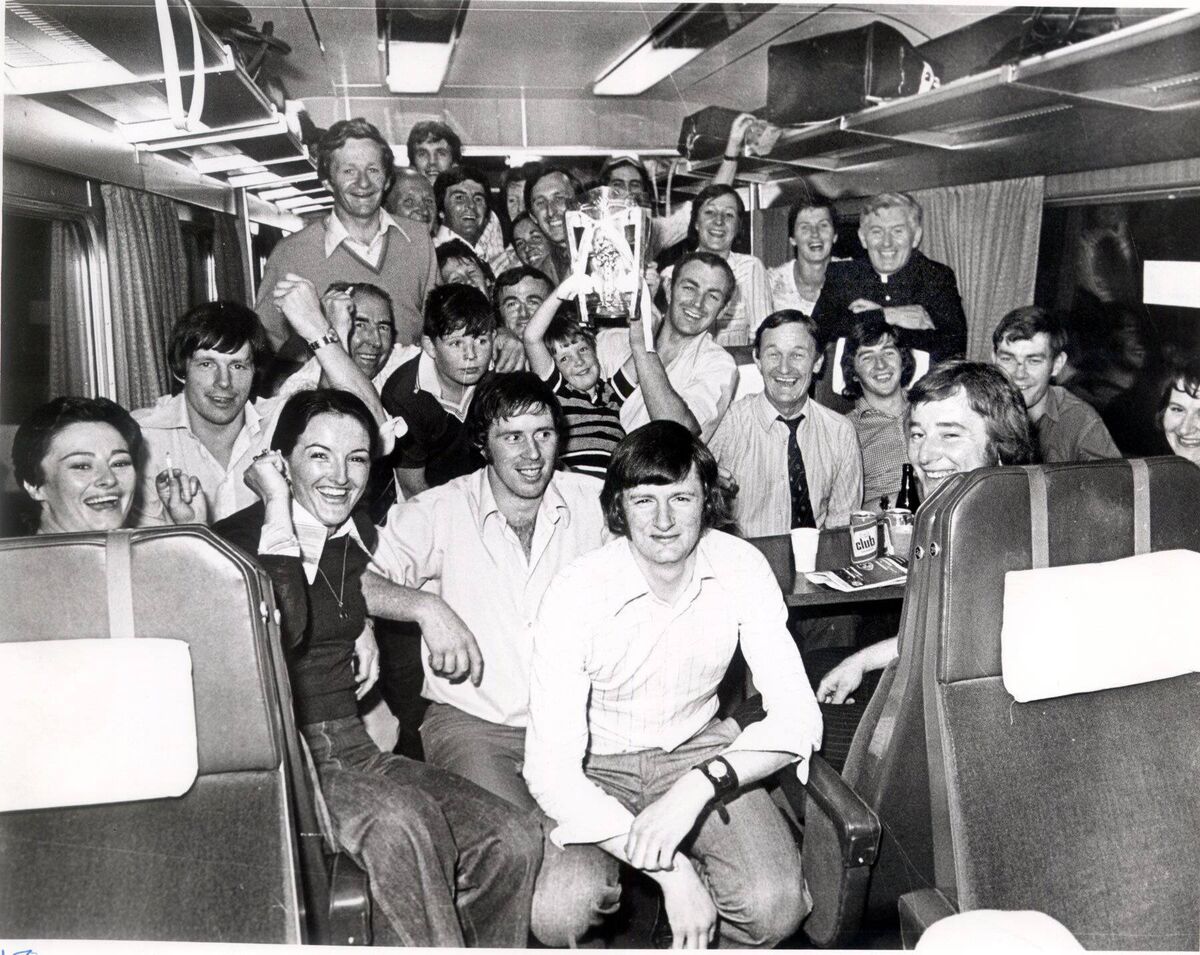
We always had great team spirit in Glen Rovers but we could hurl too. This was our 22nd county title and I think that was one of the very best we ever won. It was certainly one of the sweetest and it was very important for us. It also marked a transitionary period for the club. By the time we won our next championship, several players had retired or emigrated; people like Bill Carroll, Maurice Twomey, Mick Kenneally, Mick Lane, Jackie Daly and Seanie O’Riordan. So, we had to build another team. Which, being Glen Rovers, we did.
AFTER the All-Ireland final of 1969 and the subsequent Oireachtas final, I wasn’t feeling well and the doctors told me I had a blood infection – a virus of some kind – and they advised me to take a break from hurling and football.
They suggested six months but, while I did take the winter off (missing the National Leagues before and after Christmas), I was back training for the Glen and St Nicks in early March and I was feeling great, raring to go. I was 25 and the break had done me good, and I was straight back training with the Cork footballers.
But I wasn’t welcomed with open arms by the Cork hurling selectors. I just got on with it and eventually I was brought back into the hurling panel.
Although Glen Rovers had won the county championship in 1969, we had only two players on the Cork championship panel in 1970, myself and Jerry O’Sullivan.
That in itself, was a travesty, but I wasn’t on the team, either – I was a sub. Since Jerry was the only Glen player on the team, he was automatically the captain. So, Jerry captained Cork in the Munster semi-final against Limerick which Cork won by 4-13 to 3-6 in Thurles – a big win. That was on the 28th of June. I was an unused substitute.
Then the bombshell: Jerry was dropped off the panel – the panel – for the Munster final against Tipp three weeks later. Can you ever remember a captain of a county team being dropped off the panel for a final, having won the semi-final so well? I can’t.
Of course, this meant that when Cork beat Tipperary in the final by two points, Paddy Barry of St Vincent’s, as the longest serving player, was captain and received the cup. The fact that I had been Man of the Match in the previous year’s Munster final didn’t impress the selectors, either. I was not given a run that day, even though it was a tight game.
Perhaps this was when Glen Rovers people began to wonder what was happening with the county board and its selection committee for the Cork hurling team in 1970.
Remember that this is less than two years since Glen Rovers had defied the board and withdrawn from all board activities after the UCC match. And Glen Rovers were now county champions. But we weren’t even represented on the pitch the following year in the Munster final.
The reprisals against Glen Rovers had begun in 1969 when I was playing in the National Hurling League semi-final against Tipperary in April. This is how one newspaper reported what happened next... “Coughlan had a brilliant game that day (against Tipperary) at centrefield but, shortly before the end, was pulled out of the game by the selectors and replaced by Gerald McCarthy who only a few hours earlier had been considered unfit to play. This shock change is still one of the most controversial arguments in Cork GAA circles. Many regard it as a retaliatory dig against Glen Rovers by the Cork GAA board.”
What made matters worse was that the 60-minute game was right in the balance when they took me off, prompting Mick Dunne, in the Irish Press, to write... “When Tipperary took back the lead for those three second-half minutes Cork were still unsettled following the 52nd minute withdrawal of Denis Coughlan ... Coughlan had been such a dominant figure at centre field ... that Tipperary were never happy around the middle”.
Then they dropped me for the league final a few weeks later against the All-Ireland champions, Wexford, prompting no less a sportswriter than Paddy Downey to write in the Irish Times... “Surprise of the Cork team to play Wexford in the National Hurling League final at Croke Park on Sunday is the omission of the Glen Rovers man, Denis Coughlan, who was one of the outstanding members of the side which beat Tipperary in the semi-final at Thurles on April 13th.”
He added that my substitution against Tipp was... “to the astonishment of nearly every Cork supporter at Thurles Sportsfield”.
Now, I’m not putting in these newspaper reports to big myself up, but rather to show that all this wasn’t a Denis Coughlan/Glen Rovers/Blackpool conspiracy theory, but something that was widely known and accepted in GAA circles – even outside Cork. Me being dropped for the National Hurling League final of 1969 was no surprise to anyone. But what happened the following year was far worse.
FOR the 1970 All-Ireland semi-final against London on the 16th of August I was picked to play at centre field. And I was captain – I had to be if I was playing.
My inclusion was a surprise, not only to myself but to the newspapers. One article went... “The surprise is no reflection on Coughlan’s ability. It comes because of the continuous running battle between the Cork selectors and the county champions Glen Rovers, disagreement that had meant that appearances by Glen members on the Cork team being few and far between”.
When it was put to me if I had any ill-will to the selectors because of what they had done, I was quoted as saying,... “All I am concerned with is hurling itself and the fact that I have now got my place back on the Cork team. This is my only chance of playing in this year’s All-Ireland final. On this game alone I will be judged and I have to make the best of it”.
And, even though I say so myself, I played well, and Cork won well on the day. But the board and the selectors had other ideas for the final, and when the team was named, I was dropped.
Jerry, the captain of the team, had been dropped for the Munster final and I, the captain of the team, was dropped for the All-Ireland final. The only two Glen Rovers players on the panel. The only two players who would have been captain on either day to raise the cup for Cork. Two captains dropped for two consecutive finals, both from the same club.
To rub salt in the wound, how I learned I wasn’t playing in the final was also unpleasant. I got a phone call from the journalist, Val Dorgan on the Tuesday night before the final. I knew Val, he had played for the Glen himself.
‘Do you know you’re not playing on Sunday?’ he said.
‘No, Val, I didn’t know that, this is the first I’ve heard of it,’ I said. ‘And,’ he said. ‘Did you know that if Cork win on Sunday it will be the first time ever that Cork have won an All-Ireland that there wasn’t a Glen Rovers man on the team?’ ‘No,’ I said, gutted. ‘I didn’t know that, either.’ The following morning the team was confirmed, with the headline... “Cork Restore Four Players for Final: No Glen Rovers Man in Team”. The article also confirmed that 1970 would be the first time, “since 1929 when Paddy ‘Fox’ Collins became the first Glen Rovers player to wear a senior jersey in an All-Ireland final that the Blackpool club will not have a representative on an All-Ireland team”.
Grim reading.
Now, while I may not have known about the Glen always having had a player on Cork All-Ireland final teams, I’m sure others inside and outside the club did know it. And the club wasn’t happy; everybody knew what was going on – what the board was up to – that this was revenge for what Glen Rovers had done two years previously.
So the club ordered its representative on the selection committee (yes, there was one since we were county champions) to resign, but he refused. While everybody knew what was happening, nobody – least of all Glen Rovers – could do anything about it.
The board said the selectors were independent and the selectors said they were picking the best team.
The final went ahead against Wexford and Cork won easily. I sat on the sideline watching. The game was extraordinary from a few perspectives. There were four Quigley brothers on the Wexford starting team, Dan, John, Martin and Pat – that must have been a very disappointed household the following day.
But I was delighted that Eddie O’Brien scored a hat-trick of goals for Cork, a record that stood until Lar Corbett equalled it for Tipperary exactly 40 years later.
It was obvious mid-way through the second half that Cork were going to win in a canter. With six minutes to go, we were ahead by an extraordinary 17 points. And this was the first ever 80-minute final, where, to bring on subs would not only have been expected but almost essential. But I wasn’t brought on, anyway, and that was always the plan.
I was never going to be presented with the Liam MacCarthy Cup that day and Glen Rovers were never going to be represented on the team. When we went up to collect the cup afterwards, I must admit that I wasn’t feeling particularly well because I knew in my heart and soul the reasons behind what had just happened. I can’t say I experienced any consolation that this was not a personal campaign against me – that I was, as it were, collateral damage.
And, of course I was not the only victim of what was going on; Jerry O’Sullivan had been treated shamefully, too. Jack Lynch was Taoiseach and of course he was there, both in his official capacity and also as a proud Cork man. And we all had to go up on the podium – Paddy Barry first, as captain.
When I reached the podium, Jack was about six feet away from me. And he made a beeline for me; he had to go past people to get as close to me as he could. I remember this as vividly as if it were yesterday. He shook his head angrily and said, ‘The so-and-sos didn’t even give you a taste of it’.
Except he didn’t say ‘so-and-sos’ but I don’t want to repeat the word he used – it was a word that you wouldn’t often hear from Jack Lynch, but everybody knew what was going on.
Now, I didn’t write this book to settle old scores. Anybody who knows me knows that I’m the one most likely to be trying to stop the fight rather than start it. And there was a lot more I could have put in this book that wouldn’t show people at their best – about this particular incident, too – but I didn’t.
Nor, you will notice, am I naming names which I could have if I wanted to, they’re all dead now. Despite the bitterness shown towards Glen Rovers at that time, I’m not going to return the compliment.
No, life is too short. On the other hand, I did decide when I started the book that I would tell the truth – that’s the way I was brought up. And the truth is that politics was rife in Cork hurling and football those days, with people using positions of power to further their own personal ends and that of their clubs rather than Cork teams.
It was especially prevalent in Cork minor teams, unfortunately. Luckily for me, all that was about to change in Cork hurling and football, and luckily for Cork, too.
CONNECT WITH US TODAY



Be the first to know the latest news and updates