Hurling hands: Ollie Moran - 'If you wore a glove it was a sign of weakness'
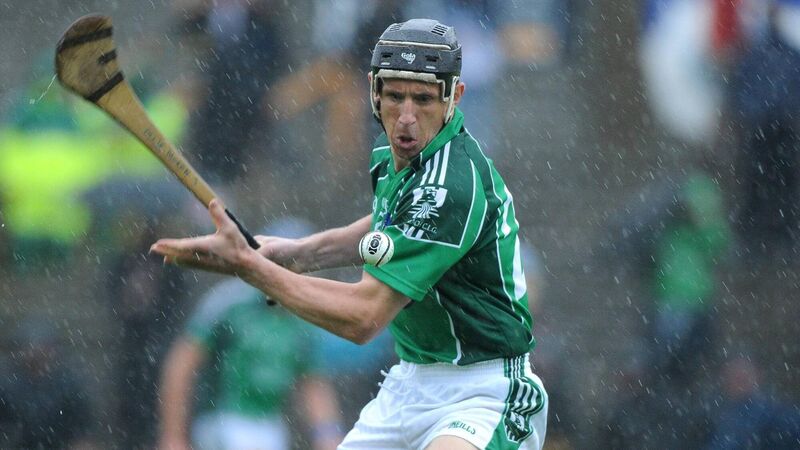
Like any hurler I got a lot of cuts and bruises and a good few breaks along the line - I broke fingers twice.
In relative terms, I came out pretty unscathed but the cold weather gets me. That came against me while I was still playing. Like every other player I’d have gone through games with hairline fractures, but what I found - particularly towards the end of my career - was I got a lot of contusion-type injuries. When you’d start off training for the year, a ball session on all-weather pitches in February or March, it’d take 20 minutes for my hands to warm up properly.
Before they warmed up out on the field, if I got a ball into the hand without having that full sense of feeling in it, I could have a ball skipping off the top of my fingers - and that would get the fingertips to swell up and get sore.
I remember a challenge against Cork one time a couple of weeks before the championship, and I broke my finger.
And I told no-one. I was in college in Waterford at the time but I went out to Ardkeen (hospital). I got an X-ray and then Tadhg O’Sullivan had a look at it and confirmed it was broken. I didn’t tell anyone because the form wasn’t that great at the time and I was thinking, ‘I’m not giving them an excuse to drop me’.

I went to Mike O’Doherty’s bioenergy place in Ennis to try to help it, to build up the circulation, and it worked - but because I tried to accelerate the healing process the finger ended up getting warped, completely and utterly.
The look of a glove would put me off. The aesthetics wouldn’t appeal to me certainly, but there was also the thing that if you wore a glove it was a sign of weakness.
And that’s completely counterintuitive because if anything it makes sense to wear a glove: you’re going to get belted on the hands and they’re very exposed.
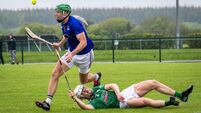
The way I played I had no problem putting my hand up in the air for the ball but if you do that you’re going to get hit a lot more. If you’re playing centre-back, centre-forward, as I did a lot, then you’re contesting more high balls than almost anywhere else.
With hurleys, the older I got the worse I got. And hurleys have changed down the years, too.
I’d have found starting off that my hurley size was 36, or 36½ inches. Maybe even 37. That wouldn’t have been unheard of, the taller you were the longer the hurley, so that’s what I started off with.
Because I spent a lot of my underage career playing in goal, I didn’t get picky about hurleys as early as some other lads. I didn't develop a preference until my early or mid-twenties.
Starting off I’d have gone to Jim Burke from Upperchurch, and he’d have been of the belief that if you were a tall strong man you should have a long hurley, and a heavy hurley, and I went with that.
Then you could see the way the game changed and the hurleys changed with it - come 2003 or so, with the running game coming into hurling, then fellas had to change their hurleys accordingly.
I started going back down - 35, 34 - and the hurleys could be two or three ounces lighter as well, which is quite an amount. I always liked having the weight in the bottom half of the hurley, but then you had to compensate if the hurley was shorter anyway . . . I’d say by the time I was finished I was using a 33, 32½. That was a pretty substantial difference from when I started.

The change in hurleys came about because you didn’t want to get hooked, you wanted to win the ball and get a pass away. Ground hurling has become almost redundant as well, so a long hurley wasn’t as important as before.
Growing up I’d have idolised Teddy McCarthy, for instance, and his high fielding, but if you look at him he rarely protected himself with his hurley behind his catching hand - he just went straight up with the hand, and I’d have tried to replicate that, even though I knew going up like that was asking for trouble.
Skills? I remember playing for Munster in the Railway Cup in 2001 or 2002, and seeing John Leahy play . . . I think he and Ken McGrath were just two of the best players I ever saw, they were just remarkable. Tommy Dunne was phenomenal, Jamesie O’Connor, these guys’ skills were unbelievable. Joe Deane the same.
I remember one day marking Brian Whelehan, again in the Railway Cup. He wasn’t that big, you wouldn’t say an unbelievable athlete - but I just couldn’t lay a finger on him the same day. He was probably on the wane, if anything, at that stage, towards the back-end of his career, but I remember thinking, ‘I’m after getting an education here’.
Michael Moynihan.


CONNECT WITH US TODAY



Be the first to know the latest news and updates