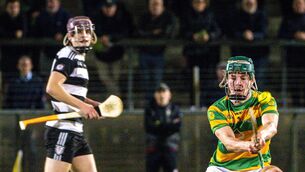
'I'm filled not with despair and cynicism but with hope and excitement about GAA's future'
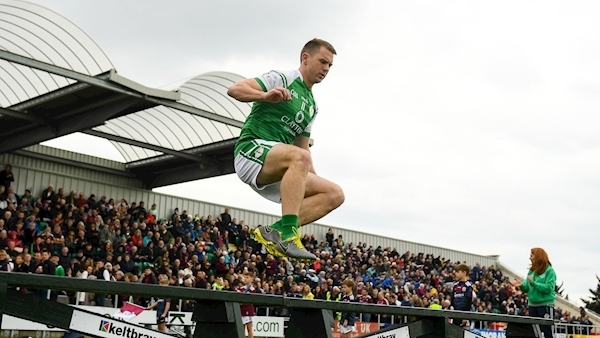
By the time you read this article, London’s 2019 senior football championship season may be over.

'I'm filled not with despair and cynicism but with hope and excitement about GAA's future'

By the time you read this article, London’s 2019 senior football championship season may be over. The first round of the All-Ireland qualifiers begins today, and in all but two of the seasons of London involvement, we have fallen at this very hurdle.

And yet, here I am, excited and confident about our trip to face Offaly, in Tullamore, this afternoon. Why, you may wonder? Given our limited resources and the extremely challenging circumstances under which we work, the respect afforded to this team has been overwhelming at times.

We started training last November on a rugby pitch, with only 15 players, in preparation for our Connacht SFC opener against Galway, a side that had contested an All-Ireland semi-final just a few months earlier.

That night, I told the players we would be ready for Galway. Sometimes, in sport — for all the things money and resources can buy — mindset, determination, and a clear plan can bring a group of people a long way.

The second reason for my excitement today is because it’s fun! And by that, I mean the whole thing, not just the game itself. The training, the sacrifice, the post-match meals, the team-building days, the runs, the battle, the arena, the fight. It is the whole package.

Jurgen Klopp said it best, in the lead-up to the Champions League final, when he explained that Liverpool would enjoy the journey, regardless of the outcome. So, when I look at the current state of the GAA, I am filled not with despair and cynicism, but with hope and excitement.

There are, however, several big-picture challenges facing our association, but they are not without their solutions. Here are the most important nettles for GAA chiefs to grasp.

Fixing the Fixtures — games, games, games

This is the hardest to fix, but by no means impossible. The recent 75th anniversary of the D-Day landings reminds us what great things can be achieved through collaboration, compromise, and consensus.

The leadership of the GAA is moving in the right direction. I know director general, Tom Ryan, is keen to set out a vision for the association and that the president, John Horan, has shown his forward-thinking in setting up a Fixtures Review Committee.

The one group I would listen to most is the CPA. The club player can be forgotten in our never-ending quest for additional commercial revenue, the professionalism in how we prepare our players and how we have structured our fixtures.

The CPA comes with a very simple request: give club players games and tell them when they are going to be on. A few weeks ago, I played both a junior B championship game and a senior league game for my beloved home club, Horeswood GAA, on a quick visit back to Wexford for the weekend.

I loved every minute of both, my first games in seven months. The greatest assets of the GAA are its players and the games. Let’s get back to basics and remember that core point. More matches will mean more happy players. Create a yearly schedule of fixtures and thus remove the uncertainty that annoys everyone.

Tiered Championship — everyone finds their level

We have a great game, but we are not selling it accordingly. Our championship structures are letting the players, fans, and officials down. We have such a good spectacle, but a terrible championship structure in Gaelic football (the amazing hurling championship shows what can be achieved with a bold vision). Of course, there are brilliant games, even freak results, like a Division 4 team, Limerick, beating Division 2 team, Tipperary, although, with Limerick’s subsequent whipping at the hands of a resurgent Cork, normal order was restored.

To me, a tiered football championship structure is such an open goal. For the season to run smoothly, we should scrap the pre-season competitions and permit a return to training only from January 1. I would leave the leagues as they are, but would scrap the finals (It’s a league!).

April would remain a club-only month and then I would run off the provincial competitions as standalones and bring back the one-off drama of knockout football. The provinces are too powerful, so no point talking of scrapping them. You’ve got to learn to work within the constraints of the GAA and accept that things sometimes move slowly.

We then need a tiered competition for the championship proper. Naysayers talk of the big day out. Why? To get trashed by Meath, or thumped by Dublin? We want games against teams of our level or similar, and more of them. We want the opportunity to develop and to improve.

If you’ve ever been lucky enough to win a novice or junior or intermediate title with your club, you’ll know what an amazing feeling that is, too.

I’d create two tiers, with the Division One and Two sides in the top section, and then the Division Three and Four in the second level. Promotion and relegation would also be factored in, which would be an added incentive for those dreaming of joining the big boys.

The key, then, is to promote and market it (the second tier) properly. Give the winning teams a holiday, ensure TV coverage, and play their matches alongside the big Sam Maguire games. Create a buzz. If the games are good, the people will come.

Catching the Dubs — with long-term development

But how do we catch the Dubs? Or Mayo, or Kerry, or Tyrone, Galway, and Donegal, for that matter?

Dublin have experienced the perfect storm of huge competitive advantage: an exploding urban population, drastically higher income and sponsorship money, and inexcusably exorbitant games development funding, compared to the rest of the counties.

And did we mention an exceptionally gifted generation of players, all coming together under potentially the greatest manager the game has seen? It leaves the rest of us playing catch-up. The greater problem is not the current crop of gifted players, but what comes after them.

As a games promotion officer working for Dublin GAA from 2008-2011, I could see the runaway train hurtling down the tracks. I call it the industrialisation of GAA football talent development, a phrase that described how France, Germany, Spain, and England have streamlined their structures and mobilised their considerable financial resources to develop young talent in football. It is no surprise that the last three FIFA World Cup winners are contained in that list.

My own philosophy for sports performance is in the benefit of small, incremental steps of improvement, all leading towards long-term, sustainable development. You need stability, a philosophy, an environment, a culture, a plan. And, most of all, you need good people all rowing together in the same direction. Dublin have cracked that.

Others are on their way. Cork really interest me. They have a plan, with good people recruited, under a brilliantly progressive young CEO. Aside from the traditional powers of Kerry, Mayo, Tyrone, it is in the large urban areas — Cork, Galway, Meath, Kildare — that the GAA will grow and will ultimately test Dublin’s hegemony.

The soul of the Association — a case for GAA 2.0

When Joe Brolly says the GAA has lost its soul, I wonder if he wants to go back to the 1950s, when players had a smoke at half-time and went back out to play the second-half with their flat cap on and a warm belly full of whiskey. As my Dad, Sean, said a long time ago, things weren’t better back then.

People should appreciate what we have now. I like Joe, I like how he thinks differently and is willing to challenge the sacred cows of the GAA and Irish society. I don’t think the GAA has lost its way, but I do believe we’ve stumbled off the path. The commercialisation of the GAA is a good thing. The multitude of facilities and top-class pitches dotted all around the country, in every village, proves that.

Of course, the GAA, as an association, needs to make money, and I love how all the money, ultimately, is channelled back into the clubs and facilities. But these commercial decisions cannot be made to the detriment of the fans, the spectacle of the game, or player welfare.

All decisions must go through the lens of is-it-good-for-the-game? If not, then we take another path. And, worryingly, so much money is being wasted on the inter-county squads now. Money alone does not achieve success: good people do.

We need a vision, a renewal… a GAA 2.0? The GAA is a force for such good in this country, we just need to tweak a few things and lay out a vision for what kind of an association and games we really want. Put it down on paper, set out our mission, vision and values. And stick to it. We have an opportunity, now, to make the game better for everyone. Let’s not waste it.

Ciaran Deely is London senior football manager

More in this section

Cookie Policy Privacy Policy Brand Safety FAQ Help Contact Us Terms and Conditions

© Examiner Echo Group Limited