Tomás Quinn: Dublin reach degree of comfort with multiple game plans
So Dublin have qualified for a fifth All-Ireland final in six years under Jim Gavin, an incredible achievement for a team that continues to evolve their style of play and the personnel carrying it out on the pitch.
In the early years of Gavin’s tenure, Dublin were an attacking machine, relentless in their desire to continuously drive hard at opposition defences and willing to get into a shootout with anyone.
The semi-final defeat to Donegal in 2014 is well documented as a fork in the road for how Dublin approaches each game and how they needed to tweak aspects of their play. This was an obvious time to take stock and after a defeat, you get the most honest type of feedback provided by the opposition system and game plan that beat you.
However even since those learnings, as Dublin remained unbeaten in championship, they have continued to look to push their game to new levels and have reached degrees of comfort in multiple game plans which make it increasingly difficult for the chasing pack to close the gap.
Their performance on Saturday was a continuation of what we have seen so far this championship: controlled and efficient from both an attacking and defensive perspective.
Dublin scored six points from their first six attacks with Paul Mannion setting the tone inside the first minute with a brilliant score on his left foot after he burned Eoghan Kerin for pace under the Cusack Stand.
Dublin are so economical in their shot selection these days, I made it 1-9 returned from 12 efforts in the first half alone. That’s a phenomenal conversion percentage but when you watch them you can see how. They move the ball through the hands at pace, the width they keep in attack to stretch the defences and then the angles of their runs means they rarely get themselves into situations where they are taking pot shots from range or off balance.
When was the last time you saw a Dublin forward do his own thing and take a really bad shot option? The level of coaching, and understanding of how working together to create openings makes all their lives easier, means that when a Dublin player takes a shot on, it is usually from a high percentage position on the pitch and in a situation where he is not under serious duress from a defender.
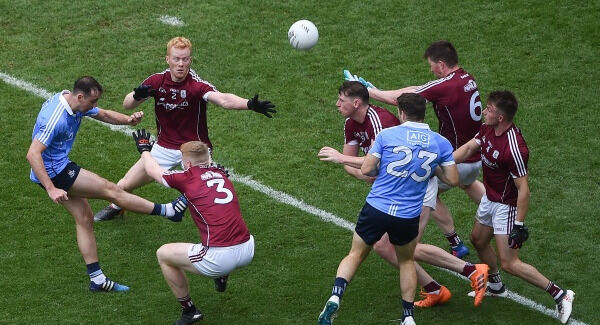
Con O’Callaghan’s goal is a perfect example of this. Look at the angle of Jack McCaffrey’s initial burst, the brilliantly timed pass into an onrushing Niall Scully and where some other players would have pulled the trigger, he unselfishly squared the ball to O’Callaghan to palm to the net.
With opposition teams playing more and more defensively, Dublin have shown in the last 12 months, in particular, how willing they are to play a possession game and work an opening without leaving themselves susceptible to a counter attack. Twice in the second-half they held possession around the middle for over two minutes at a time before working scores for Mannion and Ciaran Kilkenny.
Where possible, they will look to score from a more direct route. The score of the day had to be O’Callaghan’s 50th-minute point: a long kick out from Cluxton fetched between two Galway men by Brian Fenton (who was again outstanding), he found the Cuala man with a pin-point 30-yard kick pass and the Cuala man did the rest. Every piece of the move had its own element of class.
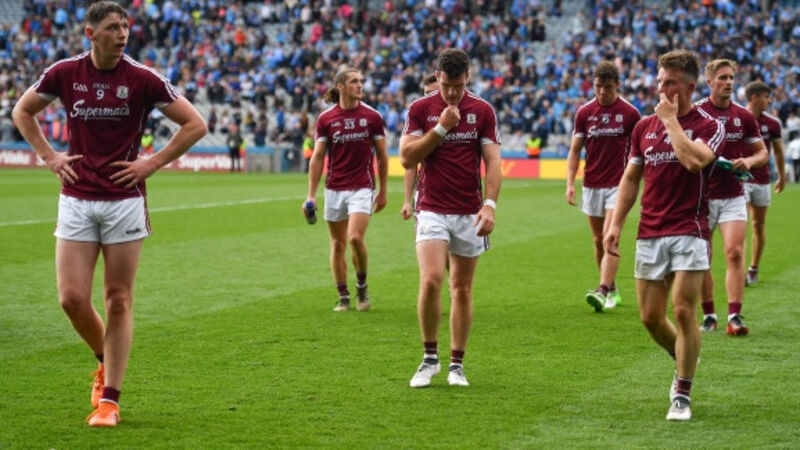
For Galway, they depart with more questions than answers. There was a sense of inevitability about the result and at times it felt like the Galway players felt the same. It is hard to pinpoint a time where they had sustained periods of urgency in their play.
Where Dublin took good options, Galway will look to a number of opportunities, particularly in the first half, which were squandered. Contrast how Mannion set the tone for Dublin with their first attack to when Gareth Bradshaw found Damien Comer with an excellent ball and went looking for the return without a Dublin player tracking his run it looked to me very similar to me to how Lee Keegan scored the Mayo goal in last year’s final. However, Comer decided to use Bradshaw as a decoy and dummied the pass to him but then pulled his attempt for a point wide.
I understand the direct route which led to Comer’s goal has a limited shelf life, but surely it merited putting in a few more balls like that to test that Dublin back line? It was the 61st minute before a similar ball was played in, at that stage Galway were eight points down and the game was gone.
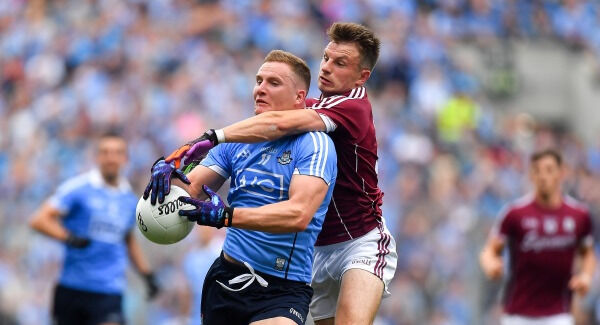
One of the main reasons the game was gone at that stage was the impact of the Dublin substitutes. This isn’t something new to this Dublin team but the consistency with which replacements ensure the team finishes the games as strong as it does is a testament to the group.
Mick Fitzsimons ably deputised when Cian O’Sullivan was forced off in the first half with injury and then up front, Cormac Costello and Kevin McManamon kicked five points between them as they both added the direct running and point-taking ability that defenders must dread to see at that stage of a game. Paul Flynn made it six points from the bench in the closing stages with a trademark effort from distance.
Irrespective of the opposition, Dublin approach the final now in a fortunate position that they know exactly how to deal with All-Ireland preparation and build up — much the same way they are on the pitch these days, with control and efficiency.


CONNECT WITH US TODAY



Be the first to know the latest news and updates