It’s time for the GAA to adopt squad numbers
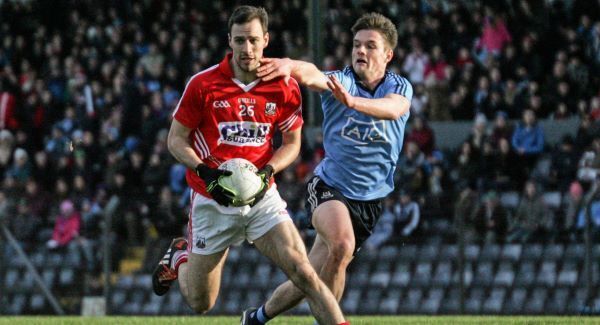
The rationale behind the idea included addressing the practice of dummy teams as well as improving the identification of hurlers. “Since the introduction of the rule ensuring all players are required to wear helmets, it is becoming more difficult to recognise players,” explained the Liam Sheedy-led group.
“As a committee, we would propose the introduction of squad numbers beginning with the 2015 Liam MacCarthy Cup competition. At the beginning of the Championship, each player would be allocated a number. The player would then keep that number for the remainder of the Championship, helping supporters to associate the number with the player as the more successful team’s progress.
“Along with assisting with the identification of our top players, it would also add a new promotional vehicle as supporters - young and old – would seek to get their favourite player’s jersey, complete with their squad number.”
The idea fell by the wayside as the GAA put forward their own idea by insisting teams released a non-negotiable 26-man match-day panel on the Wednesday prior to championship games. With the exception of an emergency goalkeeper, the 26 they named would have to be the only 26 available to them on the day of the game.
Even if it doesn’t allow for sickness in a camp as was experienced in the International Rules team’s recent trip to Australia, it has been adhered to although the measure has done nothing to cut dummy teams. Then there’s the argument made by managers that much can happen between Wednesday and Sunday and what might have been the team midweek had to change. Then there’s the unease at which some managers have to release their starting sides to Croke Park before they have even informed the players themselves – the likes of Kilkenny and Waterford’s hurlers are only told on the Friday beforehand.
However, there is more than enough wiggle room for misdirection. All-Ireland finals would have regarded as above such hoodwinking but that changed starting with Cork in the 2009 final when Ray Carey, who Conor Counihan in the build-up insisted was fit, was replaced by Kieran O’Connor.
This year’s All-Ireland final was the first time that both teams were at it – Eoghan O’Gara coming in for the named Niall Scully and Patrick Durcan taking the place of Diarmuid O’Connor who had been announced to start in the half-forward line.

Donegal made two late changes to their revealed team when they lost to Kerry in the 2014 final.
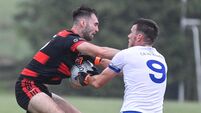
As keepsakes, those final match programmes would have been tarnished slightly or at least have to be tarnished to reflect the correct starting team. But then what are match programmes now but a means of identifying players by number, not position?
As an aside, the argument for carrying on with the traditional 3-3-2-3-3 formation is becoming more and more redundant and we here in the have tried to move with the times in reassembling pitch graphics to reflect how teams began matches.
The starting team is always a great source of debate among supporters but now the question is why someone is starting over another but can we trust the team at all?
Publishing and publicising announced teams is a dangerous exercise when managers either feel no obligation to give away such information or use it as an opportunity to try and make the opposition second guess.
Unless stronger legislation is put in place, announcing teams has had its day in the GAA. The practice is engrained in rugby and many in the GAA would bemoan losing a tradition while a rival sport is able to uphold a similar one.
It wouldn’t kill Croke Park to back squad numbers and teams only being compelled to reveal their teams an hour prior to throw-in. It might save us in the press committing to print what we question or are at least dubious about.
On several occasions, Jim Gavin has given the go-ahead to announcing teams he knows won’t begin. Not surprisingly, he prefers squad numbers.
“I think it has merit,” he said last year. “For the supporters it might make things a little clearer with the game-day panel, because the way the game is evolving, it’s not just about the game-day panel any more.”
In term of presentation, it’s one of a few proposals that can assist a more accurate promotion of Gaelic games.
In hurling, placing numbers on helmets and the colour of players’ helmets being included in the match-day programmes would be most useful in establishing exactly who is who.

White numbers on jerseys featuring significant white, yellow or gold should also be avoided.
The games, we know, are changing. How we look at them has to as well.