How professionalism would reduce GAA grassroots to just another accounting phrase
To sustain themselves in a highly competitive domestic market, Australian sports have become the most sophisticated in the world in terms of commercialisation and marketing.
The best known Australian sports body in Ireland is probably the AFL. The AFL’s commercial dominance over its rugby union, league and cricket rivals in Australia can be seen by the fact that its current TV deal, running from 2017 to 2022, is worth Aus$2.5billion (€1.6bn). Given Aussie Rules limited international appeal, this is a remarkable figure.
Moreover, in 2017, the AFL concluded what is called a collective bargaining agreement (CBA) with its players. The six-year, Aus$1.8bn (€1.2bn) deal sets out the minimum terms and conditions of AFL players’ employment. Underwritten by TV money, the players received a 20% pay rise in the new deal. The average annual player wage in the AFL is now Aus$371,000 (€240,000).
At first glance, it’s difficult to see the relevance of the AFL’s CBA to Irish sport and even its closest ally the GAA. And yet a collective bargaining agreement exists between the GAA and the Gaelic Players’ Association (GPA). The most recent example being that which was announced in July 2016 when the GAA agreed to provide the GPA with €6.2million of funding between 2017 and 2019.
The GAA/GPA agreement is not, of course, premised on “pay for play” and is for other “services” but is it a step towards professionalisation, along the AFL’s pathway?
Although there are many historical parallels between the AFL and the GAA — the games have limited international attraction and the AFL’s original hub in the state of Victoria is similar in population size to Ireland — the AFL has since evolved rapidly. Traditional clubs rooted in locality (mainly suburbs of Melbourne) were gradually allowed select players from agreed regional zones. That system then evolved into the franchise-like, 18-club AFL league of today with salary caps to ensure competitive balance between the teams.
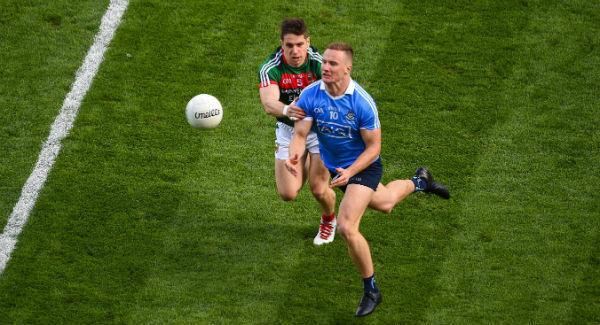
Despite occasional talk about the GAA introducing “pay for play” — Dublin midfielder Brian Fenton being the latest to suggest that the GAA is “not short of money” — no convincing commercial case for inter-county GAA to follow the AFL’s pathway has ever been made.
Nor do I think it ever could.
The AFL’s riches are sustained by taking advantage of the highly competitive commercial TV market in Australia, where sport is a valued broadcasting commodity. For example, the current TV deal to show club rugby league in Australia, which is a largely Sydney-based competition, is worth a staggering Aus$1.8bn (€1.2b). That kind of a market does not exist in Ireland.

In any event, although the AFL is still dominated by Victorian clubs, it had, unlike the GAA, the capacity to expand elsewhere and into large cities such as Sydney, Perth, Brisbane, and Adelaide.
More generally, Ireland has a poor record in sustaining professional sport. The sponsorship pool is simply too small and income from gate receipts too inconsistent. Our largest sporting industry, horse racing, is underpinned by Government subsidies. Many League of Ireland clubs have been stung by efforts even to maintain semi-professional squads. The viability of Ireland’s four rugby provinces is underwritten by the revenues gleaned from the international game.
If the GAA were to support a level of professionalism, it would have to become more elitist. Having 60 or so inter-county teams in hurling and football would not be viable. As happened in the AFL, some traditional teams would have to merge or fold.
In addition, once players start being paid, they become employees. The existing transfer rules in the GAA would fall away because, once out of contract, it would be illegal to restrain players’ right to move. Dropping a player from a county team would become a matter of employment law as might the hiring and firing of a manager. The pressures on volunteer county board officers to deal with such matters would be intense.
More broadly, in a professional GAA regime, it is likely that the traditional gateway of playing underage with your county would be replaced by an academy or draft system. The stress on young players to “make it” would intensify.
And yet this is what happened in the AFL and commercially it has gone from strength to strength. Would this work for the GAA?
Personally, I’d dislike it and for two reasons.
First, professional sport, though lucrative for a short period, is a ruthless environment. I spoke recently to the AFL’s integrity unit about match-fixing. The unit monitors and profiles AFL players for threats associated with illegal gambling. The diverse pressures that AFL players are under in terms of social media attention to training loads and, for many, a total unpreparedness for life after football, was eye-opening.
Second and most importantly, professionalism at the top level of the GAA would change the very nature of the association. In 2017, the AFL, rugby league and cricket in Australia all concluded CBAs with their players. Negotiations between the leagues and clubs, often played out in the media, was full of corporate clichés on revenue sharing models, image rights, mobile streaming opportunities and, most dispiritingly, both sides’ “commitment to the grassroots”. The grassroots had been reduced to just another accounting phrase.
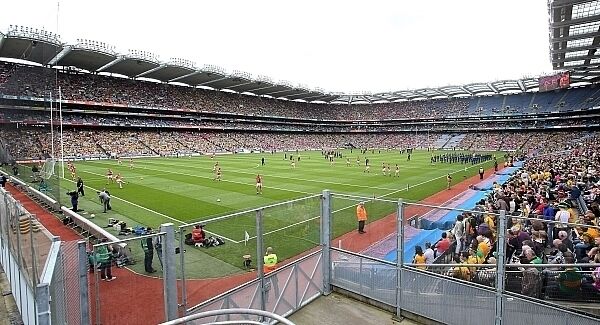
Professionalism apart, the GAA is currently undergoing what might be called a “sham-amatuerism” phase in its existence. Calls by the current director general, Páraic Duffy, for a transparent, vouched expenses system have gone largely unheeded at county and club level. The figures being released this month at GAA county conventions relating to expenditure on inter-county teams appear unmanageable. Sham-amateurism will be a key challenge for Duffy’s successor who will first have to ask him or herself what will the GAA look like at, say, its 150th anniversary in 2034?
Sometimes the GAA overdoes it on things like its voluntary nature — there are committed volunteers in all sports up and down the country; nevertheless, the GAA is a unique sporting organisation which, ironically, is at its best where it is not really concerned with GAA matters: as can be seen in how its members have recently raised awareness on gambling addiction, advocated for the homeless and focused attention on mental health.
The language of professional sport may be beguiling for a minority in the GAA but to misuse a corporate phrase, the GAA’s key performance indicator should always be participation, not pay. Playing the games, getting a lifelong enjoyment from being involved with your sport, using it to contribute to your community is one experience that you can never vouch for.

CONNECT WITH US TODAY



Be the first to know the latest news and updates