The Leading Question: Tribesmen eyeing up possibilities
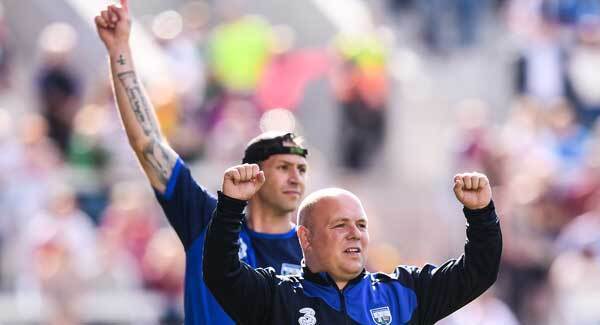
Derek McGrath has gifted the summer a patchwork quilt of quotations.
Articulate and thoughtful, the Waterford manager refuses to take hurling’s received opinions at face value.
McGrath strives to alter the game’s sense of itself, beginning with defensive structure. He is not content with traditional verities.
Following Waterford’s victory over Wexford last July in their All-Ireland quarter-final, McGrath produced an intriguing take: “The danger, I suppose, is there’s so much debate about it that it seeps into your team. You take a situation where [Wexford’s] Shaun Murphy goes back as a sweeper today and if we push our man up on Shaun Murphy. And then there’s five on five on the other side. We’d be accused of being defensively naïve then, and gullible.”
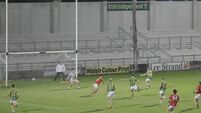
Here is nub of the debate that centres on sweeper systems. For all the exposure received by this topic, there is little enough understanding of its core dynamics. A team that elects to use an extra defender, typically called a sweeper, voluntarily establishes a group of 13, seven backs on six forwards. The opposing team, in accepting an extra defender by default, establishes a group of 11, six backs on five forwards.
Here is an immediate sliver of advantage. A defensive group of 13 (Waterford’s situation) allows less space to attackers than a defensive group of 11 (Galway’s situation).
By definition, there is more space available when two bodies are removed from the equation.
This facet is particularly important on a team’s own puckout. Driving to a group of 11 (Waterford’s situation) offers more space as a target than driving to a group of 13 (Galway’s situation). Winning two or three puckouts, leading to a score, rather than not winning them easily becomes the factor that decides a close contest.
How many people believe this All-Ireland final will not be a close contest?
Micheál Donoghue needs to decide whether Galway should push up seven on seven on their own puckout. Here is a nice paradox.
By compressing space further, by adding a 14th body to the equation, Galway could acquire more leverage.
Kilkenny utilised this approach when attacking a sweeper-defended puckout in last June’s Leinster semi-final with Wexford. Their loss on the day, and their poor 2 performance overall, obscured the fact that said approach paid dividends. Donoghue will not have missed this click.
Defenders adopt a different body shape when attacking a ball with an extra defender in attendance. Often enough, it becomes a matter of not attacking the ball, of allowing the delivery through to the sweeper. Put in possession, he can then set in motion a counterattack.
Say, hypothetically, Galway take a point off their own puckout, thereby preventing a counterattack, a movement that could easily conclude in a Waterford point. Here is a two-point swing.
How many times does a two-point swing win a close All-Ireland final?
Spool the logic. What happens if the Waterford sweeper, be he Tadhg de Búrca or Darragh Fives, is marked for puckouts? David Burke, who has quick hands in tight corners, could be pushed up temporarily in this role.
Will Derek McGrath have coached Waterford in two styles of defending the Galway puckout? Will he have coached defending in a temporary group of 14 as well as defending in a group of 13?
Yes, Galway must be eyeing possibilities on their own puckout.
CONNECT WITH US TODAY



Be the first to know the latest news and updates