Jim Forbes: Revolutionary, leader, absolute GAA man
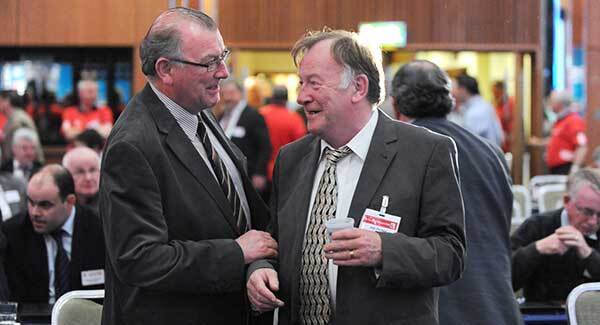
“Jim was always very approachable,” said Cooney. “He was innovative but also had his feet on the ground — the two don’t always go together — and the PR role suited him, because he was so approachable.
“I met him first in the county board when he was treasurer of Carrigdhoun, where he and John Twomey were great leaders.”
Twomey first met Forbes the day they landed into Farranferris together, “with all the other west Cork lads”, but the two would later spend 20 years together with the Carrigdhoun board.
“I was chairman and he was treasurer, and he was an unbelievable man to work with. His whole life was motivated by taking on a challenge: he couldn’t sit down and watch the world go by, he had to be doing something useful all the time.
“He was fantastic. A revolutionary, really, in the GAA. He was ahead of his time. We organised the first summer camps, down in the southeast, and he was head and tail of that. We were also the first to organise a coach going into the schools full-time, Joe McGrath. Even though that was contrary to rule, the likes of Con Murphy and Frank Murphy acknowledged we were going the right way and doing the right thing.”
The strengthening of clubs in the region is a fitting legacy for Forbes, says Cooney: “Carrigdhoun is now an enormously strong division, and the credit for that goes to Jim and John Twomey. You only have to look at the number of club teams there playing senior hurling and football, or intermediate hurling and football to see that.
“Their focus was on strengthening the division, and it’s a massive legacy for Jim and the other people who worked on that. He laid the foundations for that growth,” agrees Twomey.
“I remember when I came in as Carrigdhoun chairman we’d have the odd Cork minor, the odd Cork U21. Soon enough there were years when you could report to the annual convention every team Cork fielded had at least one player from the division on it.
“That came from the groundwork Jim put in — things like the summer camps and the schools coach meant the GAA was part of the curriculum in the schools, that strengthened the clubs and eventually put players on Cork teams.
With the Cork County Board, Forbes’ affable manner and common sense approach helped to create a more positive public image.
“He made friends with the media,” says Twomey. “It wasn’t a them-and-us situation anymore. He was always good with people but he was straight, you always knew where you stood with him. And that helped later on when he was chairman and there was a tricky situation to be dealt with. ”
Forbes was Cork County Board chairman when the Cork hurlers stunned the GAA world by going on strike late in 2002.
“What Jim brought to that situation was a sense of stability,” says Cooney. “And a lot of common sense in trying to move that forward. That was a very challenging time for a lot of people and Jim was a key player in helping to resolve that eventually. As an indication of how able Jim was,” says Twomey, “when Sean Kelly became GAA President he appointed Jim to national committees — and when Nickey Brennan became GAA President he re- appointed Jim, which is rarely done. He was very well regarded in Croke Park.
“The thing about Jim was if he said he’d do something then it’d be done. Simple as that. If he had to work through the night to get it done, then he’d so so. He was an ideas man, but he’d also follow up on those and put them into practice.
“He gave his whole life to the GAA, really. His commitment was fantastic — if there was a meeting at 10am he’d be there, if there was another meeting at 10 that night he’d be at that, too.”
Though Forbes served the GAA at the highest level, he was willing to return to the southeast and do more valuable work later in life.
“He fell back in with Rebel Óg (Cork’s underage system) and became chairman of Central Rebel Óg, working hard to put in a manageable system of grading, for instance,” says Cooney.
“People outside Cork mightn’t realise just how hard that job, grading, is in the county. Clubs want their underage teams to go where they want, some may want them in a competition they’re too strong for, really, in order to win a trophy, but Jim’s fairness was very important in that context.
“He always wanted to do what was right for the sake of the competition, and he was prepared to listen to the arguments being made and to bring a calmness to the discussion then.
“He often manned the gates at Rebel Óg games, but then he was never afraid of hard work, no matter what the level. What can you say about a person like that, other than he was an absolute GAA man?”
CONNECT WITH US TODAY



Be the first to know the latest news and updates