Unravelling the GAA’s injury legacy
Formerly involved with the Kerry, Mayo and Limerick set-ups, and Tipperary hurling, O’Neill knows the game, its rapidly changing landscape and the increasing physical toll being placed upon players.
Legacy injuries, said the Cork IT department head, are those accumulated over the course of a season or two, not serious enough to rule a player out of a league or championship campaign, but requiring off-season intervention.
Every inter-county senior football manager deals with these injuries.
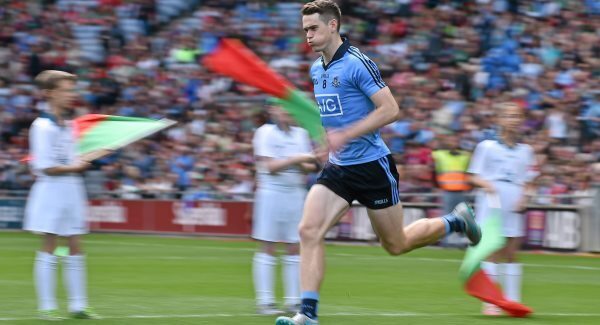
Take Jim Gavin, in Dublin, for example, whose All Star midfielder, Brian Fenton, required shoulder surgery — ruling him out of November’s International Rules test — after his breakthrough season.
Perhaps Fenton already had a vulnerable shoulder, but the hits, shunts and collisions in Gaelic football are greater than ever before.
Six-packs and ripped bodies are the norm, not for aesthetic purposes, but so players can break tackles in a game that is more congested than ever, as well as to simply allow players get through a tonne of work.
Whisper it quietly, but Gaelic football may be mimicking rugby, where players are bulking up in a demanding new ‘professional’ era. And what will be the price that the players ultimately pay, both throughout their careers and, just as importantly, in the following decades?
“In my experience, going back over 20 years to the Down teams I managed when we won our All-Irelands, we had no major examples of players ending the season and going in for any kind of major surgical work in the winter break,” said Pete McGrath, Down’s 1991 and 1994 All-Ireland-winning manager, who is currently in charge of Fermanagh.
“In those days, the national league kicked in around October, so even if you were having a successful season, winning an All-Ireland, you’d be back three or four weeks later. Maybe some players needed a break, but that was down to fatigue.
“To my recollection, and I’d be quite clear on this, there were no cases of people having to undergo any kind of surgical procedures to put right joint damage, or anything major, as a result of how intensive the previous season was.”
McGrath says that, at the moment, a couple of his players, involved in Fermanagh’s run to the All-Ireland quarter-finals, are having knees and hips looked at.
“I think it’s common across a number of teams, not just Dublin. A lot of guys are going in for surgeries and little procedures,” said Dublin centre-back, Cian O’Sullivan, an All-Ireland-winning colleague of Fenton’s.
“I think it’s just the way the game has gone. The demands that are being placed on players are increasing and it’s probably taking a toll on players’ bodies.”
In Donegal, team doctor, Kevin Moran, is a member of the GAA’s medical, scientific and welfare (MSW) committee. He said he was surprised to learn that, according to statistics at least, legacy injuries aren’t being caused by powerful players colliding, but, as O’Sullivan alluded to, the increasing demands on players generally over a long period of time.
One of the findings of a recent report from the MSW committee is that, in Gaelic football, only 28% of injuries were caused by “contact with another player”. Remarkably, in the apparently more skilful and speedy game of hurling, the figure for contact injuries is higher, at 36%.
“My perception, absolutely, was that we were getting more collision injuries in football,” said Dr Moran. “That was until I saw the results in our injury database. It shows that most of the injuries are either when you’re sprinting or turning, and that a very small percentage are actually from impact.”
So why are players increasingly being forced to use the off-season to recover from injuries, injuries that, according to McGrath, didn’t even exist just a couple of decades ago?
“My interpretation is that it’s over-training and overuse and this goes back to those crucial years between 18 and 21, when so much activity is taking place,” said Dr Moran.
“I would agree very much with the Ard Stiúrthóir, Paraic Duffy, that this has to be addressed. I’m not sure what should be there instead of the under-21 grade, because I’m coming to this as a doctor, but something has to be done.
“I’m dealing with players in that age group who are getting no rest-and-recovery between college and club games and U21 games, and some of them are on senior teams, as well.”
Pete McGrath says he agrees that big hits are not the reason that players are spending more and more time in the waiting rooms of medical specialists throughout autumn and winter.
“My theory is that, compared to 20 years ago, there is obviously much more focus now on strength-and-conditioning work and, yes, that is meant to make players more sound and stable, so that they can absorb heavier tackles and, ultimately, avoiding sustaining injuries,” said McGrath.
“But, possibly, it accumulates to an extent that there has to be stresses and strains placed on the body by simply doing all that work. I think it is a concentration of all that. There might not be one specific cause, but it would appear it’s more down to overuse generally, and work load over a longer period, that these injuries are occurring.”
McGrath said that he’s not anti-strength and conditioning. Applied correctly, he said it helps preserve the body rather than place additional strain on it.
“Sometimes, players have deficiencies and certain types of training can then unravel those deficiencies,” he added.
McGrath doesn’t see Gaelic football ever approaching the point that rugby has reached, where Irish players in green jerseys do pretty good Incredible Hulk impersonations.
“No, I wouldn’t like to think it’ll get to that stage where Gaelic football is simply a war of attrition and the physical fallout and damage from the collisions is colossal,” said McGrath. “I don’t ever think it will, because of the nature of the game.
“Yes, in one sense it has become more physical, but there’s great pace in the game, people are also retaining possession more and there’s definitely less 50-50 situations, where physical contests are occurring, than there used to be.
“I do believe sports science is keeping Gaelic football on a sensible footing, too, and that’s being widely applied.”
CONNECT WITH US TODAY



Be the first to know the latest news and updates