CORK DOUBLE 1990: Conor Counihan and the generation game
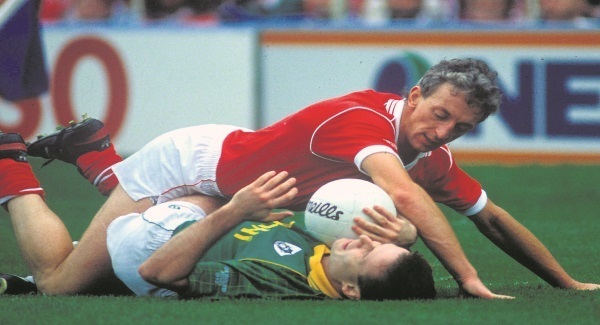
Conor Counihan can compare the two eras, but the differences arenât as obvious as you think. Take training, which we see now as a daily commitment for the inter-county player.
âEven then, organised training was probably two nights a week with the entire team,â says Counihan.
âBut you had a lot of players on that team in 1990 who were very self-motivated, fellas who were doing the world of stuff on their own.
âCertainly the likes of Larry Tompkins, Niall Cahalane; these guys would have fit into any era in terms of the work theyâd do away from the group sessions.
âWhat was probably a bigger issue that time was a general lack of knowledge: players now work a lot smarter because that information is available to you now.â
For all the developments since, Counihan believes Cork were ahead of the curve in terms of preparation. They had a qualified man in their corner, after all, in Billy Morgan.

âBilly had come in from a PE teaching background, heâd studied the subject overseas, he was immersed in what was current at the time. If anything Iâd say that at that time we were probably slightly ahead of many other teams.
âIn terms of general fitness we were always good. You wouldnât be sure of what others were doing but Billy was very good that way. One point Iâd make was that when we were going well it was ourselves, Dublin and Meath, really, and before that for years it had been Dublin and Kerry, so generally the quality has spread out a lot. That makes it far more entertaining, but it also puts an onus on teams to be fitter earlier in the season, and for longer.
âI know when Larry (Tompkins) went to Old Trafford to get a hamstring injury looked at, heâd have brought back stories about what they were doing. You could get information, but you didnât have, obviously, what you have available now to you on the internet.â
Having the freedom to look up athletes in other disciplines on Youtube was one development. The change in a sport on the GAAâs doorstep was another.
âWhat made a big difference, I think, in the intervening period, was the professionalisation of rugby,â says Counihan. âAll of a sudden you had a full-time, professional sports franchise on your doorstep â not just here, but all over the country, in every province.
âBecause of that a lot of Gaelic football trainers, or strength and conditioning coaches if you like, came in from rugby. It was a natural move, but there wouldnât have been any sense of that back in the late eighties, early nineties.â
This professionalism brought other changes. Take diet: changes in nutrition have been âdramaticâ, says Counihan.

âVery dramatic â to be honest, I can hardly face chicken now because Iâve such a disgust of it after being involved for so long. Chicken night, noon and morning, and I mean that. It was like prison, the diet that modern intercounty players face.
âThere was common sense when we played, in fairness. Fellas knew what they shouldnât be eating, certainly, whatever about what they should have been eating. The scales were produced in October and you were weighed â then youâd be weighed again in March or April. I remember one player was half a stone heavier in April than heâd been in October, and that half a stone wasnât needed in October, let alone April.â Wider changes in the last quarter of a century have also had an impact. Counihan points to the amount of support for players, and how that can be a double-edged sword.
âThereâs a lot more structure now compared to then. Time management is a big deal now â in all walks of life â in a way it wasnât then. Thereâs support there for players, though, good support; the one point Iâd make is whether all of that support affects playersâ independence a bit.
âPreparation is a lot more professional, obviously, but the question youâd have is whether players need guidance for everything. The psychological input is huge now whereas in our time it wasnât; there was motivation, and Billy was very good at that, but thereâs more involved now than motivation.
âFor instance, in our time you went away down to training whether there was anyone sick at home or anything. That didnât come into it. Nowadays youâd have to be aware of that, you must know what the circumstances are, whether thereâs something you can do to support a player if heâs having a bad day. In our time you got on with it, so you could say the player was more independent. More grown-up? Maybe.
âItâs a wider issue today, whether our kids now are more dependent now than we were at the same age. Where it comes into sport is that youâre trying to develop players who can go out on to the field and operate independently of you; on the field theyâre the ones making the decisions, not the manager.
âYou can over-coach as well, remember. You need to have a system. Of course you do. No team operates without that. But you must also have players who can take a particular situation and do whatâs necessary â to play instinctively as well.â
Empowering players is the holy grail for all coaches, of course. Counihan adds that the hands-on information players can share about opponents is part of that.
âThat has all changed. The amount of time thatâs put into opposing teams now, the research, is massive. Every opponent is researched. Thatâs totally different to when we played.
âBut that research now involves empowering players, because who better to analyse an opponent than one of your players whoâs played against him already? If you get your six backs together, for instance, theyâll know the six Dublin forwards inside out; theyâve played against them, so thereâs a wealth of knowledge thatâs available and which youâd be crazy not to use.
âThat collective approach didnât really exist in times past â that sense of working in a group. By the same token it didnât mean everyone was going off doing his own thing, but it was largely a case of individual battles. You beat your opponent, and if you won enough of those battles as a team youâd win. That was a simple enough philosophy, but at the time it was pretty effective. It won a fair few All-Irelands.â
Celebrating wins was different in the double era (âThat time if you won a national league game in Roscommon youâd stop on the way home and maybe not get back onto the bus before closing time; that wouldnât happen now, but at the time it built great camaraderie, great spirit,â) and that brings Counihan to a significant comparison. Is the intercounty experience more or less enjoyable experience now compared to 1990?
âIâd worry about that, genuinely. Do they come in smiling? They probably donât. Players made significant sacrifices when we played too, but thereâs more goes into it now. A lot more, and thereâs no point in saying otherwise. If you put in all that time and it goes wrong, then youâre seriously annoyed.
âLife is different in every way now compared to then, obviously. Even your job is very different now to what it was 20 years ago, Iâm sure.
âOne point worth making is that a lot of players at that time â not just with Cork, but everywhere â were doing physically demanding jobs. They were on building sites, on farms â nowadays a lot of players are in their mid-twenties and theyâre still students, which would have been unheard of in our time. But in our time there wasnât the same need for strength and conditioning because the players were more physically active, and if you went back another 20 years it would be true also.
âNowadays thereâs strength and conditioning even at club level, but ironically enough there was probably never as many people going to the gym, even if itâs just for the sake of looking in the mirror when theyâre done.â