Donegal boss, Jim McGuinness, lifts lid on his battle with self doubt
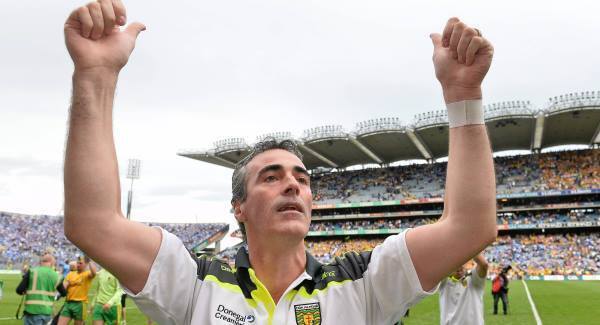
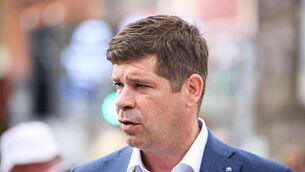
The Donegal boss’s self-esteem was so poor he almost quit his sports science course in IT Tralee on his very first day there in 1997. Then aged 24, McGuinness had just completed his Leaving Cert a few months earlier at Donegal VEC in Letterkenny. He had gone there to take his first steps towards becoming a secondary school PE teacher — “and have summers off to focus on football” — but on arriving in Tralee had been overcome by nerves.
“The very first day I went to Tralee my self-confidence was at an all-time low. I think it was because I was a wee bit older and the kids — let’s call them that, 17, 18, coming out of Leaving Cert — were all buzzing about and everyone was chatting, ‘where are you from?’, so on and so forth.
“I kinda felt a wee bit out of place and I thought to myself, ‘this is not for me’. I turned on the corridor and went out the front door and was heading towards the car when a very good friend of mine now said to me ‘are you in sports science?’ and I said ‘I am’. He said we had a meeting in the room next door there and I just followed him. I went into the room and they went through a bit of stuff in terms of the course. I said I’d give it a day and then I said I’d give it until the end of the week. By the end of the week I’d met a lot of friends. There was a good atmosphere. Everybody made you feel very welcome.”
McGuinness then received an offer to go to University of Ulster, Jordanstown and was confronted with the same feelings he had had in Tralee — “I shouldn’t be here. I’ve gone as far as I should be going. I’m not good enough to be here. This is university — they’re way more intelligent.
“I couldn’t turn on a computer when I went to Tralee. All my class-mates were doing their assignments on the computer. I couldn’t switch it on and when you did switch it on it was one finger here, one finger there. I could have written it five times before I could get it typed. That was very tough because you didn’t want anybody to know that or anybody to see you doing that.”
The 41-year-old’s inhibitions stemmed back to him leaving school after his Junior Cert. In a speech at the Donegal VEC Adult Education Fair last year, he recounted the day he received his exam results. “In my head I would describe it as a Willy Wonka’s Chocolate Factory moment where we got the envelope and I thought to myself, ‘well, I’m not going to open this in public anyway! I need to find the security of some room’.
“I remember going up to the boys’ toilets in the school and going into the cubicle and the reason it felt like Willy Wonka’s Chocolate Factory was that I had the envelope and I was hoping the magic ticket was going to be inside the envelope. I opened it up and yes, yes, no. I think there were nine exams and I failed eight.
“The only one I passed was science and funnily enough that always gave me a tiny, tiny, tiny, tiny sense of confidence because I was reasoning it out that was the hardest exam. That was pretty much my education career over at 15 years of age because I knew I wasn’t going to get the Leaving Cert.”
McGuinness and an older brother then worked in different fishing jobs in Killybegs, 12-hour shifts on freezer boats and then the factory. “It was probably the first time I kind of reflected, ‘I messed this up’, and I started beating myself up.”
After emigrating to the US to play football in 1991, he came home for a holiday during which he impressed during a trial for Donegal in Ballyshannon. “I ended up playing very well because there was no pressure on me. Because I knew I was going back [to the US].”
Nine months later, Donegal claimed their first All-Ireland title and as a result of it a number of the players secured jobs, including McGuinness with Telecom Eireann. “I learned to become a very good card player, 25! Extended lunch-breaks was an understatement.”
After two-and-a-half years, he felt he wasn’t fulfilling his potential and his mother suggested he might complete his Leaving Cert. “At this stage, I was established as a county player. I was 23 and that was a difficult thing because you’re in the public spotlight to an extent. To be seen then to be going back to do your Leaving Cert, you’re thinking, ‘what’s other people thinking of you? Why didn’t he do it the first time around?’, and that goes back to the self-confidence, the self-worth. But, in fairness, the encouragement was there and it came from my parents, my brothers, my sisters. I have to say it was the best decision I ever made in my life and probably the best achievement that ever happened to me in my life.”
McGuinness’s mother couldn’t believe how good his Leaving Cert results were. “She said, ‘are you serious?’ I said, ‘I am’. She said, ‘are you serious?’ His decision to stick with Tralee, Jordanstown and then John Moore’s University in Liverpool came down to his commitment to furthering himself. With that came focus, which he applies to his management now.
“If I’m playing midfield for Donegal there are four or five things I know I need to do and if I’m focused on those four or five things I’m going to play well. If I’m catching ball or breaking it away from the man I’m marking or I’m looking to get forward I’m going to play well.
“There’s loads of things that can break that focus. The man that’s marking me, the referee, your team-mates bitching at you, oppositions trying to knock you, loads and loads and loads of things that can break your focus. For young people, for older people there’s loads of things that can break that focus but if you can reconnect as quickly as possible... like for us and the football team if we have one person and their head is gone we’re down to 14 men.
“Ninety per cent of the time someone else is going to say, ‘come on relax and settle down, take your time’. What’s happened then? You’re down to 13. If it’s a bad enough situation you could have two people calming the man down and then you’re down to 12 and you’re never going to win a football match playing 12 against 15.”
McGuinness now uses the expression “nailed on” but during their 2012 success he began using “locked on”. “The night before we played Kerry, we were watching the Olympics and Mo Farah was running and it was very inspirational. The following day, Katie Taylor was fighting. I followed her and watched her and seen the focus in her mind from a long way out. I said to our players that I can’t predict the future, but I can guarantee you Katie Taylor will be Olympic champion tomorrow. The reason I could speak with that conviction was that she was locked on. There was nothing else in her life only that gold medal.”
A meeting with Roy Keane at the Celtic-Barcelona Champions League game in Parkhead saw the now Republic of Ireland assistant manager attempt to pick McGuinness’ brain.
“He said to me ‘why did you win the All-Ireland?’ Focus. ‘Why did you win the All-Ireland?’ Because we were very dedicated. ‘Why did you win the All-Ireland?’ Because we trained at a very high intensity level. ‘Why did you win the All-Ireland?’ We tried to be professional. ‘Why did you win the All-Ireland?’ We worked hard every day.
“This was the conversation and every time he asked me the question, I thought about it and gave him the answer and he said ‘that’s it, good players, very focused training at a very high intensity level is the magic formula. That’s what you’ve just told me. That’s what we did at United. David Beckham used to say to me walking off the pitch after training that the match was a joke compared to that training’.
“It goes back to the honesty, commitment and hard work. Can you imagine going into that environment where the commitment level of every single training session is higher than a match? They bred a commitment where if I’m playing for Manchester United, I’m going to work towards this. He told me as part of his pro licence he done a week with the All Blacks in New Zealand and the message was exactly the same. Really good players, really focused real high intensity level.”