Pre-mortem can help Jim avoid the ‘ifs and buts’
In business you make decisions which are often measurable as success by a revenue return.

Pre-mortem can help Jim avoid the ‘ifs and buts’

When deciding on a tender submission you may expect a reward based on past performance, relationships or maybe you wish to compete on cost benefit. But whatever decision you make it often has a way of biting you on the behind when the tender is unsuccessfully awarded. You perform a post-mortem, discuss the ‘ifs and buts’, and disseminate the blame throughout the team.

A better way of ensuring a successful outcome is to perform a pre-mortem. When your proposal is completed but prior to submission take a moment to project your mind forward, assume you were unsuccessful, and then ask yourself why? It may create an interesting discussion and possibly inform or amend the pending submission.

Management in team sports is no different.

So let’s pretend we are Jim McGuinness, the Donegal manager, and our task is to defeat Jim Gavin’s Dublin.

Jimmy’s plan has always been to attack opposition strengths — the Ulster championship is littered with the crushed remains of Conor McManus, Mark Lynch and Jamie Clarke. So it is reasonable to believe he will attack Dublin on three fronts: kick-outs; primary possession in Dublin’s full-forward line; and character.

Kick-outs: Let’s not bore ourselves with the stats but Dublin are good at winning primary possession.

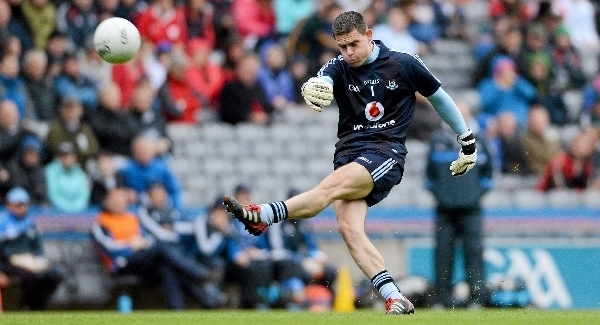
The plan for Donegal is to be very aggressive by providing a full court press on all restarts from goalkeeper Stephen Cluxton. Disrupt the option for easy primary possession and Donegal will reasonably expect to win 50% of long kick-outs. Donegal will attack the break ball in twos or threes and overturn the person in possession. Failing that, one player will continue to harass the ball-carrier while the others retreat to their pre-programmed defensive position. If the principal objective of primary possession is not achieved the secondary objective is to slow play down while the defensive wall is built, moat dug out and draw bridge drawn.

Pre-mortem: It was never a good idea to press the Dublin kick-out. We did not have the required concentration levels and were caught for mobility. The speed of the Dublin attack prevented us from getting into position which left gaps for the fast paced runners. It felt like we were always chasing shadows.

Full-forward line: The opposition may not have been as potent but remember what happened in Celtic Park and Clones. It was a complete shutdown of what were deemed pre-match scoring sensations. The opposition full-forward lines got nothing and the respective managers were confronted with spectators asking “surely [manager X] knew what to expect?”.

“Apparently not!” was the obvious reply.

Dublin play accurate, quick ball into their full-forward line, irrespective of what combination has been selected. Their ability to win that primary possession and offload to runners at pace is what makes them magic up front. Stop this process and you severely disrupt Dublin’s patterns. Options available are: 1) stop the outfield player making the pass by applying pressure; 2) stop the option available to the player in possession.

Donegal will go for the latter as it is what they have practiced and what they are extremely good at. Don’t expect the Brogans, Mannion, O’Gara or anyone else to get easy first-time possession and be able to off load. Expect Dublin to begin recycling the ball and change their plan to a running game with overlapping runners coming from deep. A strategy right into the hands of McGuinness for it will inevitably slow the game down, lead to enhanced frustration, create a higher wide tally as Dublin shoot from distance and angles and finally soak up massive amounts of energy.

Pre-mortem: Did we really think Jim Gavin wouldn’t have learned from the Monaghan game? The ability of the Dublin players to pick their passes was not something we foresaw. The speed of movement and quickness of hands and thought processing punched repeated holes in our defence. It was only a matter of time before the goals came.

Character: I prefer to think of this as fitness, intensity and discipline. The perception that Dublin have a superior fitness and are better athletes to all other Gaelic players presently playing is exactly that — a perception based on evidence of playing vastly inferior teams with inferior complexes. Not so Donegal. The crazy reports about their training sessions are true. This team are extremely fit and play at an intensity designed to drain the energy, frustrate and overwhelm the opposition. They train at this intensity to maintain their structure and shape. Donegal will do whatever is asked of them for whatever length of time it is required. Unconvinced? Study Michael Murphy in this year’s championship.

Pre-mortem: The raw energy and determination shown by Dublin was that of true champions. One tired man was replaced by another just as good, maybe better. It was inevitable we would not be able to maintain that intensity for so long. Our older players just didn’t have the legs. Maybe we should have just sat back like 2011.

Summary: The pre-mortem is a useful exercise that allows you to question yourself before it’s too late. It allows you to strip away complacency and see a situation as it really is. The most important thing is that you have the courage to plan and execute that plan. Jim McGuinness has a plan, he has stress-tested it and his players have full confidence in it.

Donegal have the ingredients and can win this match but few people outside the county believe this.

More in this section

Cookie Policy Privacy Policy Brand Safety FAQ Help Contact Us Terms and Conditions

© Examiner Echo Group Limited