Is it time Cork looked outside for direction?
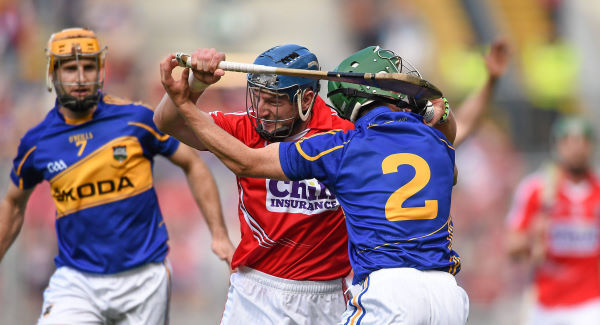
Nothing sparks a bout of self- examination like a 10-point defeat in an All-Ireland semi-final.

Is it time Cork looked outside for direction?

Cork took the field last Sunday for their encounter with Tipperary as slight favourites, but were hardly competitive after the opening quarter. Their manager, Jimmy Barry-Murphy, admitted the men in red were flattered by a two-point deficit at half-time; the final winning margin was a fair reflection of Tipperary’s superiority.

Later that evening, on The Sunday Game, former Cork keeper Dónal Óg Cusack questioned the coaching structures in Cork and the plans for a centre of excellence within the county, referring also to Cork’s lack of underage success over the past decade and a half.

The first question is an obvious one: what is the connection between the two, the heavy defeat and the coaching structures?

Focusing on the current senior team first, when the Leesiders cruised past Waterford, Limerick and All-Ireland champions Clare in the Munster championship the lack of underage success didn’t seem a pressing concern.

In the rush to explicate Cork’s arrival in last year’s All-Ireland final, for instance, the third-level colleges experience of many of their starters, collected in UCC and CIT, was presented almost as an alternative building method to the traditional scaffolding of minor and U21 success. Does one heavy defeat dismantle that logic?

In questioning the number of coaches in Cork, Cusack sounded a recurring theme on Leeside — and beyond. Former national director of hurling Paudie Butler told this writer some years ago that “Cork city needs at least a dozen coaches” for hurling, as the area had a tradition in the sport and numbers available to learn, which isn’t a common combination around the country. But there’s a wider issue within the GAA regarding professional coaches, and that’s the lack of a proper career path and opportunities for advancement.

The perception that coaching with the county is a stopgap for inter-county players between better jobs is a lingering one that hasn’t been addressed by the GAA as a whole. If there were more coaches on the ground in the clubs and schools would there be quite as pressing a necessity for a centralised location?

If the number of games development administrators were increased then that might be more beneficial than two, 20 or 40 pitches in one area. A 14-year-old footballer in Beara trying to perfect his running technique would surely be better off having the kinks in his cadence ironed out at home rather than sitting in a car for over an hour to have that improved for him at another location — and then sitting back into the car for another hour.

The causal link between the coaching context and the Cork performance doesn’t seem particularly strong to this observer. A member of the Cork backroom staff was struck by the nervousness of a couple of the newer players on the Saturday night before the game, and while most of the Cork team played in last year’s All-Ireland final(s), a strong cohort of Tipperary players played in three All-Ireland finals in a row from 2009 to 2011. Does that explain the winning margin? No. But it’s as plausible as the lack of coaching structures.

Incidentally, Cusack pointed to Barry-Murphy and his backroom turning “water into wine” when it came to the talent at their disposal. One knock against the development squad system is that while it is supposed to produce players fit for intercounty purpose, it doesn’t seem to provide counties with managers suited to the top level. If it did we wouldn’t see the chaotic lurching from candidate to candidate visible in many counties when a senior manager steps down, or gets a shove.

By the way, there was an interesting template for Cork that wasn’t too far away in Croke Park last weekend.

The Limerick minor hurlers who swept Galway aside — having annexed a second provincial title in a row — had a former Cork physical trainer, Jerry Wallace, on the sideline. The Limerick seniors have had three Cork coaches — Justin McCarthy, John Allen and Donal O’Grady — in charge of them in recent years also.

The lesson here may not be that bringing in people from Cork will solve all Rebel problems. It may be a lesson that’s a good deal harder for the Deep South to absorb: is it time for Cork to look outside its borders for direction?

x

More in this section

Cookie Policy Privacy Policy Brand Safety FAQ Help Contact Us Terms and Conditions

© Examiner Echo Group Limited