The big interview: Eamon O’Shea
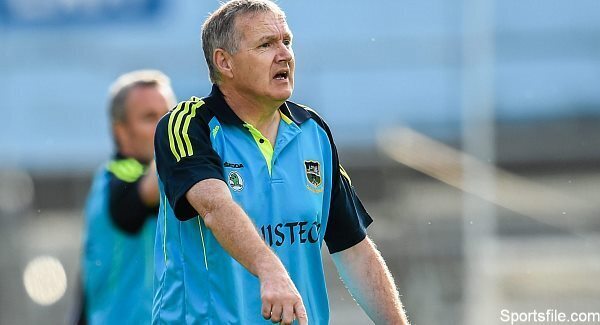
Eamon O’Shea doesn’t get offended when you ask him to define what it is he does. He’s an economist who specialises in... well, let him explain.
“It’s gerontology, a way of looking at how ageing and an ageing population impact on life — community life, public spending, all of that. What I do is look at ageing in a social and economic context: social gerontology.”
This writer has a distant memory of TV ads in the 1970s proclaiming Ireland’s population the youngest in Europe, though.
“We still have one of the youngest populations in Europe. For instance, Ireland’s population over 65 is about 11.5% of the population as a whole; in Europe the average is close to 16%.
“So we’re still relatively young, but we’re about to hit a pretty big surge in our population because we’re missing people.
“There are thousands of Irish people ageing in London or Sydney or New York, people who emigrated in the 50s or 60s when they were in their 20s.
“They’re the people who are missing, if you like, from the present population, but over the next 20 years we’ll see a significant rise in our numbers of people over 65.”
The immediate reaction is to consider how this might impact on the health services, but O’Shea takes a wider view.
“That impacts on other areas — caring systems, healthy ageing, how to be healthy as we age — all of those things that we can do rather than wait until a time comes when we have to enter a nursing home, say.
“But there’s also the matter of the perception of older people within the population, and what they can contribute beyond the usual familial roles we understand, as grandparents and so on.”
Dementia is one huge challenge associated with ageing, and O’Shea’s department recently established its economic impact: “We recently quantified it and the figure is €1.7 billion — that’s the cost of dementia, in terms of family care givers in particular.
“The numbers, then, are going from around 40,000 people with dementia at the moment to around 100,000 over the next 20 years, mainly because dementia is impacted by age, and as the Irish population ages over the next 20 years, the numbers with dementia will go up.”
It’s not just about money, either. O’Shea stresses the need to recognise the individual involved when you ask whether it’s a grim subject to be dealing with.
“We do a lot of work with people with dementia, and though there is no cure, what’s good is that there is an increased recognition that things must improve, in terms of putting more emphasis on the person with dementia rather than seeing them as a non-person.
“Keeping people’s sense of integrity and self-respect strong is important, and before you can do the economics, you must put the person at the centre of what you’re doing, something which is the goal in the literature of dealing with people with dementia. It’s not grim because there are a lot of people working hard now to improve the lives of people with dementia and those who care for them.”
That work feeds into other areas of concern in modern Ireland: rural depopulation, isolation, and the scarcity of resources.
“We did a study a few years ago where we went into 10 rural communities across the country — in Cork, Kerry, Tipperary, Westmeath — and we interviewed older people, and what we found is that in many of these places, older people are the only people there during the day, as others commute away to work.
“And what it also taught me was how older people are under-used within communities, in terms of the contribution they can make — we tend to think of rural communities in terms of ‘this place needs industry’ without considering the resource available within the community in terms of the older person.
“The GAA is a classic example within that of an enduring connection for people with their community.
“The problem sometimes is differentiating between isolation and loneliness. One can be isolated and not lonely, or lonely and not isolated.
“Loneliness, for me, is something we need to spend more time identifying, and not confusing it with other things, like isolation. There’s a lot of work to be done in terms of integrating and connecting people within their communities. Technology is good but people must also be connected face to face.”
There are examples to be found abroad of good practice, but O’Shea is optimistic about Ireland’s performance in these areas also.
“The Scandinavian countries, with high welfare provision, spend a lot of money on caring but there’s been a lot of work here in the last few years, and the Atlantic Philanthropies have supported a lot of work in the ageing area in Ireland.
“It’s a good time in Ireland in terms of the thinking being done in this area though it may not come to fruition for a while.
“There’s a dementia strategy being published in the coming months. We’re catching up a little in making this a country where age is respected, but also where age is mobilised and energised. That’s the key to maintain the visibility of older people in civic and social life.”
oes a general increased emphasis now on mental health, and associated ideas such as mindfulness, help in that regard?
“I think mindfulness is good but needs to be seen in a public sense as well as private. We need to be mindful of our own issues, our own energy, but we should also be mindful of the need to protect social spaces where people can connect.
“And going back to the GAA, a lot of the time we take for granted things like parishes and loyalty and commitment, when we need to make sure that that endures beyond the games — that it’s something in our everyday relationships. It should be necessary to remind ourselves we’re social beings who need to be connected.”
He welcomes the GAA/GPA work on mental health as a help in that context: “It’s good if people are directed quickly to those who are in a position to help them. Team managers would come across situations where they realise people need help, it’s something you need to be aware of.
“It’s a good thing to get people in touch with professional services, and it’s also good it removes the stigma — there’s a real issue with the stigmatisation of some of these areas.
“We can see players as one-dimensional but the Tipperary lads did a charity run around December — not looking for anything for themselves but on the basis of a former team-mate who had a problem. I’d say they found it very empowering, and I’m only referring to them because obviously I’m familiar with that situation, I’m sure other county teams do similar things.
“Those who play the games are in a privileged position and it’s nice to think beyond what you’re doing, to think of other people — I think that’s a good thing because civic engagement and responsibility is powerful.”
Well, he’s the one who brought up games... after Tipperary beat Dublin in the All-Ireland quarter-final, O’Shea argued that Tipp hadn’t had as bad a spring and early summer as some people felt, offering a figure of eight games with only one lost and another drawn, though lost in extra-time.
He deals with statistics professionally: is one of the issues with GAA stats the smallness of the sample size, particularly with so few hurling games?
“A lot of this stuff comes from Bill James and Billy Beane in baseball, and coming through now in soccer as well, and in both sports you have a lot more games. Obviously the more games you have the more data you have, which makes it easier to predict who’ll keep winning, who’ll keep losing.
“On the other hand, in the GAA you’re described as being on a bad run when you lose three league games, though you may only have five games in total. Lose three games in the hurling league and when the question is asked, ‘is this guy a good manager or a bad one?’ then losing three out of five, you’d say ‘bad’, but in an overall context you might need 15 or 20 games to establish that.
“Randomness plays a huge role in sports, and I’d say the role of a manager is to minimise the impact of randomness on the outcome, particularly in hurling.
“On any given day, if you lose by two or three points, then looking at the game you’d say, ‘well if that went the other way’ or ‘if that decision went the other way’, there could have been an entirely different outcome.”
he way he sees it, information isn’t a problem. Too much information might be.
“Probably within the GAA the next revolution is in statistical awareness in coaching and trends and so on, but one of the issues is finding time to digest all the information that’s made available to you.
“I wouldn’t be sure if I could make the time — having to work full-time — to absorb everything given to me by ProZone or one of those programmes.
“I think you need a bit of a run of games, but you don’t need statistics either to get a sense of whether you’re on the right track or not. That doesn’t mean you’ll get it right before you lose your job or you move on, and the statistics may show you’re losing by a point or two so there could be a sense that you can’t get over the line, but when you think ‘well, if I try this or that it’ll work’, you may not have the time to do that. In a league of five or six games, you may not have the games in which to act on that instinct.”
The danger of the stats overshadowing instinct is another challenge.
“Hurling’s so quick compared to other games, the ball comes to you and you either do it or you don’t, but a lot comes down to what’s happening in different areas of the field, for me.
“If, for instance, you get a stat that your team’s put in 12 hooks or blocks, you’re going to be a lot more excited if your full-forward line are the ones putting in those hooks and blocks compared to your full-back line, because the forwards are doing that in addition to their principal job, of trying to score.
“Some of the possession stats can mislead you, too. Your corner-forward might only have five possessions in a game, but if he gets three goals, you’re looking at another factor: efficiency. I’m a great believer in efficiency, and you have to interpret the stats in the light of factors like that, such as the player’s position.
“Take the midfielders. The number eight may have had 20 possessions and the number nine might have touched it only four times, but the nine might be able to say in honesty, ‘well, the ball wasn’t in my part of the field,’ or ‘when it was, it bounced away from me’. You have to use your own judgment there as well, and it becomes a different conversation.”
So no more whipping off the corner-forward, the lazy manager’s out?
“Yeah, the last resort. Sure, we have to be seen to be doing something, that attitude.”
O’Shea doesn’t feel there’s a magic stat in GAA terms, the way on-base percentage revealed player efficiency in baseball.
“Intuitively, you’d feel there probably is a correlation between possession, turnovers, hooks and blocks, and the momentum of the game. But that’s not to say the team with the highest score in those categories will win the game, because the other side may be simply more efficient or economical with the chances they get.
“It’s wrong to assume that the best team is the one with most hooks and blocks, or turnovers — the best team is the one which converts its possession to scores.
“I don’t think the focus on numbers is wrong, just that it can be misplaced. In The Numbers Game, the authors outlined a common perception that corners in soccer lead to goals, which isn’t true.
“There are other misconceptions that come into play with people. Take the way you view a player. In Moneyball there was a lot of talk about baseball players ‘looking’ like big league players, but there are also your own prejudices. Take two players, one of whom you view as doing a lot of hooking and blocking, and one who doesn’t. It may not even register with you when the player who doesn’t usually do much hooking and blocking — at least as you see him — manages a hook or a block.
“And when the man who usually hooks and blocks misses one, your own bias may blind you to that, too.”
Not if you’re used to taking the broad view, though. Eamon O’Shea has always done that.

CONNECT WITH US TODAY



Be the first to know the latest news and updates