Ryan decries ‘unholy’ rules mess
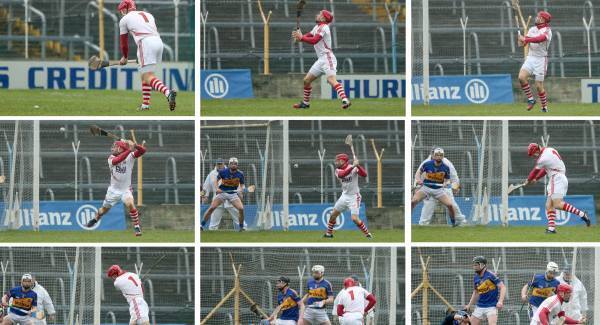
Describing it as “an unholy mess”, Ryan was reacting to the news that all penalties and 20m frees are now set to be taken on the 20m line or up to seven metres before it.
Central Council are today expected to endorse the GAA’s management committee’s recommendation, therefore abolishing the style espoused by the likes of Anthony Nash and TJ Reid from this weekend forth.
However, there will be no repeat of Waterford goalkeeper Stephen O’Keeffe’s heroics either as the three defending players will be restricted to the goal-line for penalties.
O’Keeffe was permitted to do because of a GAA interpretation that Nash had struck the ball as soon as he had lifted it. However, that guideline has now been dismissed.
Ryan lashed: “The most disappointing aspect is the way the thing has been handled right up to last Sunday. Who gave these silly instructions to referees that have no bearing or basis now? That’s the concern.
“I would have been much happier if the thing was dealt with at Congress next year, as we were led to believe it would be. The rest of the Championship has the potential to be flawed, really. We could have a fella going through and he’s taken down but the advantage is to the back to do it. The chances of getting a goal are much more limited now.
“A superb game has been thrown into disarray by people who six months ago decided there was a problem when there wasn’t one. It wasn’t a problem when Christy Ring was doing it or anybody up along the line. That’s the sad part of it all. We have one of the best field games and it’s in disarray. Where will it end? The sooner we get to next Congress and this is put to bed with common sense the better. It’s critical to the game.”
GAA president Liam O’Neill’s comment on Monday that “you can’t stop a Championship halfway through and change the rules” will also be viewed dimly by those who support Nash’s close-range dead-ball style, which has been replicated across the country.
In the statement last night, the GAA revealed that the management committee have asked Central Council to consider the interpretations to the playing rules of hurling.
The defending players for a penalty or a 20m free awarded on the centre point of the 20m cannot move until the ball has been struck, basically when it has been left the taker’s hurley.
In the event of a free being awarded elsewhere on the 20m line, the defending players must stand a minimum of 20m from where the free has been awarded and may not move closer until the ball has been struck.
The interpretation will be a temporary rule until Congress early next year, when it will be voted on as a motion.
They will now have to bring in a black card for cynical fouling in hurling as a penalty is now no more an advantage! #crazyidea #noadvantage
— Shane Dowling (@dowlerznap) June 10, 2014
Last night’s development comes as two of hurling’s leading medics have called for urgent changes to penalties and 20 metre frees due to the ferocity of how the sliotar is being struck in the modern game.
Former long-standing Limerick and Wexford team doctors David Boylan and Stephen Bowe insist changes have to be made for the safety of players.
Boylan, who was the medic to the Limerick hurling team for over 20 years, described modern day sliotars as the “nearest things to bullets”.
He has seen first-hand the damage that can be done by the speed at which a sliotar is struck including a lacerated liver and a ruptured spleen.
“I think it’s got to a serious stage and if we don’t speak up about it, then it will be too late. It will be too late to do something when a serious injury occurs.
“That’s based on not just how it’s hit but the nature of the ball as well. When the rule about the 21 (yards) was made, the ball was heavier and it was harder to strike. Sliotars now are the nearest things to bullets, as shown by players’ abilities to score points from 90 yards out.
“That wasn’t possible 20 years ago.
“It’s not just the new style of free-taking that makes close-range frees and penalties so dangerous.
“The traditional manner of taking them is dangerous too, because the ball is so light. Even with masked helmets, you can’t be guaranteed they will prevent head injuries.”
Bowe currently works as the team doctor to Wexford’s minor hurling team, having assisted the seniors for 25 years. He said: “All players wear face guards now but (Wexford’s) Harry Kehoe had his nose fractured by a ball that struck him in the face through it last year (v Antrim in March’s Division 1B game). The ball was struck at close quarters but not maliciously.
“The trajectory of the ball being struck at pace from close quarters is very dangerous. It can cause severe damage.
“The 21-yard frees are actually more dangerous than penalties because at least with only three people on the line fellas have space to move and get their bodies out of the way.
“When it’s 21-yard free there is a greater risk of injury because there is a clutter of people and their ability to manoeuvre themselves is a lot more restricted. Many of them are standing shoulder to shoulder and can’t move left or right.”