Ladies football voice merits of clock/hooter system
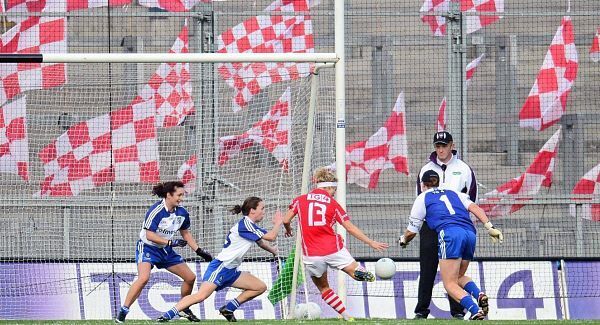
The same system has been in operation in their game for several years without much fuss although there is a countdown clock (the GAA one currently counts up from zero). It is started and stopped by a match official on the signal of the referee and substitutions are defined as stoppages.
“I know the worry is there would be tactical substitutions used late in the game to run down the clock, but we simply stop the clock for substitutions,” states a LGFA spokesperson. “It’s a very simple process where you have an official who is in charge of the clock, the referee puts one hand in the air and that signals to the official to stop the clock. The referee signals again for the clock to start and the game is back on. It’s a simple system but it works well for ladies football. Ladies football, in general, is quite clear of cynical play so it probably isn’t in the make-up of our managers and players to use tactics like that. But we have the rules there to deal with those situations should they happen.”
The public clock also provides spectators with a better understanding of the time remaining. “Something the GAA would be aware of is sometimes you have long injury time. There might be an indication of four or five minutes of injury time and the crowd are aghast at that. With the clock there is no room for argument. The ref has his hand up and the clock is stopped. The ref doesn’t have to worry about anything other than the action on the field. When you do get a situation when you have seven, eight or nine minutes of injury or stoppage time, you can look back over the video and count it up exactly so you take all of the hassle out of a referee’s hands.”
The GAA also have concerns about the hooter sounding the end of each half. The report from the trial during the Sigerson and Fitzgibbon finals weekends recommended the hooter only confirms that the next time the ball goes dead the end of play is confirmed.
However, in ladies football the end of the first half or full time is only called when either the ball touches the ground after the hooter. A score counts if the ball is in flight at the start or the sound of the hooter.
In last year’s All-Ireland intermediate semi-final, Tipperary’s Niamh Lonergan scored the winning point against Fermanagh, with the hooter sounding before the ball sailed over the crossbar. “We have rules in place to deal with those things,” added the spokesperson. “If you have a player standing over a 30-yard free after the hooter sounds that player either has to put it over the bar or net. If it touches a team-mate that ball is declared dead.”
CONNECT WITH US TODAY



Be the first to know the latest news and updates